"Moldova dropped in the press freedom ranking; expert cites attacks and economic pressure as key causes"
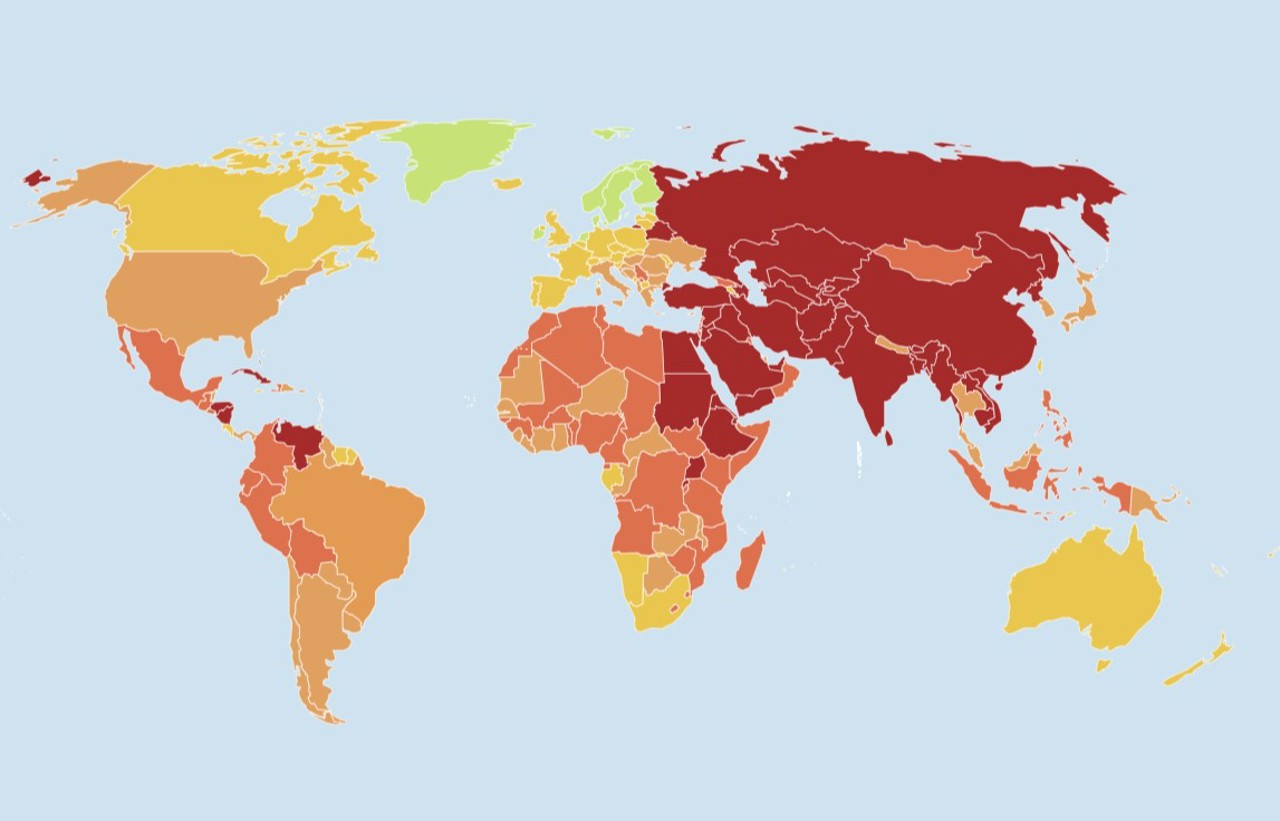
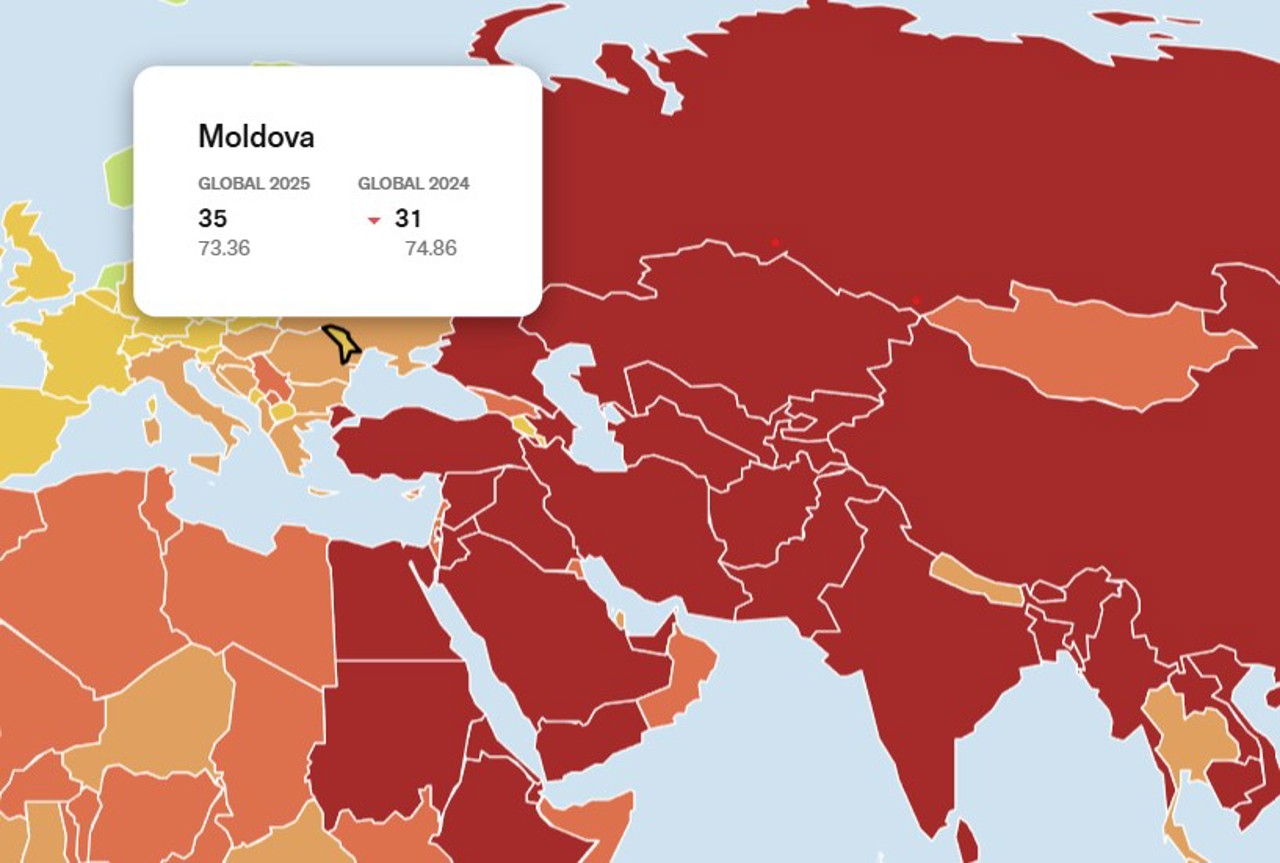
The Republic of Moldova ranked 35th in the World Press Freedom Index 2025, produced by Reporters Without Borders (RSF), down four places from the previous year. According to the ranking, Moldova is in a "satisfactory" zone, ahead of Armenia and Slovenia.
The index, which analyzes the level of press freedom in 180 countries and territories, reflects a significant global deterioration, marked in particular by increasing economic pressures on journalists and media institutions. Moldova scored 73.36 points and is marked in yellow on the RSF interactive map, indicating a satisfactory overall situation. However, the ranking is weaker than in 2024, when the country occupied 31st place, continuing the downward trend that began in 2023, when it was in 28th place.
Journalists, the target of online attacks and legal pressures
The safety of journalists and the legal aspect are among the factors that contributed to the change in position in the ranking, explained the president of the Press Council, Viorica Zaharia, in a comment for Teleradio-Moldova.
"We have had a lot of cyberattacks on journalists' online platforms (…) Identity theft of journalists, online harassment, a lot of online attacks. We have also had attacks on journalists in the non-virtual space", said Zaharia.
The legal basis is another aspect mentioned by Viorica Zaharia: "It refers to the impunity of people who attack the media, the exercise of legal pressure on editorial offices or difficulties in ensuring access to information".
Improving the legal framework for the protection of journalists, a topic of discussion in Parliament However, Zaharia says that we are in a very good position, especially compared to 2020 when we occupied 91st place in the ranking and 2021 when we were 89th: "I hope to maintain the same places in the coming years".
While physical attacks on journalists are the most visible form of abuse, RSF highlights that economic pressure poses a less obvious but profound threat. In 2025, the Index’s economic indicator hit an all-time low, prompting RSF to classify the global media situation as “difficult” for the first time.
Asked about the economic aspect, the Press Council president says it influences the vulnerability of newsrooms in the country, which has a small market where “it is difficult to sell advertising and convince people to pay for information”. According to the media expert, the vulnerability has been amplified by the advent of the internet and the withdrawal of American donors this year.
Globally, the top three positions in the ranking are occupied by Norway, Estonia and the Netherlands, while Romania is in 55th place and Ukraine in 62nd place. At the opposite end, in the “very serious situation” category, there are 42 countries, including China, North Korea and Eritrea. RSF points out that the number of states in this category has increased in the last year.
The organization defines press freedom as the ability of journalists, individually or collectively, to select, produce and disseminate information in the public interest, without political, economic, legal or social interference and in the absence of physical or psychological threats.
We remind you that, every year, on May 3, World Press Freedom Day is celebrated around the world, a day on which the fundamental principles of press freedom are marked and tribute is paid to journalists who have lost their lives while exercising their profession.
This day was proclaimed by the UN General Assembly in 1993, following a recommendation adopted at the 26th session of the UNESCO General Conference in 1991.