Republic of Moldova concludes bilateral screening session on Cluster 3. What's next?
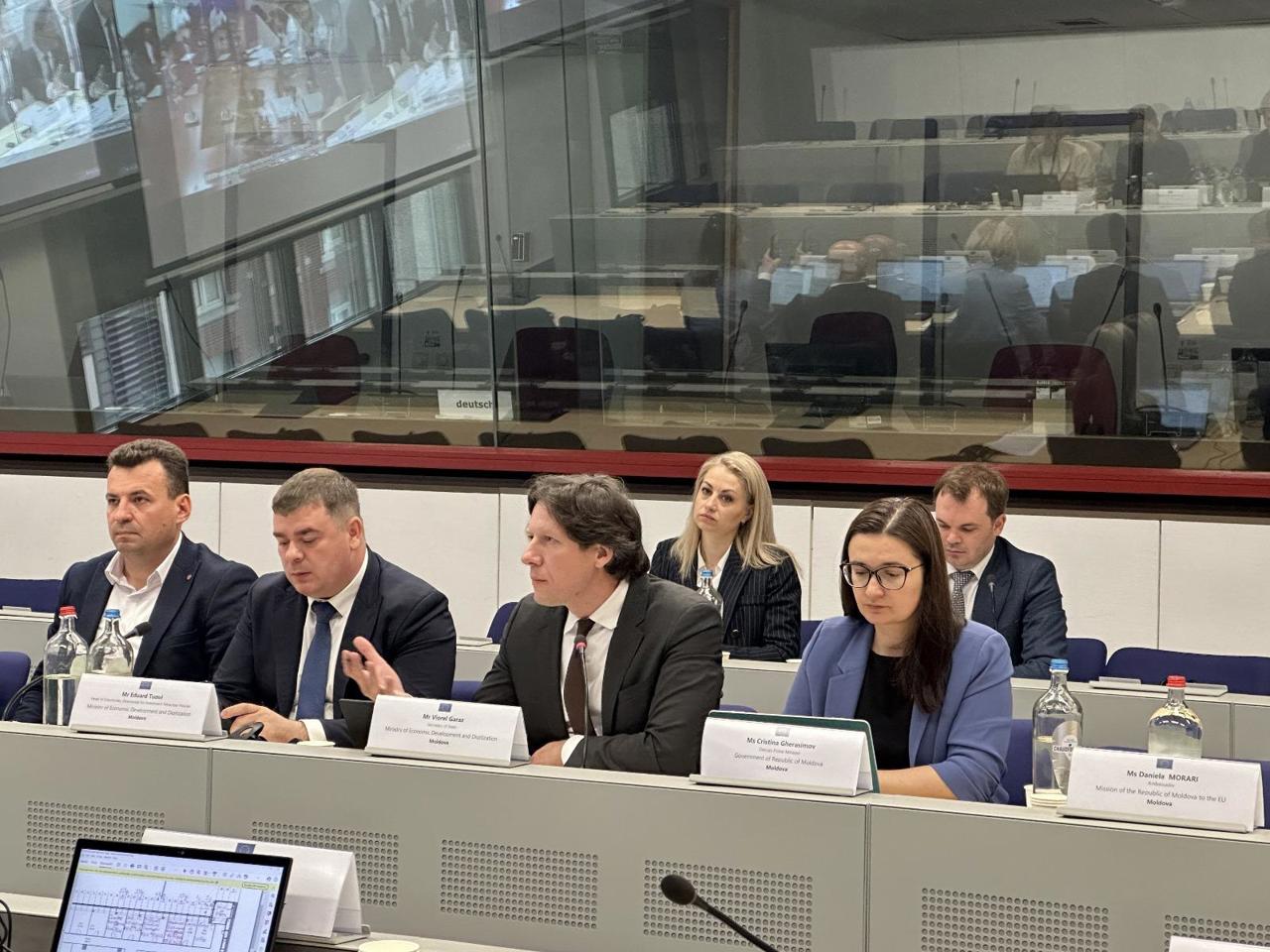
This month, discussions on Chapter 20 – Industrial and Entrepreneurship Policy, which is part of Cluster III of the “Competitiveness and Inclusive Growth” initiative, concluded in Brussels. Although this chapter is less comprehensive from a legislative standpoint, it is strategically important for fostering an innovative and competitive entrepreneurial environment in the Republic of Moldova. Deputy Prime Minister for European Integration, Cristina Gherasimov, emphasized this during “Zi de zi” show on Radio Moldova.
The text outlines European regulations regarding critical materials that are essential for the green and digital transition, which is also a priority for our country.
"We are working to align with the acquis communautaire to support businesses and enhance the overall business environment, making them more competitive in the internal market of the European Union. This encompasses a wide range of areas, including space and construction policy. For us, the construction sector is undoubtedly more relevant than space research. However, it is crucial to establish our national priorities, whether or not we are interested in space exploration, and effectively communicate these priorities to the member states. Based on these priorities, we will determine which regulations to align with, which are less relevant, and which are mandatory for our country."
In the next step, the European Commission will create a screening report for this cluster, evaluating how well Moldovan legislation aligns with European norms. Cristina Gherasimov also noted that this report will outline a roadmap for further negotiations. Once the report is presented to the Council of the European Union and receives unanimous agreement from the member states, the Republic of Moldova will be able to officially begin negotiations for this group of chapters.
Cluster 3, titled "Competitiveness and Inclusive Growth," consists of eight chapters aimed at bringing the Republic of Moldova closer to the European economic model. These chapters focus on developing a functioning market economy, supporting the private sector, stimulating innovation, and ensuring fair economic growth. The issues addressed include industrial and entrepreneurial policy, taxation, social policy, employment, statistics, education, research, intellectual property law, and economic and monetary policy.