US-Israel strike targets Iran's Fordo nuclear site
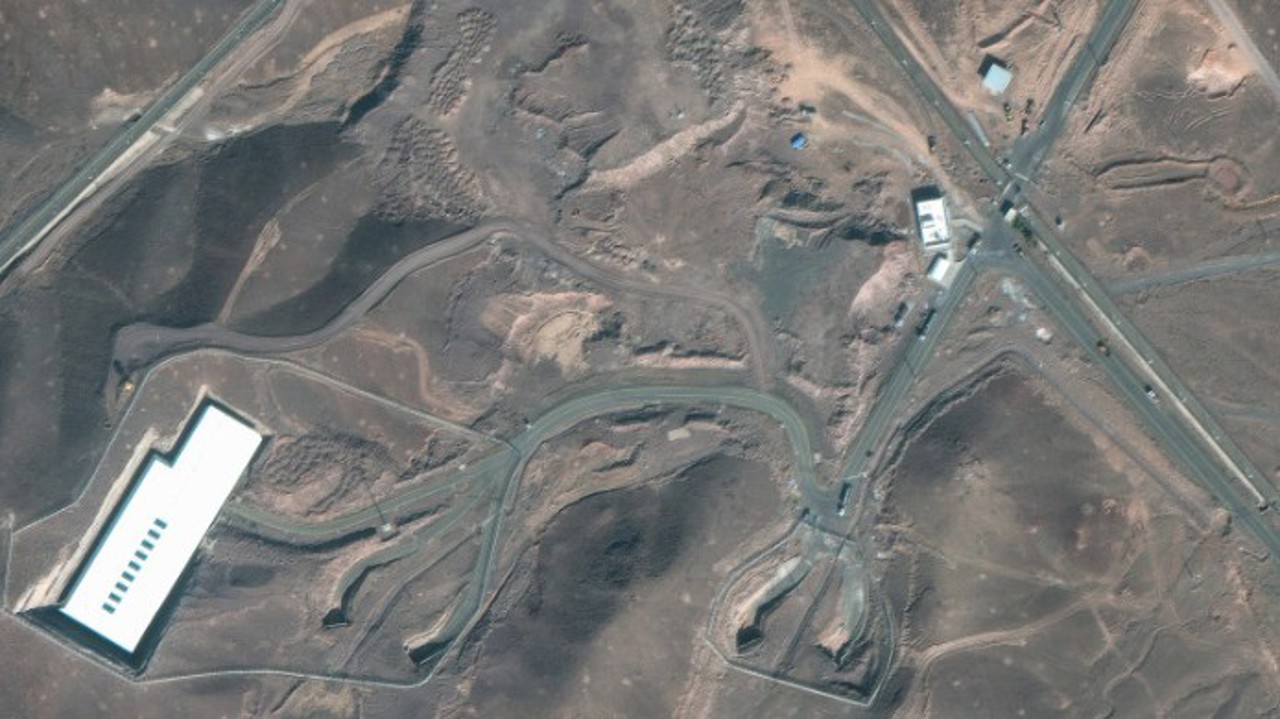
The Fordo nuclear site in Iran, tucked away under a mountain and protected by anti-aircraft systems, plays a crucial role in Iran's nuclear program.
This comes after the International Atomic Energy Agency (IAEA) found that uranium enrichment there was nearing weapons-grade purity, according to The Guardian.
On the morning of June 22, the United States launched a massive attack on key Iranian nuclear facilities, specifically targeting the Fordo site, considered one of the best-protected underground objectives. President Donald Trump announced the "complete destruction" of the facilities, following a military intervention with strategic support from Israel.
"Everyone has heard these names for years as they built this horrible destructive enterprise. Our goal was the destruction of Iran's nuclear enrichment facility," US President Donald Trump stated, adding in a White House statement that "the strikes were a spectacular military success."
US bombs three Iranian nuclear facilities. Donald Trump: "Very successful attack"
The decision to directly involve the US military came after more than a week of Israeli strikes on Iran, which systematically targeted the country's air defense and offensive missile capabilities, and also affected its nuclear enrichment infrastructure. The Fordo plant is buried under a mountain and protected by anti-aircraft systems, designed to withstand an air attack. Deactivating it, either through diplomatic or military means, is essential to prevent Iran from developing nuclear weapons.
The International Atomic Energy Agency found that uranium at Fordo is enriched to 83.7%, very close to the 90% threshold required for nuclear weapons, according to Digi24.ro.
"The US did what no other country on Earth could do"
Israel requested that the United States use GBU-57 Massive Ordnance Penetrator bombs, weighing 13,600 kg, capable of penetrating deep underground before detonating.
These bombs can only be launched by the B-2 stealth bomber, exclusively in the American arsenal. After the attack, Israeli Prime Minister Benjamin Netanyahu praised Trump's decision, saying that "the impressive and righteous power of the United States will change history."
In a video message, he stated that the US "did what no other country on Earth could do."
Iran attacked Israel. At least 16 people injured
In turn, Trump thanked Netanyahu, stating that they had worked "as a team like never before" and had made significant progress in eliminating "this horrible threat to Israel."
The bomb carries a conventional warhead and is believed to be able to penetrate up to 61 meters (approximately 200 feet) underground before detonating. Multiple bombs can be launched successively to penetrate even deeper. The bombing occurred after B-2 bombers were deployed to Guam.
A US official confirmed to Reuters that B-2 bombers were involved in the attacks on Iranian nuclear sites.
Fordo, hidden under a mountain and heavily protected
Trump told Fox News that six GBU-57 bombs were launched at Fordo, and another 30 Tomahawk missiles targeted sites such as Natanz. Natanz, itself a major objective, had been previously hit by Israel.
Diplomats say the facility is located approximately three levels underground, and experts have long debated whether airstrikes can cause significant destruction there.
Last week, Trump told advisors that an attack on Iran would only make sense if the "bunker buster bomb" guaranteed the complete destruction of the Fordo facility.
However, defense officials warn that even multiple GBU-57s launched at the same point might only collapse tunnels and disrupt activity, without completely destroying the facility.
Translation by Iurie Tataru