Moldova’s EU future at stake ahead of September vote
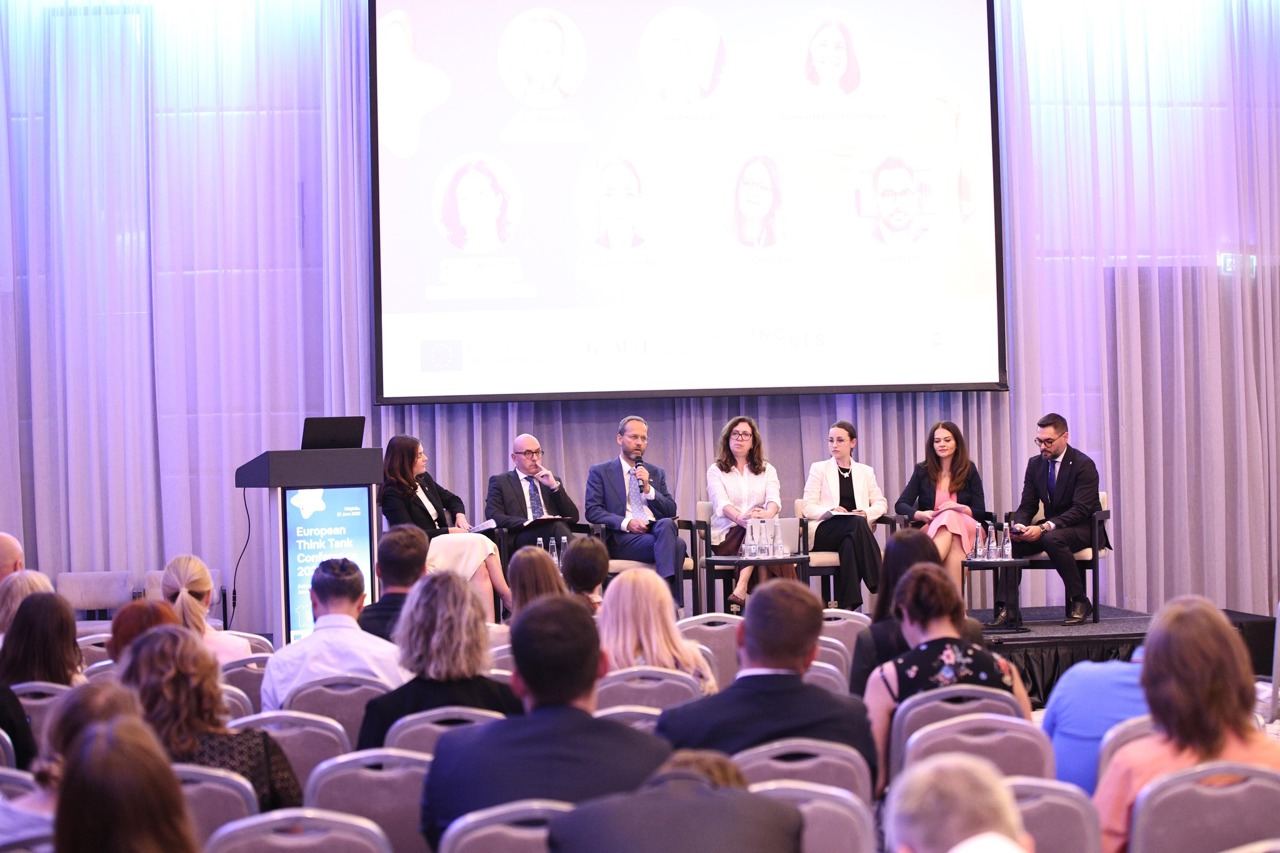
The Russian Federation is reportedly dissatisfied with the direction chosen by Moldova’s citizens and is likely to attempt influencing the outcome of the parliamentary elections scheduled for September 28, according to Jānis Mažeiks, the European Union’s ambassador to Moldova.
“We can expect attempts to sway the elections through vote-buying or disinformation,” stated Mažeiks at the recent European Think-Tank Conference in Chișinău. The event was organized by the Institute for European Policies and Reforms with the support of the European Union and the German Marshall Fund of the United States – Transatlantic Foundation.
The conference brought together over 100 participants, including public officials, civil society members, researchers, and academics from the European Union, the United States, Moldova, Ukraine, and the Western Balkans.
Ambassador Mažeiks stressed that it is ultimately up to the Moldovan people to determine—through the upcoming vote—whether the European course, consistently pursued over the past three years, will continue. “We’ve seen countries make the most of such opportunities, while others have stalled or regressed. It would be a historic mistake if Moldova were to take a step back,” he warned.
He emphasized that Moldova’s EU accession process must not only be fast, but also credible. “We must ensure that Moldova is fully prepared to meet the responsibilities of EU membership. I urge everyone to consult the EU documentation. People often ask why we don’t criticize Moldova more openly. The answer is simple—read the enlargement report. All our critiques, many of which are developed with input from civil society, are clearly laid out there.”
Jasmin Frentzel Sorensen, Deputy Head of the Danish Embassy in Chișinău, reaffirmed Denmark’s strong support for Moldova’s European path. Denmark assumed the rotating EU presidency on July 1. “A secure Europe entails many elements: stronger defense, ongoing support for Ukraine, democratic resilience, and merit-based enlargement. Enlargement is the only way the EU can stabilize the continent and help vulnerable countries resist external interference. While Ukraine is currently driving this process, Denmark will actively promote accession talks with Moldova and the Western Balkans,” Sorensen stated. She added that the EU must also prepare for enlargement through internal reforms and the upholding of democratic values and the rule of law. “Denmark is committed to supporting Moldova, just as it did for the Baltic States and Poland in the 1990s.”
She also noted that to maintain momentum in Moldova’s accession process, Denmark continues to support human rights, rule of law, and democratic initiatives through local partners.
Cristina Gherasimov, Moldova’s Deputy Prime Minister for European Integration, reiterated during the same conference that Moldova’s choice for Europe is fundamental. “This is the choice of a country that has experienced poverty, corruption, and fear. It is the choice of a nation learning to rely on rules, transparency, and cooperation. Most importantly, it is about securing a peaceful future—something we cannot guarantee unless we belong to a community of nations that share our values and stand by each other in times of hardship,” Gherasimov said, thanking Moldova’s European partners for their expertise and continued support along the country’s EU path.
Translation by Iurie Tataru