Moldova: A success story in energy independence
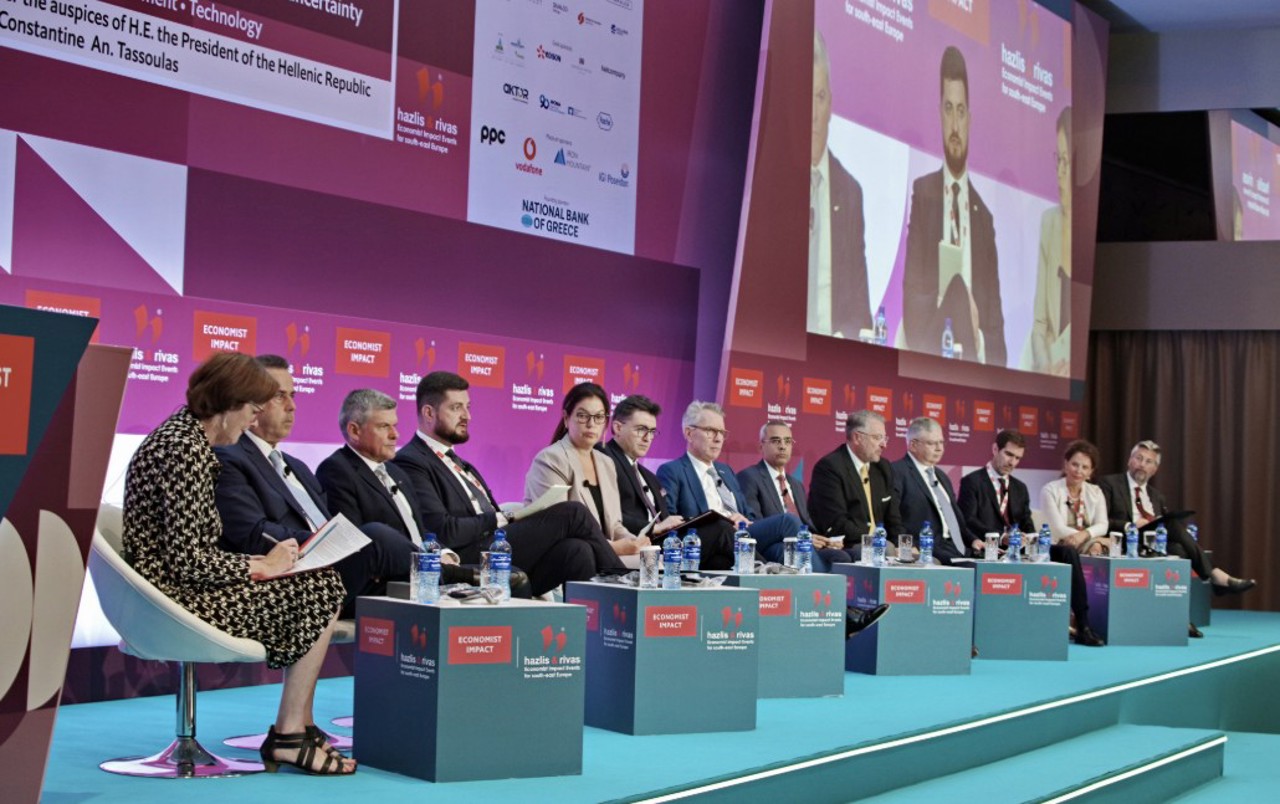
Moldova has overcome Russia's energy blackmail and aims to fully interconnect with the European Union's energy market by 2027, Energy Minister Dorin Junghietu announced at the annual ministerial forum organized by "The Economist" from July 1-3 in Athens, Greece.
According to the Energy Minister, Moldova recently adopted a new electricity law, thereby strengthening its regulatory framework and promoting market liberalization.
In the natural gas sector, the minister highlighted Moldova's efforts to fully separate from Russian energy imports, with the support of the Energy Community and the European Union.
"Moldova had a single natural gas supplier – Gazprom – and its contracts did not allow for purchasing gas on the free market or from other suppliers. Since Moldova imports 100% of its gas, this left it vulnerable to energy blackmail from the Russian Federation, which did not hesitate to use energy as a weapon on several occasions," the minister explained during a panel discussion with his counterparts from Greece, Cyprus, and the Deputy Energy Ministers from Azerbaijan and Bulgaria.
Dorin Junghietu reiterated that the Vertical Corridor – a natural gas transport path extending from Southern Europe, starting with liquefied natural gas (LNG) terminals in Greece, towards Central European countries and storage facilities in Ukraine – has been "a lifesaver for Moldova," offering the possibility to continue supplying gas to citizens even during a crisis. By adhering to this route, Moldova demonstrated its ability to source gas from alternative suppliers, eliminating the risk of supply disruptions.
The minister also emphasized the involvement of the state-owned company Energocom, which was the first operator to use the ICGB gas pipeline – the Greece-Bulgaria Interconnector, commissioned in 2022 – later using it to import natural gas into Moldova.
"Energocom also imported LNG from the United States via the first vessel to dock at the Alexandroupolis terminal, transporting the gas along the Vertical Corridor to underground storage facilities in Ukraine, thus demonstrating the viability and efficiency of this route," Junghietu added, as quoted in a press release from the Ministry of Energy.
The same source indicated that on the sidelines of the ministerial forum in Athens, Minister Junghietu had, among other engagements, a bilateral meeting with Azerbaijan's Deputy Energy Minister, Orkhan Zeynalov, to discuss potential collaborations on renewable energy projects. The minister invited Azerbaijani companies to participate in the second round of tenders for renewable energy plants and storage capacities, set to be launched in the autumn of this year.
The minister informed his counterpart about Moldova's progress in the renewable energy sector, noting the successful completion of the first tender for 165 MW, and that a new tender for 170 MW of wind energy with storage capacities is expected in the autumn.
It's worth noting that the prestigious magazine "The Economist" has presented the Republic of Moldova as "a success story" in the region regarding energy sector reform.
Translation by Iurie Tataru