Moldovan theatre unites Europe through cultural diplomacy
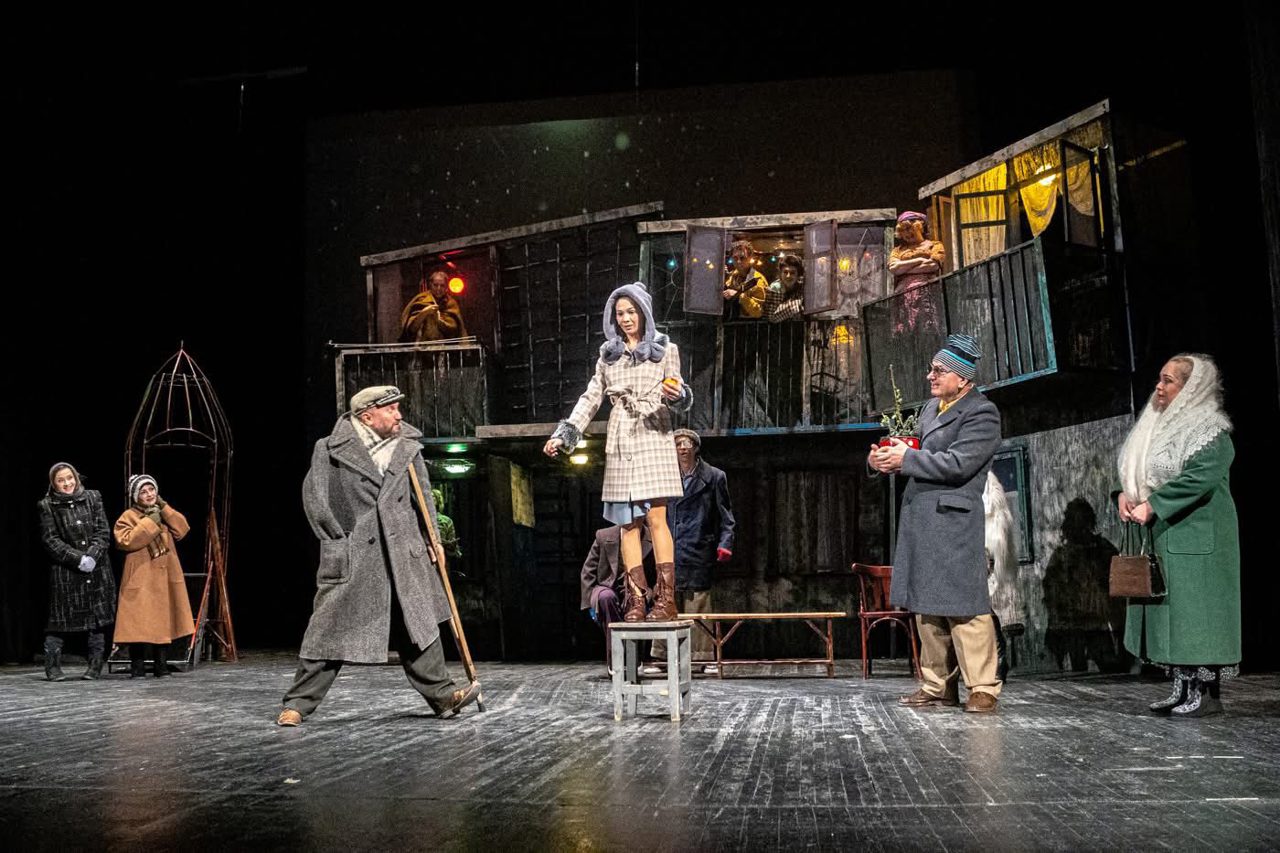
Large audiences, enthusiastic applause, deep emotions, and warm appreciation marked the conclusion of two successful international tours by actors from the Mihai Eminescu National Theatre (TNME).
For over a month, the troupe performed on stages across Romania and several European cities as part of the “Cultural Diplomacy” project.
“We’ve proven that Europe is our home. After every performance, we were told: theatre brings us together, you made us proud of what we have at home, you brought us back together,” said Petru Hadârcă, director of the Mihai Eminescu National Theatre, at a press conference.
The company presented The Glass Garden, based on the novel by Tatiana Țîbuleac—recipient of the European Union Prize for Literature—in Verona, Padua, Rome, Parma, and Turin (Italy), as well as in Brussels (Belgium) and Berlin (Germany).
At the same time, the production The Siberia Files was staged in Oradea, Cluj-Napoca, Baia Mare, and Satu Mare (Romania).
Director Hadârcă highlighted that the Mihai Eminescu National Theatre has become “an important cultural ambassador,” promoting Moldova’s cultural identity abroad.
“This was an indescribable experience, and we still have many stories to share. We’ve reaffirmed that Europe is our home. After each performance, people told us: theatre unites us, you made us proud of our roots, you brought us back together. This confirms that the ‘Cultural Diplomacy’ project achieved its purpose—and we are already being invited for future collaborations. Every show sparked conversations, stirred emotions, and opened hearts. It wasn’t just for those who long for home—it also changed the way foreigners see us. That’s thanks to our actors’ dedication and evolution,” Hadârcă added.
Actor Ghenadie Gâlcă described the tours as “a journey filled with strong emotions and wonderful experiences.” “In just over a month, we proved that our National Theatre has both artistic and technical excellence. In every city we visited, we met extraordinary people—our fellow Moldovans who left long ago but welcomed us warmly and helped us feel at home, even on foreign stages,” he said. Also speaking at the press conference, Culture Minister Sergiu Prodan emphasized that the TNME actors demonstrated Moldova’s place in the broader EU cultural space—one that is “open to us” and where “we can export cultural products,” because “we are welcomed, wanted, and appreciated.” “I’m happy to see cultural diplomacy flourishing—it has become a real phenomenon across Europe. Thank you all for this remarkable impact. Foreign media is writing about the tour. That was the goal: to be seen, heard, understood, and appreciated,” Prodan said.
The tours were supported by Moldova’s Ministry of Culture and the Embassy of the Republic of Moldova in Romania.
Translation by Iurie Tataru