Macron's poker: France awaits parliament dissolution
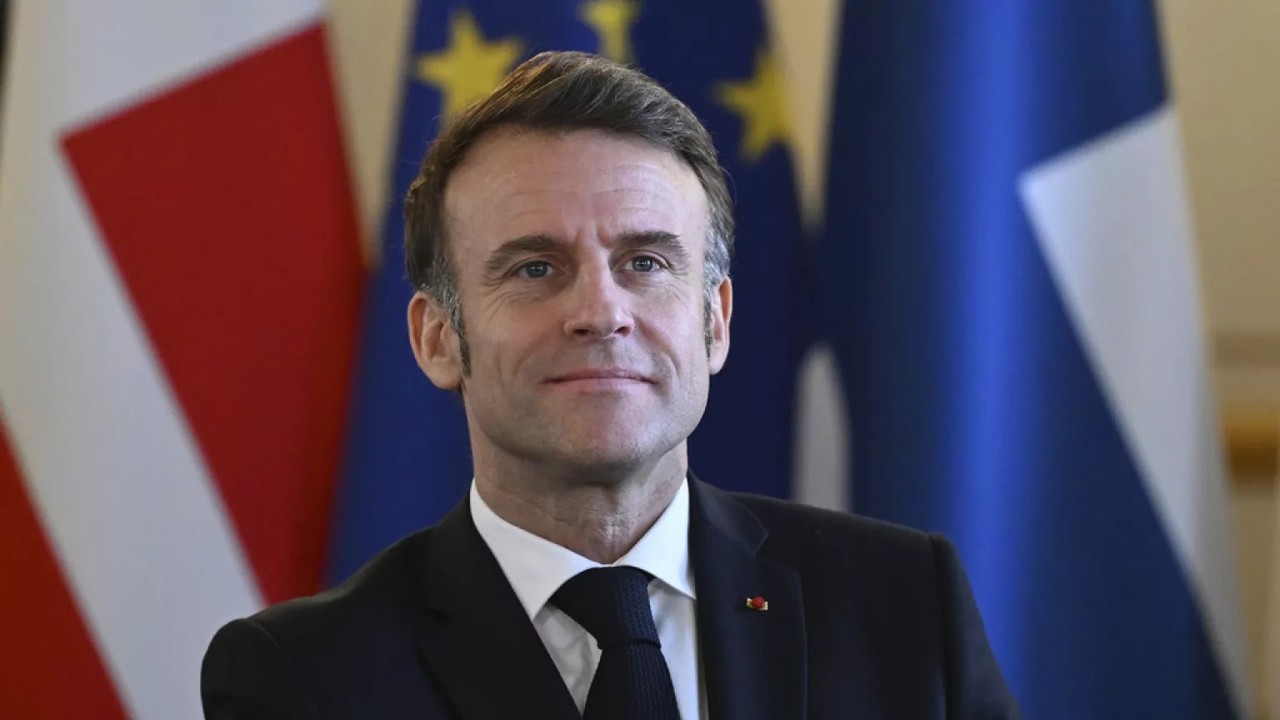
Starting this Tuesday, July 8, France will hold its breath, waiting to see if President Emmanuel Macron will try his "political poker" maneuver again, just as he did last year when he dissolved parliament in July 2024, hoping to secure a majority, but failed.
Like a game of poker, Macron made the fateful decision last July to dissolve the lower house of parliament and call snap elections, plunging the country into a long period of political instability. Those elections led to a more divided parliament than ever and a shaky government, cobbled together from various parties and currently led by centrist François Bayrou.
Polls show that at least 56% of French people want the current French government to fall, and far-right and far-left extremist parties, very strong in the National Assembly, would undoubtedly applaud a new dissolution of the legislature and new elections.
Bayrou is one of the least popular French prime ministers in post-war history, with a recent poll indicating he has the support of only 14% of respondents. The French Constitution grants the president the right to dissolve parliament again if 12 months have passed since the last such maneuver. But will he?
In a presidential system like France's, the president's prerogatives are immense, similar to those of the U.S. President. The head of state is not only the supreme commander of the army and the only one with access to the nuclear red button, but can also declare war (though in both cases, they must report fully to the legislature after a few months). Moreover, in France, the president can dissolve that legislature, as Macron did in 2025. However, 12 months must pass before he can do it again.
As seen with Macron last year, precedents are not very favorable. In France, it has happened several times that a "cohabitation"—a government divided between a president and a government from the opposing camp—was precipitated, hastened, or, one might say, produced by an error in political judgment. For example, Jacques Chirac, when the presidential term was still seven years, chose to dissolve parliament in 1997 amidst strikes, hoping to secure a much more solid parliamentary majority for his conservative party in his remaining five years in office.
Instead, in the snap elections, which were not at all necessary, the Socialists won, remaining in power for five years—an unexpected political gift—leading to an extremely difficult cohabitation with Chirac.
Chirac had tried to imitate his predecessor, François Mitterrand, who a decade earlier, in 1988, had done exactly the same thing: dissolved parliament to get rid of the right-wing government that was then led... by him, Jacques Chirac. However, where Mitterrand succeeded, in Chirac's case, everything backfired, and he had to govern for five years with a hostile government and a parliament in constant internal turmoil.
So, here we are, a year has passed, and Macron can do it again... but the tension will last another week, as Macron is on a state visit to London these days. This is the first state visit by a French president since Nicolas Sarkozy in 2008, including a dinner at Windsor with King Charles.
And it was from London that his predecessor, General De Gaulle, launched a completely different appeal to his compatriots.
A political suicide?
Indeed, the general consensus is that another dissolution of parliament would be political suicide. But, since the reasoning was the same a year ago, and the trauma of the 2024 surprise is still present, everyone still has a little doubt in the back of their minds.
Enough to keep the 577 deputies now awaiting the president's goodwill in a stalemate. Parliamentary staff, traumatized by the sudden termination of their contracts last year, are also preparing for any eventuality.
It's clear that Emmanuel Macron now "holds all the cards" (as Donald Trump famously says): The head of state effectively regains threefold power: the power to dissolve the Assembly, the power to reverse the electoral calendar (if he dissolves it before the presidential elections), and the power to prevent his successor from dissolving it for one year, should the dissolution occur just before the presidential elections.
For now, there's no sign he's drawing up such plans. But that's precisely the problem with Macron, who's known for making last-minute decisions, giving in to his instinct, which he greatly trusts (after all, that's how he became president), but which can also mislead him. Indeed, that's exactly what he did last summer.
Translation by Iurie Tataru