EU funds and elections: A look at Moldova's infrastructure projects
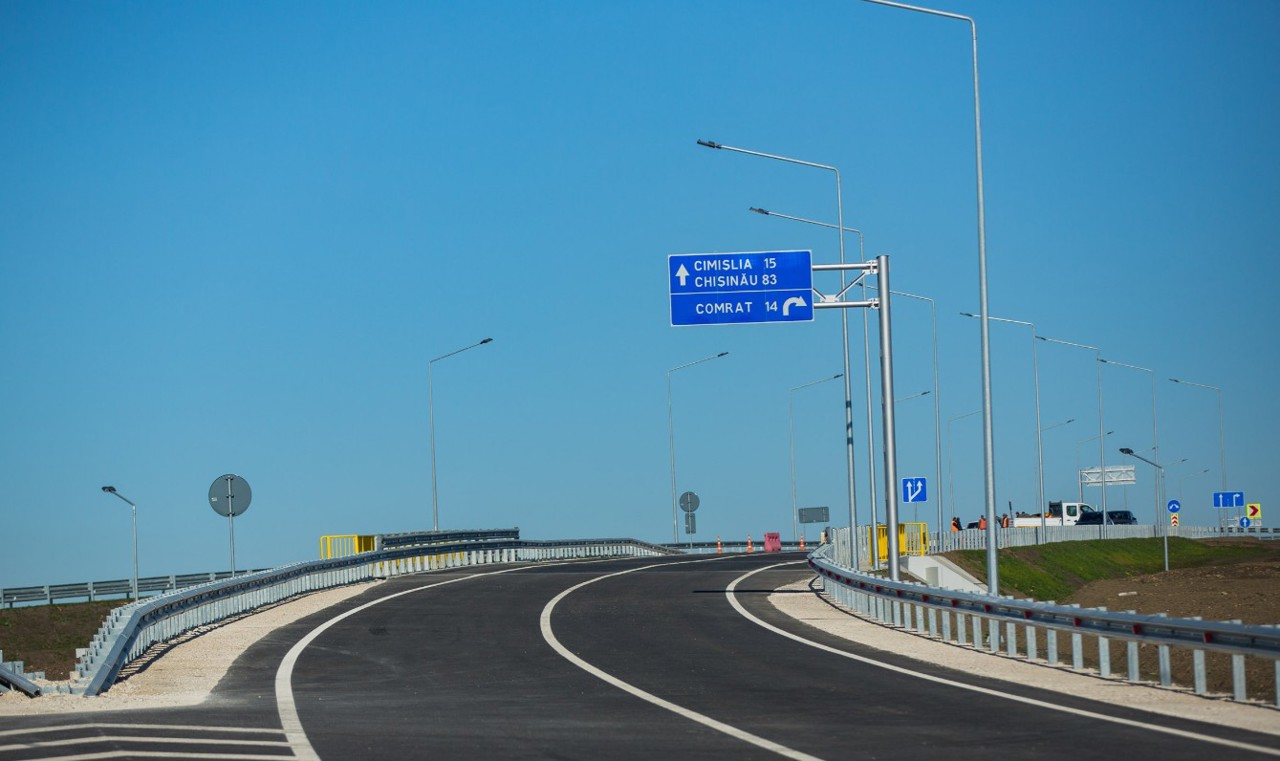
Over 200 infrastructure projects are being implemented in communities throughout Moldova, with another 100 potentially starting in 2025 if the promised funds from the European Union are received.
The government program, "Europe is Near," provides investments for roads, sewage systems, and local development in hundreds of Moldovan villages and towns. However, experts are raising concerns about the politicization of these investments and a chaotic implementation pace.
The government program "Europe is Near" launched with an initial budget of 500 million lei, but the government has allocated additional funds and is also awaiting money from the European Union. In total, 579 local town halls have submitted eligible funding applications.
Infrastructure projects on the eve of elections
"We are very optimistic that in October there will be more money in the national budget to initiate a new phase. We are also awaiting funds from the European Union, which have already been promised. If that money comes in, we will be able to satisfy all these requests in the first half of next year," stated Corneliu Cirimpei, State Secretary at the Ministry of Infrastructure and Regional Development (MIDR), on the "Public Space" show on Radio Moldova.
The National Office for Regional and Local Development (ONDRL) plays an essential role in implementing the program.
"We have identified ten implementation phases for the projects, which are grouped into three categories: project preparation, implementation, and post-implementation. Local public administrations can also be penalized if they do not ensure project sustainability. They are not eligible to apply for subsequent projects and funds," added Eugen Secrieru, Deputy Director of the ONDRL, on the same show.
Vitalie Rapcea, director of the "Economic and Environmental Infrastructure" program at the Independent Analytical Center "Expert-Grup," noted a synchronization of these projects with electoral cycles, which he criticizes.
"We have analyses done for 'European Village' 1 and 2, and now this program is being synchronized with the parliamentary elections, and there are correlations between the winners and their political party affiliation," Vitalie Rapcea observed.
State Secretary Corneliu Cirimpei rejected the accusations, arguing that the large number of beneficiary town halls demonstrates the impartiality of the program.
"No political entity in the Republic of Moldova has more than about three hundred town halls. Following the 'European Village' projects (one, two, and Express), over 800 town halls have benefited. For this program, I mentioned that at least 579 town halls have become eligible, a number much larger than a single political entity would have after the last elections," Cirimpei pointed out.
Many projects and concerns about work quality
In addition to the political aspect, the representative from "Expert-Grup" highlighted another phenomenon observed in the implementation of government programs—the creation of an unhealthy competition among contractors, who cannot adapt to such high demand.
"We're seeing the same phenomenon, which is the state's myopia, so to speak. Why? Because we are creating competition among contractors. They are the same contractors for the 'European Courtyards,' and the same contractors for 'Europe is Near.' If we had phased these works, perhaps, and not launched them all in an election year, we might have had better quality, lower prices, and greater competition. Because what's happening now is that the supply cannot adapt easily to this increased demand," Vitalie Rapcea remarked.
For Lot III of the "Europe is Near" program, another 100 projects are planned for launch, according to MIDR State Secretary Corneliu Cirimpei. Furthermore, the ministry has promised to satisfy all eligible requests, especially once funds are received from the European Union. Corneliu Cirimpei also emphasized that such programs help town halls increase their capacity to draft projects, an essential skill for the country's European future.
"If we don't try to increase the capacity of town halls to write projects, primarily in the infrastructure sector, what happened in Romania ten years ago will happen. There will be an extremely low capacity for local public administrations (APL) in the Republic of Moldova to absorb these European funds," the official stated on Radio Moldova.
Prioritized projects: Sewage and roads
To date, 207 of the 220 infrastructure projects (32 from Lot I and 88 from Lot II) are being implemented in the three regions of the Republic of Moldova:
North Region: 30 projects;
Center Region: 116 projects, including 13 in Chișinău municipality;
South Region: 61 projects, including one in the Autonomous Territorial Unit of Gagauzia (UTA Gagauzia).
Notably, town halls contribute 10% of the value of the infrastructure projects. This contribution is mandatory for projects up to 10 million lei submitted by rural communities and district centers. The same contribution from APLs also applies to small communities with under 1,500 inhabitants and to those in the process of amalgamation that have submitted projects up to 5 million lei.
More than 50% of the projects submitted by APLs under the "European Village 1, 2, and Express" programs were for the construction of aqueducts, while requests for sewage systems were fewer. The MIDR State Secretary, Corneliu Cirimpei, announced that to balance the situation, authorities will favor town halls that submit projects focused on the construction of sewage networks in the coming period. The Ministry of Infrastructure and Regional Development also anticipates the launch of a third lot of projects and promises that, once EU funds are allocated, all project requests for road modernization in the Republic of Moldova will be satisfied.
Translation by Iurie Tataru