Gagauzia: A 1990 proclamation and its lasting legacy
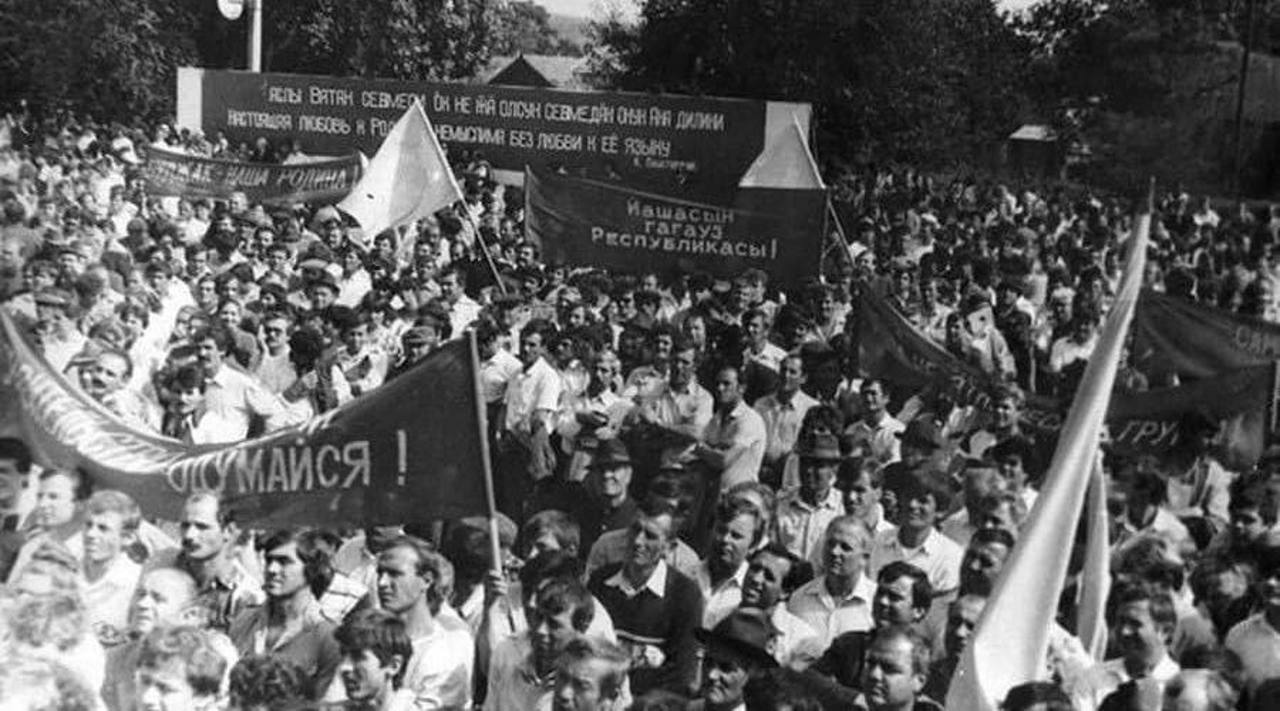
On August 19, 1990, a group of local deputies from southern Moldova met in the city of Comrat. The gathering took place as the Soviet Union was in the final stages of its collapse and the Moldavian Soviet Socialist Republic was experiencing a period of national revival. At the congress, they proclaimed the "Gagauz Republic."
They declared it an independent entity that would remain part of the USSR, rather than an autonomous region within the Republic of Moldova. Thirty-five years on, historians and analysts describe the move as part of a wider Moscow strategy to weaken Moldova by creating breakaway regions. The anniversary is still marked in Comrat with official ceremonies and public gatherings.
Historian Ștefan Bejan explains that the decision was part of a broader Moscow strategy, also applied in other regions of the former Soviet Union. "The Soviet Union had a policy known as 'counter-separatism' aimed at preventing union republics from separating from Russia. They created this policy by instigating internal conflicts and establishing separatist republics within the larger union republics. This was also seen, for instance, in Nagorno-Karabakh—a conflict that has lasted for more than 30 years—and in the enclaves of Abkhazia and South Ossetia. In Moldova, these two separatist republics were Gagauzia, proclaimed on 19 August, and the Dniester-Moldavian Republic, proclaimed on 2 September 1990," says Mr Bejan.
Two days later, on 21 August 1990, the Presidium of the Supreme Soviet of the MSSR declared the act illegal and unconstitutional. Authorities in Chișinău then sent volunteers to stop the movement. The Russian Federation intervened on the side of the Gagauz, providing support from the 14th Army and Transnistrian militias. "Russia, with the help of Ukraine, assisted and armed Gagauzia, and we were very close to a Moldovan-Gagauz war," the historian adds.
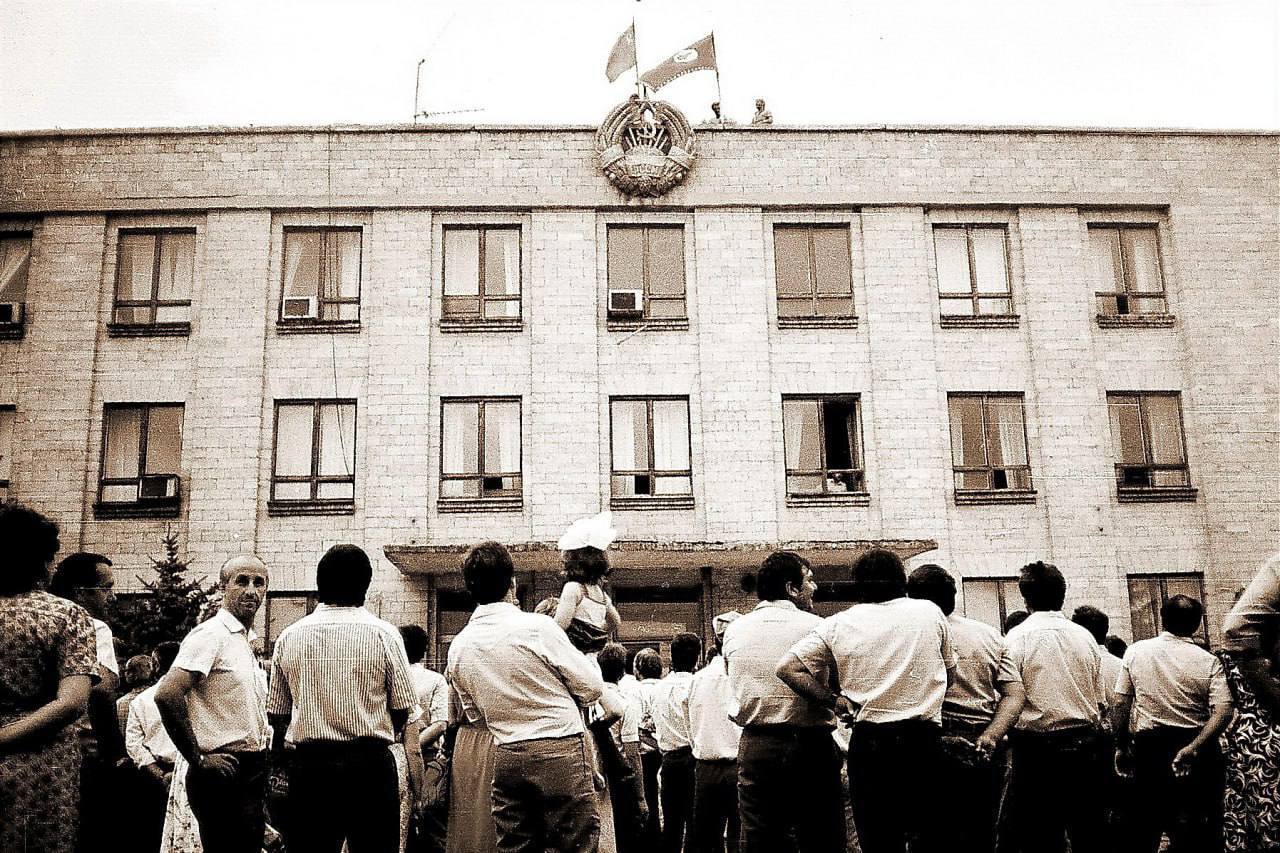
The Gagauz Halkı movement
The Gagauz Halkı (Gagauz People) movement emerged in Comrat in the late 1980s. It demanded a cultural and linguistic revival, as the Orthodox Turkic Gagauz people feared the assertion of a Romanian identity in Moldova—through the Romanian language and Latin alphabet—would endanger their own culture.
But according to Mr Bejan, these tensions began with legitimate demands. "Chișinău was not against it; on the contrary, in the initial phase, Chișinău supported most of Gagauzia's efforts. But at one point, they changed their minds and insisted heavily on obtaining a form of political autonomy. This was a point Chișinău did not agree with, and it is where the divergences arose. Of course, Russia had a major involvement, providing both logistical and political support for this separatist movement."
Moscow’s geopolitical role
Journalist and political analyst Nicolae Negru says the events in Comrat cannot be separated from Moscow's strategic interest in fragmenting the MSSR. "It's obvious that everything organised at the time was at Moscow's initiative... Moscow pushed the Gagauz to dampen autonomist spirits in the MSSR. That was actually the goal."
Mr Negru recalls Moscow directly warning the Moldovan leadership. "Snegur was told that if you behave this way, you will have three republics instead of one. This is what they started to do – turning the MSSR into three republics."
"A stab in the back"
Mr Negru, who witnessed those events as a journalist, says the Gagauz decision to proclaim independence felt like "a stab in the back."
"We expected the Gagauz to be our allies because we were fighting for freedom, for our language, for our alphabet. Instead, they metaphorically put a knife in our back. It was a feeling of betrayal as absolutely nothing foreshadowed this move," the political analyst says.
From conflict to compromise
The "Gagauz Republic" existed only in practice, as it never gained international recognition, and tensions continued for four years. The situation was finally de-escalated in 1994 when Moldova's parliament adopted a law on the special status of Gagauzia (Gagauz-Yeri).
The 1994 compromise gave the region administrative and cultural autonomy, with its own institutions, including a People's Assembly, an elected bașkan (governor), and the right to make decisions on issues such as education and language. But historian Mr Bejan explains that this solution came with significant concessions.
"Looking back today, Chișinău conceded more than Comrat did. But this must be understood in the context of events in Chișinău, because the 1994 elections were won by the Democratic Agrarian Party, a profoundly Moldovanist and anti-Romanian party formed from the former communist nomenklatura. They then passed several laws to the detriment of the people of Moldova. Consequently, the Agrarians also conceded in favour of Gagauzia, because the special status offered to Gagauzia is discriminatory compared to the rest of the country," Mr Bejan added.
Consequences and legacy
While the autonomy of Gagauzia has been praised internationally as a peaceful solution, experts say that 35 years on, identity and geopolitical issues still persist.
"This autonomy has not, in fact, served the interests of the Gagauz people; it has only served the interests of some local elites who seized resources and who, to this day, use this status to blackmail others and obtain personal benefits," Mr Bejan suggests.
Mr Negru supports the same conclusion. "We see that when needed, Moscow resorts to this so-called autonomy. In reality, it is not for the benefit of the Gagauz people but for the Russians, and it is used to exert pressure on both Chișinău and the Republic of Moldova."
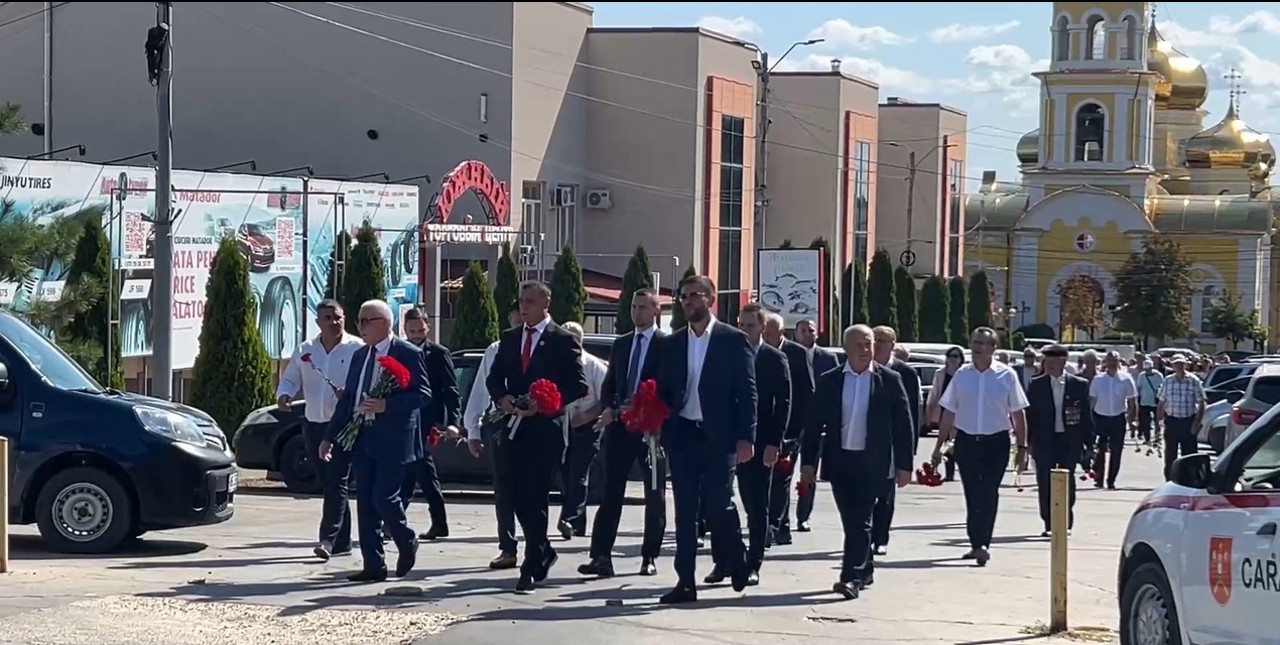
35th Anniversary of the 'Gagauz Republic'
The 35th anniversary of the self-proclaimed "Gagauz Republic" was marked in Comrat with flower-laying ceremonies at the Alley of Glory, an official assembly, and a concert at the House of Culture. As in previous years, the event brought together local executives, deputies, mayors, and veterans of the Gagauz movement from the 1990s.
However, the festivities took on a political tone. Without foreign diplomats or government representatives, the Comrat authorities used the occasion as a platform to evoke Gagauz identity and to criticise Chișinău. The interim bașkan, Ilia Uzun, said the current situation of Evghenia Guțul—who has been sentenced to seven years in prison—is seen as a provocation against the Gagauz people as a whole.
Other participants, however, focused their messages on unity. The president of Comrat district, Vadim Ceban, declared that the autonomy's future lies only within the Republic of Moldova. "The autonomy must continue to be part of Moldova and develop as a component of the country, cultivating its language, culture, and economic potential."
Residents also echoed the same sentiment, calling for the existing constitutional powers to be respected rather than pursuing political confrontation. "If the constitutional powers are respected, there will be no problems," one resident said.
Translation by Iurie Tataru