Moldova's grain exports face new hurdles amidst regional instability
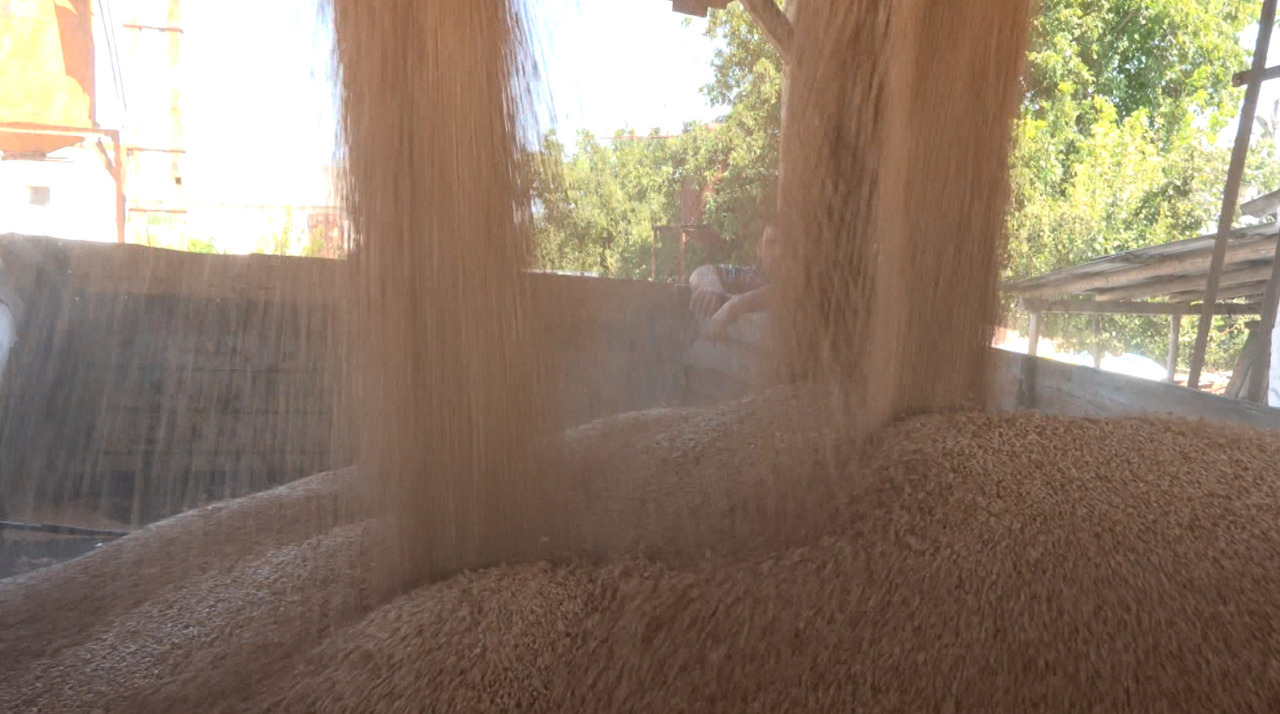
Moldova’s grain exports are being hurt by fluctuating prices and regional instability.

While this year's wheat and rapeseed harvests were better for farmers, exports are more profitable due to volume rather than price, which is only slightly up on last year.
Despite abundant early harvests—rapeseed, wheat, barley, and peas—farmers say that low sale prices are barely covering their production costs.
Nicolae Apărece, a farmer from Giurgiulești, says his wheat production was better than last year, at around 3 tonnes per hectare, and prices are a little higher. He adds that farmers in the south have the advantage of being close to the port, which means lower transport costs.
"The only advantage is in southern Moldova," the farmer says. "Setting aside the climate, which is more difficult in the south than the north, we have one small price advantage: access to the port. The port is close, so transport costs are very low."
Wheat currently sells for about 3.20 lei/kg in the north of the country, 3.30 lei/kg in the central region, and around 3.60 lei/kg in Giurgiulești – the main export hub. According to Ion Cornea of an export company, prices are only slightly higher than last year. He says market trends are heavily influenced by the volumes and stocks of countries like Russia, Ukraine, and France, with the war in the region creating uncertainty for foreign buyers.
Storing grain also involves additional costs, says Ion Cernea, which is why many farmers prefer to sell immediately after the harvest.
"Prices usually rise in the autumn or winter when farmers store their grain," he says. "But storage comes with additional costs—for maintenance and bringing it up to necessary standards. It's natural, therefore, for prices in December and January to be higher than they are now."
Transport costs are a problem, especially for farmers in the north. The lack of a functional railway infrastructure—a much cheaper solution—and modern facilities like elevators forces producers to depend almost exclusively on road and sea transport, explains Mr Cornea.
"Trucks are efficient over short distances, from the farm to the elevator," explains Ion Cernea. "But when transport is needed directly for export, problems arise: long waiting times at customs (3-4 days), blocked trucks, and a lack of other available vehicles. This is where trains could take on the long-distance role, for example from the elevator to Giurgiulești, becoming an efficient and serious alternative."
He also spoke of the limited and outdated grain export wagons from the state railway company.
"The grain wagon fleet has not been renewed since independence," he adds, "and many are worn out and unusable. The remaining wagons are insufficient for existing demand, limiting transport capacity. Another problem is the track gauge difference: Moldovan lines are the Soviet type, while in Romania, they are the European type. This means goods must be transshipped at the border or the wagons' bogies must be changed, which involves additional time and costs. These delays can even affect grain quality and reduce profitability, sometimes making the operation inefficient."
The acting head of Moldova's Railway, Sergiu Cotelnic, told Radio Moldova that there are no short-term plans to modernise trains, wagons, or the railway infrastructure. He says the priority is debt payment and reorganising the institution.
Agricultural expert Iurie Rija says naval transport has now become the main channel for exports, accounting for around 70% of grain exports in the first half of 2025, over half a million tonnes. This is a shift from 2021, when road transport dominated. Rail transport accounts for only 4%. Without urgent investment in railway infrastructure and better logistical connections, Moldova’s grain exports remain vulnerable to geopolitical blockages and climate risks, he warns.
Translation by Iurie Tataru