Moldova police warn of Russian-backed destabilisation efforts ahead of elections
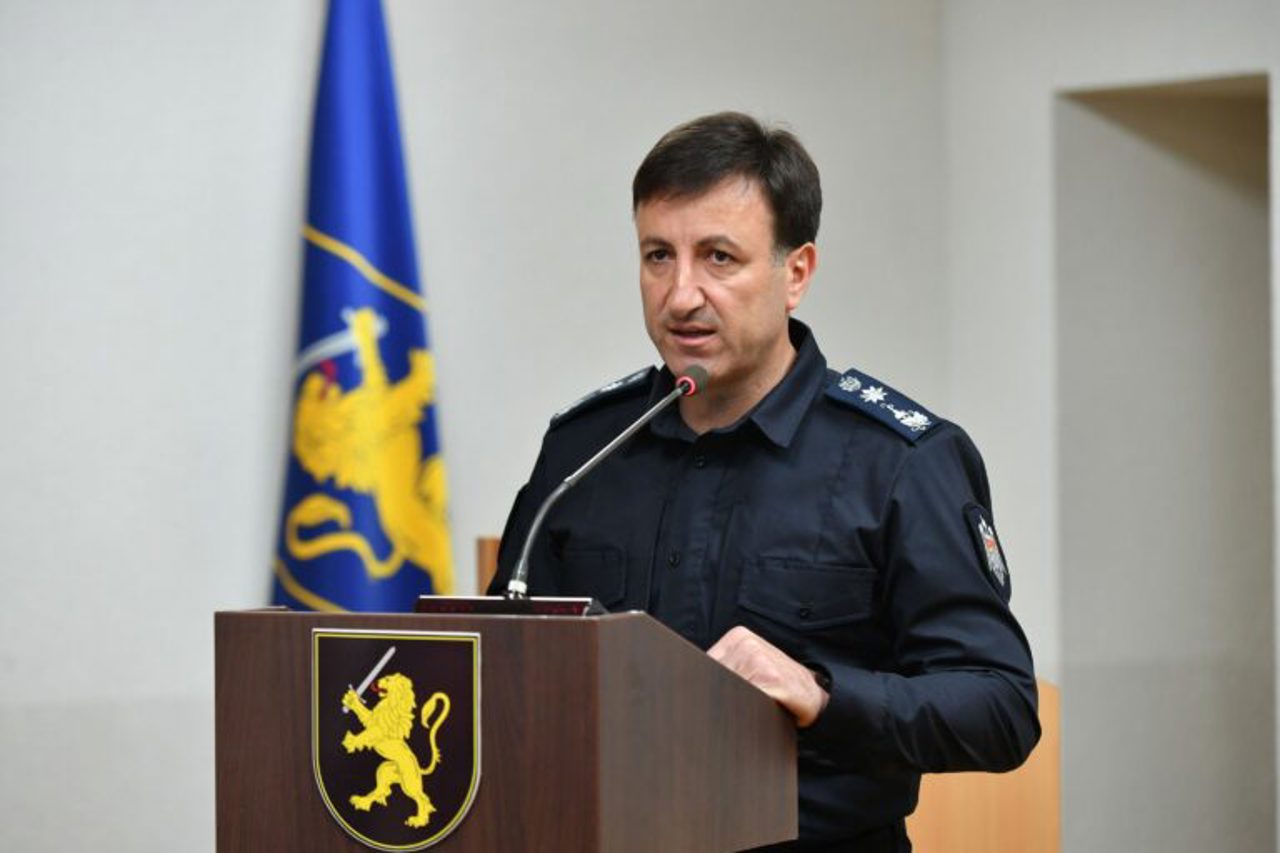
Moldova's police chief has warned of "destabilisation efforts" targeting the country's democratic processes ahead of parliamentary elections.
Viorel Cernăuțeanu, the head of the General Police Inspectorate (GPI), stated the actions were not isolated and went beyond simple voter bribery, forming part of a complex scheme supported by Russia.
He added that the efforts included "disinformation, destabilisation, and mass unrest," which were being handled separately by law enforcement.
Mr Cernăuțeanu explained that the investigation was a collective effort, based on collaboration between state institutions. "We're working shoulder to shoulder under the guidance of the Prosecutor's Office, along with the National Anti-Corruption Center, the Information and Security Service, and the State Tax Service," he said. The Service for the Prevention and Combating of Money Laundering is also playing a crucial role, he added. While some operations are visible to the public, he said they were part of complex investigations involving surveillance, wiretapping, and tracking financial flows on online platforms.
One of the main threats is the illegal financing of election campaigns. Last September, police documented transfers of around $39m intended for voter bribery.
The cost of a vote has reportedly increased from 5,000 to 15,000 rubles.
Recent investigations, including those by the newspaper Ziarul de Gardă, reveal that the primary objective is the mass creation of TikTok accounts for manipulation and disinformation. According to the police chief, approximately 80% of disinformation materials are generated with the help of artificial intelligence.
In response, the police have a direct point of contact with TikTok to quickly remove illegal content. However, difficulties remain with Telegram, which has not responded to authorities' requests.
Hundreds or even thousands of disinformation videos are identified daily, including some that promote war propaganda, recruitment for armed conflicts, and child or drug trafficking, the GPI head said.
Asked about the raids conducted this week, he specified they were part of a criminal case handled by the National Anti-Corruption Center concerning illegal financing and electoral corruption.
Mr Cernăuțeanu rejected accusations from Irina Vlah, who claimed the arrests of her party members were a result of their criticism of the government.
"The criminal case is about financing and corruption, not attempts to undermine state institutions," said Mr Cernăuțeanu.
According to him, phone intercepts show discussions about money being distributed among party members, including a candidate at the top of the electoral list.
He added that money for voter bribery is reaching Moldova through increasingly sophisticated methods, with direct links to the PSB in Moscow (the Russian bank Promsvyazbank). The funds are transferred online, converted into cryptocurrency, and then into US dollars and Moldovan lei, distributed by intermediaries. Traditional methods like cash smuggling and inflated contracts are also being used.
Mr Cernăuțeanu urged citizens not to get involved in such actions: "Anyone who comes forward and reports these crimes will be exempt from punishment. It's better to use the money for their families than to spend it on fines."
Translation by Iurie Tataru