Moldova's EU path: Accession negotiations move to technical phase
Moldova's EU accession talks are set to enter the technical phase after the completion of a legislative review.
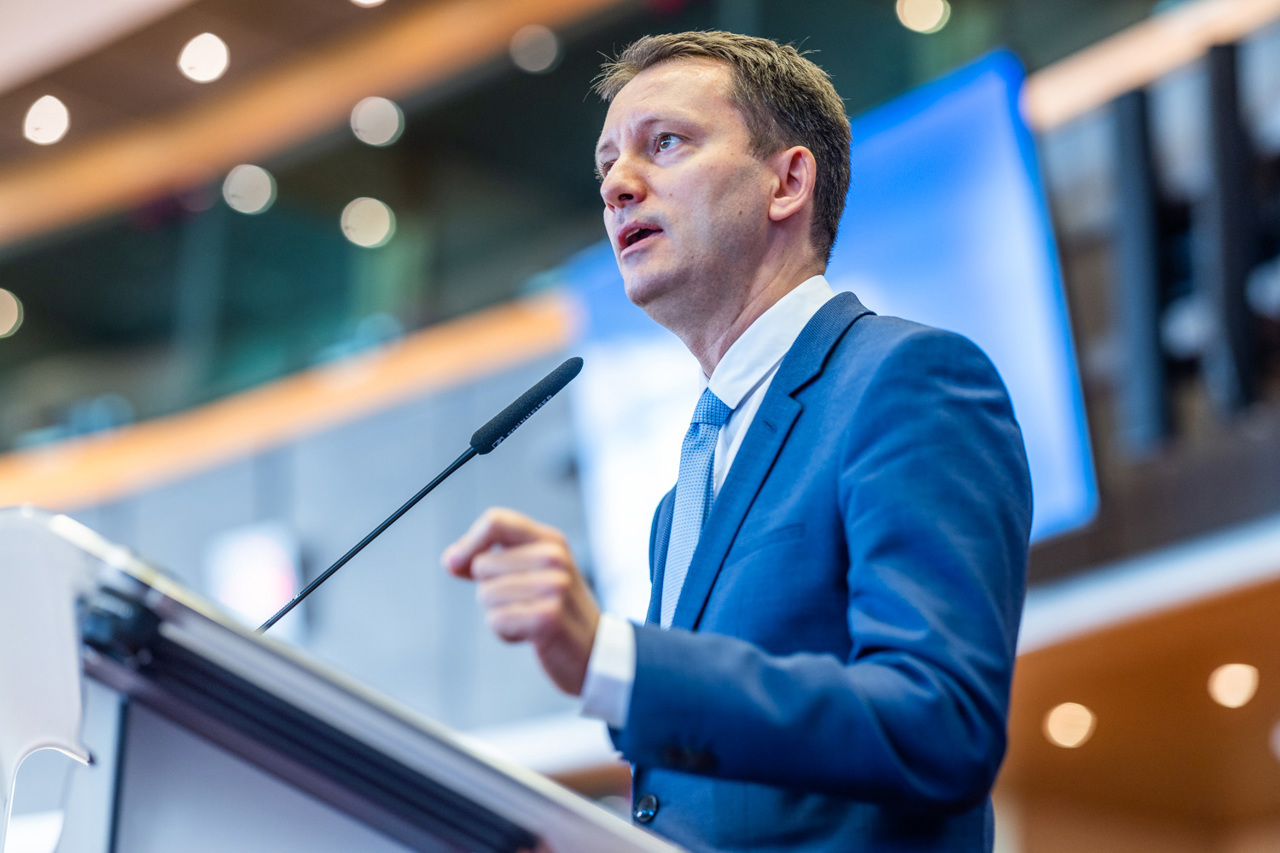
The announcement was made by Romanian MEP Siegfried Mureșan on Radio Moldova's "360 Degrees" show. He said Chișinău's European path has accelerated at an unprecedented rate in the past three years.
"A review of legislation across various chapters has been completed, with technical discussions on so-called 'clusters' to begin very soon," Mr. Mureșan said. "In just three years, Moldova submitted its application, was granted candidate status, and member states unanimously voted to open talks."
According to Mr. Mureșan, EU integration has already brought tangible benefits to Moldova: the synchronisation of its electrical grids with the EU and Ukraine, participation in the common gas purchasing platform, integration into major infrastructure projects, and €45m in financial support to secure its border. The country has also been included in the "Digital Europe" programme, receiving €7.5m for digital modernisation, with roaming fees to be completely eliminated from 1 January 2026.
Another important step is the implementation of the €1.9bn European growth plan, adopted earlier this year.
"Moldova has already received a pre-financing of €270m in July and a first installment of €19m in recent weeks," Mr. Mureșan specified. "Over the next three years, the funds can be used for the construction of hospitals, schools, roads, and energy interconnections with the European Union via Romania."
Overwhelming support from European Parliament
Mr. Mureșan also commented on a European Parliament resolution, passed with a 75% majority on 10 September, which calls for accelerating Moldova's EU integration.
"All the major steps in recent years—from the granting of candidate status to the increase in pre-financing—were initially requested by the European Parliament and later backed by member states," he explained. "Last week's resolution is an extremely strong signal, not only to the citizens of Moldova but also to all European institutions."
The MEP further said the document reaffirms support for accelerating talks, consolidating financial and technical aid, and counteracting external interference.
"It is a firm message against the Russian Federation and a call for more support from member states and the European Commission," Mr. Mureșan concluded.
Moldova and Ukraine's joint path to the EU
On Radio Moldova, Mr. Mureșan also commented on the possible scenario of the "decoupling" of Moldova from Ukraine in the EU integration process, after President Volodymyr Zelensky warned that such a separation would be "a very bad move."
The official said the two countries are currently on a shared European path, which represents a mutual advantage.
"Moldova and Ukraine started on the path of European integration together, and it's good that they started together," he explained. "For each country, it's important that the other also makes progress. Ukraine is a large and important neighbour for Moldova, and the faster it reforms, the better for Chișinău. Likewise, it's important for Ukraine to have a stable and pro-European Moldova to its west."
However, he pointed out there is no "guarantee of accession through alliance" and that integration will only happen when each country fulfills the conditions required by the EU.
"If Ukraine meets the conditions and Moldova does not, then Ukraine will accede alone. Likewise, if Moldova implements its reforms faster, it could accede before Ukraine," he stated. "There are no shortcuts; the only way is to implement reforms and respect all the criteria."
He also pointed out that Moldova, being a smaller country with fewer structural problems, has the chance to make rapid progress in the coming years if led by a pro-European government. In contrast, Ukraine faces additional difficulties due to the war, which could slow the reform process.
Asked about Hungary’s opposition to starting accession talks with Ukraine, Mr. Mureșan said while Budapest had not opposed Moldova, its blockage indirectly affected Chișinău by delaying the official launch of technical talks.
"Hungary wants to postpone the start of talks for Ukraine, and this has also delayed the moment for Moldova," he explained. "However, the period was used constructively for preparations: legislative harmonisation, evaluation of differences, and contacts with the European Commission. Thus, when the talks actually begin, they will advance more quickly."
He added that the situation could evolve after the parliamentary elections in Hungary next spring, where the pro-European opposition is currently ahead of Prime Minister Viktor Orbán's party.
"If a pro-European government comes into power, both Moldova and Ukraine will have even stronger support in Budapest," Mr. Mureșan concluded.
Investors await elections
The European Commission recently launched an investment call for companies from the EU and Moldova, aimed at stimulating economic development by attracting private capital. Mr. Mureșan affirmed that only private investments can generate jobs and sustainable growth.
"Public funds are limited. There is a need for private investments, for investors to come and build, create jobs, and foster development," Mr. Mureșan said. "Through European programmes, these investments are supported and even guaranteed. If investors incur losses, the EU will cover part of them to encourage risk-taking."
The MEP acknowledged that foreign investors have remained hesitant in recent years due to the lack of a clear guarantee on Moldova's European path, persistent problems in the justice system, underdeveloped infrastructure, and security risks from the war in the region.
"Many business leaders are waiting for the outcome of the 28 September elections," he emphasised. "If Moldova has a stable pro-European government for the next four years, investor confidence will increase. A stronger justice system, modernised infrastructure, and a safer country will mean additional reasons to invest."
The official expressed confidence that once the pro-European direction is confirmed and reforms in justice and infrastructure continue, Moldova will succeed in attracting significant investments in the coming years.
Translation by Iurie Tataru