Moldova's farm infrastructure key to EU membership bid
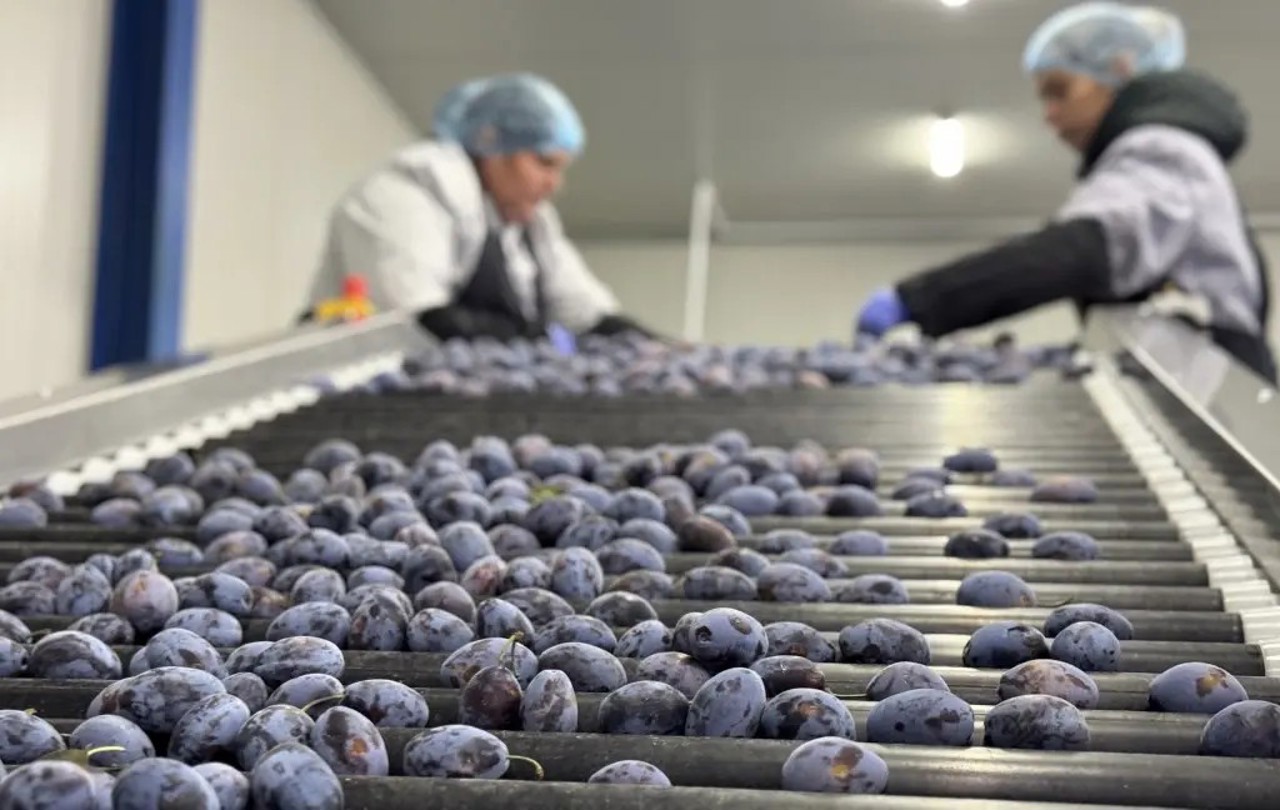
Improving post-harvest infrastructure is one of the priorities for the Ministry of Agriculture and Food Industry.
Such investments are seen as vital for the global competitiveness of Moldovan produce and for the wider national economy, Secretary of State Andrian Digolean told the national broadcaster, Moldova 1.
"Hundreds of thousands of people work in agriculture. They must be encouraged to remain in their villages to revitalise rural communities. We can only achieve this through highly efficient farming that ensures food security and economic benefits," Mr Digolean said.
The infrastructure upgrade has long been a challenge due to the high costs, Mr Digolean admitted.
"However, recent success stories show that producer associations can generate impressive results," he added.
In Bucovăț village, Strășeni district, several entrepreneurs partnered last year to build a high-efficiency cherry sorting and packaging line worth over $1m.
"A German trader, a producer, and a cherry exporter built the line," he said, calling it "the most advanced in Moldova."
Also in Ungheni, the association "Berries Group," which brings together 12 strawberry producers, invested in cold storage facilities to reduce post-harvest losses.
Losses can be significantly reduced
"Product degradation immediately after harvest causes losses of up to 10-15%. With adequate pre-cooling and storage systems, losses are reduced to 3-5%, and the quality and visual appearance are maintained for up to six months," explained Mr Digolean.
Refrigeration systems allow producers to store their produce until market prices become more attractive.
"A kilogram of plums sold straight from the field during peak season will fetch 5 lei. When we cool it, package it, and sell it in winter or two or three months later, the price is 9–12 lei. The difference is obvious," he underscored.
The path to European standards
Modernising agricultural infrastructure directly aids Moldova's bid to join the European Union, where requirements for product quality and labelling are strict.
"As a candidate for EU membership, it is essential to prepare farmers to compete in the European market. They increasingly understand that only in the European Union can they benefit from stability and predictability in the agricultural business," Mr Digolean emphasised.
Moldova is currently harmonising its agricultural legislation.
"All legislative harmonisation work is closely aligned with the private sector. Associations are consulted, their opinions are heard, and no hasty steps are taken," he said.
Countries like The Netherlands and Poland are success models in modern agriculture.
"The Netherlands is pioneering vertical farming and investing heavily in digitalisation. Crucially, they also invest in science and the development of micropropagation laboratories. We are strong in horticulture overall," Mr Digolean specified.
Co-operation is the key
The Secretary of State highlighted the importance of co-operation among the public sector, the private sector, and international partners.
"The Ministry of Agriculture creates policies and national development programmes. The private sector provides the know-how, funding, and expertise to implement these techniques. We also have international partners. Everyone contributes their best, and by co-operating, I believe we will succeed." "I have a piece of advice that I always repeat: if one candle lights another candle, the first one is not extinguished. Thus, co-operation and association—among farmers, the public sector, and donors—is crucial," he stressed.
Mr Digolean reiterated that agriculture remains a strategic sector of the national economy.
"Of course, the IT sector is important for the GDP, but only 12,000 people work there. In agriculture, however, hundreds of thousands of people work—and the vitality of our villages depends on the success of this sector," the official concluded.
Translation by Iurie Tataru