TUX platform investment rumors debunked

The National Financial Market Commission (CNPF) is not involved in any initiatives regarding the recovery of investments made through the TUX platform. The institution asserts that any claims about the start of the investment return process are false.
"There is false information circulating on social networks about the supposed cessation of TUX's activities and claims regarding the possibility of returning investments. These misleading messages also allege that certain international organizations are collaborating with the CNPF to facilitate the return of funds to investors. This is not true! The CNPF does not participate in, nor does it have any connection with, such recommendations, initiatives, or organizations related to the return of funds associated with TUX," reads a press release from the institution.
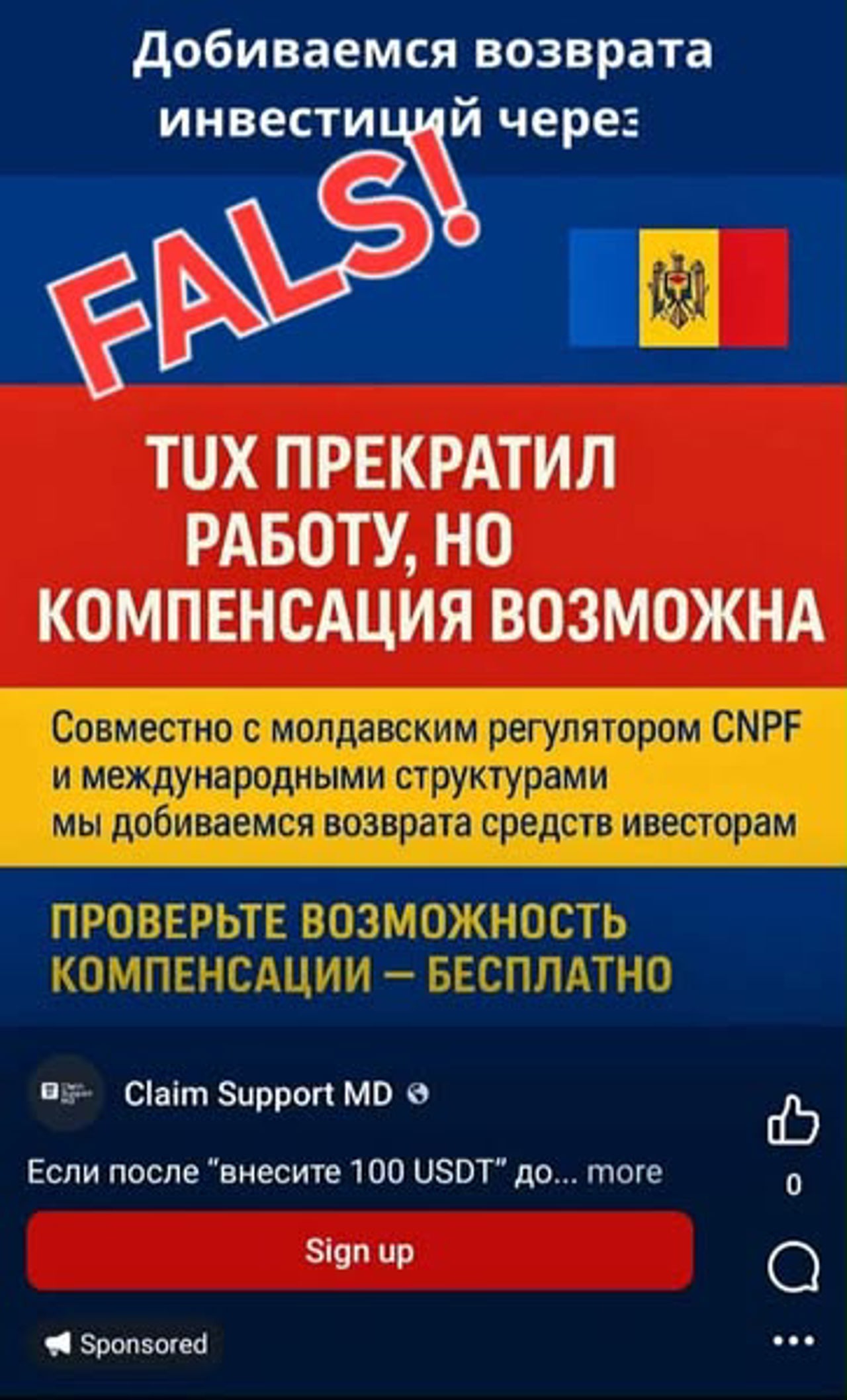
The CNPF urges citizens not to believe such messages, to avoid accessing the links, and to refrain from distributing the respective content to prevent becoming victims of fraud.
The authorities recommend that people always verify the sources of information and report suspicious messages to the competent institutions.
For further clarifications, citizens can contact the CNPF representatives at 0 22 85 95 95 or at the e-mail address [email protected].
We remind you that the TUX platform, which promised earnings of up to 4% per day and attracted tens of thousands of Moldovans, is the subject of a criminal case due to reasonable suspicions of bank fraud.
Recovering money lost in such pyramid schemes is extremely difficult, say the authorities.
TUX operated according to the model of a classic pyramid scheme: users invested small amounts and were initially allowed to withdraw some income to gain their trust. Later, payments were suspended, accounts were frozen, and participants began to receive messages asking them to pay a $100 "activation fee" to keep their accounts functional.
The government of the Republic of Moldova warned citizens that investment offers that promise quick and exaggerated earnings are, as a rule, scams. Authorities recommended that people exercise caution and not be fooled by scammers.