PAS candidate for Prime Minister: Transnistrian reintegration possible via economic measures
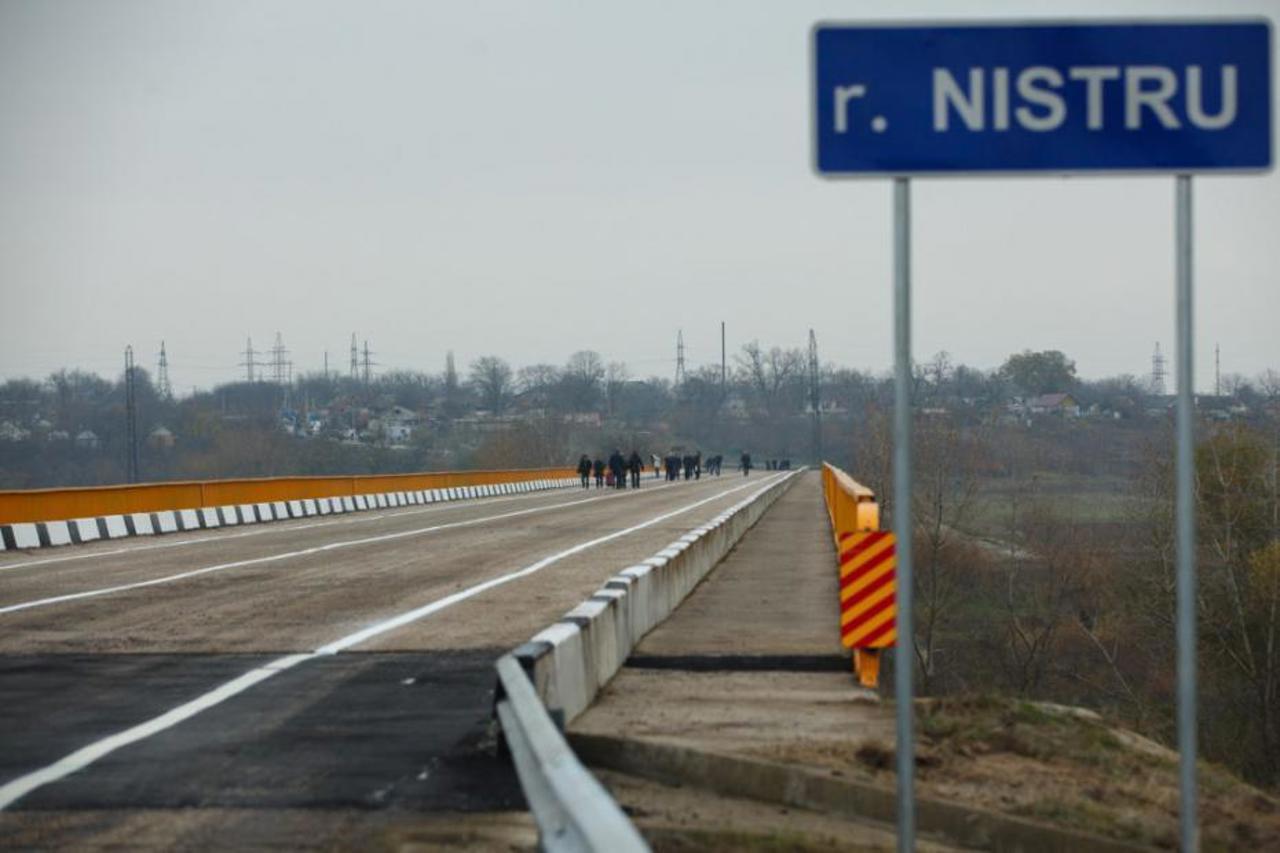
The reintegration of the Transnistrian region is possible peacefully, through economic mechanisms, claims Alexandru Munteanu, the candidate of the Action and Solidarity Party (PAS) for the position of Prime Minister. According to him, diplomatic efforts, combined with economic benefits, will ultimately contribute to the state's reunification. However, experts believe that the process cannot be achieved only through financial measures, because one of the main obstacles to the reintegration of the state is the illegal stationing of Russian troops on the left bank of the Nistru.
The reintegration of the Transnistrian region will be a top priority for the future executive branch, and this can be achieved through economic measures. This is the assertion made by Alexandru Munteanu, the Action and Solidarity Party candidate for Prime Minister. In a broadcast on TV8, he emphasized that during his more than 20 years of traveling between Chisinau and Kiev, he has passed through the Transnistrian region and witnessed the gradual decline of its economic and social conditions.
It is precisely this regression that would create a favorable framework for the rapprochement of the separatist region with Chisinau.
"We start from the premise that the Transnistrian region is part of the Republic of Moldova. Our citizens live there and, of course, the issue of reintegration is a priority for the Government. (...) We just need to understand what reintegration will consist of. Now we have the opportunity to integrate this part of the Republic of Moldova economically. No one is considering any military operation, this is not a constructive approach", declared Munteanu.
Before economically reintegrating the region, the authorities should insist more firmly on the complete withdrawal of the Russian Army from the left bank of the Nistru, according to security policy expert Stefan Bejan, who commented for Teleradio-Moldova.
"First of all, we must do everything possible for this army to leave. And, subsequently, a more attractive market and higher salaries, like in Chisinau, can be an additional argument for those in the Transnistrian region to want to be with us. We saw how the gas crisis, which occurred last year, did not radically change the feelings in the Transnistrian region and, somehow, they consider that the Republic of Moldova is also to blame. And the question arises whether economic integration like in Chisinau means, on the one hand, higher salaries and investments, or, on the other hand, fair prices for energy. Are the residents of the left bank of the Nistru ready to pay fair prices for gas and electricity?", asked Bejan.
The expert also notes that many residents of the Transnistrian region already work daily in Chisinau, attracted by higher salaries and visible investments in the capital. However, he believes that the change of mentality on the left bank of the Nistru will be slow and a new approach is needed. According to him, one of the major problems is the limited access to information. He believes that the Chisinau press should be present in the region, to counter local propaganda.
Bejan also emphasized that the integration of the Transnistrian region will be possible only through a combination of political, economic and informational measures.
To change the perspective of the people on the left bank of the Nistru, we need to rethink our approach to the Transnistrian issue. Despite the progress we have made over the past 30 years, or even just the last five, it has not produced the desired results. We must change our strategy. In the negotiations between the two banks of the Nistru, it seems we have not achieved much. Chisinau has made significant concessions, but it has not received proportionately in return. While we have managed to break through the information bubble to some extent via the Internet, our reach remains limited. As long as the information is primarily provided to the people on the left bank of the Nistru by official sources, it will only convey what is needed rather than what is true," emphasized Ștefan Bejan.
We mention that in the Transnistrian region, since the end of 2024, a state of emergency in the economy has been established and repeatedly extended. After the reduction of financial support from Russia and the restriction of gas supplies, industrial production has decreased by over 40 percent, and sectors such as metallurgy, energy and the chemical industry have recorded collapses of 50–60%. The budget deficit for the current year is estimated at over 130 million euros.
The reintegration process of the Republic of Moldova primarily involves the withdrawal of Russian troops from the country's territory and considerable economic costs to ensure the integration of the Transnistrian region in all areas, President Maia Sandu previously stated on Moldova 1 TV. The head of state noted that, in order to cover the costs of reintegration, Chisinau is holding talks with international partners.