Moldova ends reliance on Russian gas, guarantees security
The former Soviet republic of Moldova says it is no longer reliant on Russian natural gas, having diversified its supply and advanced interconnection projects with neighbouring Romania and the European Union.
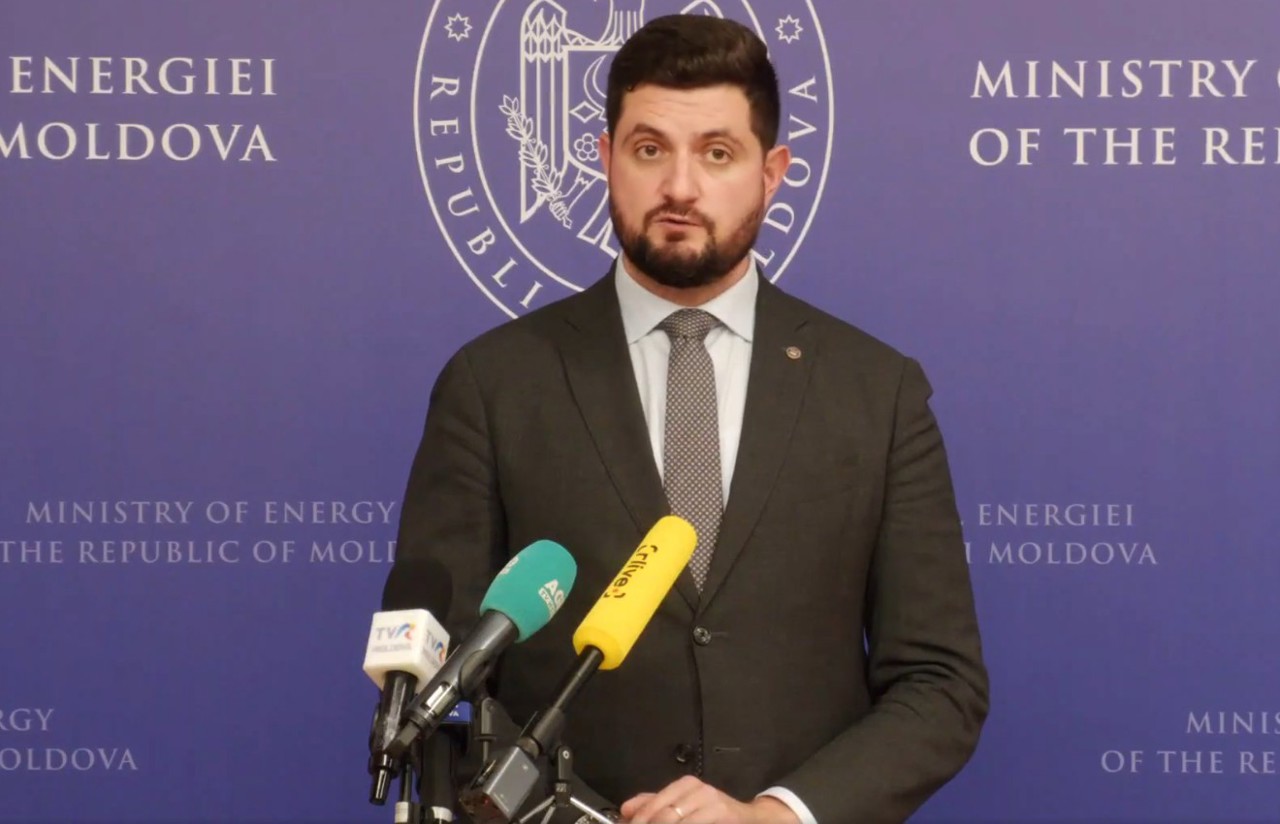
Presenting his activity report, acting Energy Minister Dorin Junghietu said that although gas prices remain the highest in the Balkans, energy security is now guaranteed. He added that the transition to renewable sources is becoming a reality.
Mr Junghietu explained that the region is affected by the war in Ukraine, leading to higher gas prices. "Before reaching Moldova, the gas transits several countries, and the transport costs significantly influence the final price," he said, adding that "even if we see other reference tariffs on the Dutch exchange, they do not automatically apply to our regional market."
Regarding energy infrastructure projects, Mr Junghietu announced that work on the Vulcănești–Chișinău power line is 90% finalized. He emphasized that commissioning this line will not affect the electricity tariff for consumers.
"The commissioning of the line in question has nothing to do with the purchase price of electricity," he pointed out. From the perspective of supply security, Vulcănești–Chișinău will eliminate the current configuration where the line passes through MGRES, a power plant in the breakaway region of Transnistria.
Securing supply and infrastructure
In the same conference, the Minister stressed that Moldova had concluded an essential stage in its energy transformation process.
"If in 2021 we were permanently threatened with gas cut-offs and subjected to energy blackmail, today we can say with certainty that Moldova can no longer be blackmailed," Mr Junghietu stated. "We have a free market, multiple sources, and reliable European partners."
Moldova is currently supplied from over ten gas sources, mainly via Romania – its principal energy partner. The state-owned company Energocom purchases gas both from European exchanges and through long-term contracts.
Furthermore, the Iași–Ungheni–Chișinău gas pipeline is now operational, and the country has joined the Vertical Gas Corridor (Greece – Bulgaria – Romania – Moldova – Ukraine), which allows access to gas from the Caspian Sea and LNG terminals in Greece.
He noted that since September 2022, the right bank of the Dniester river has not consumed Russian gas, and the breakaway region on the left bank is set to follow suit in January 2025.
Green transition and efficiency
Mr Junghietu called 2025 "the year of the green transition" for Moldova, highlighting a rapid increase in renewable energy production – over 850 MW installed. He recalled that in August 2025, domestic electricity consumption was almost entirely covered by renewable sources for the first time.
The government is also implementing multi-million euro projects for the rehabilitation of schools, hospitals, and residential buildings.
These include:
- The World Bank-financed Sustainable Transition through Energy Efficiency in Moldova (STEEM) Project improves efficiency in 46 schools, benefiting over 46,000 students and teachers.
- The Green Home Program (Casa Verde), which offers grants of up to 70% for the thermal insulation of homes.
- The EcoVoucher Program, supported by the EU and Norway, which has already helped 39,000 households save almost 30 million lei annually on energy bills.
Minister Junghietu concluded that Moldova is on "an irreversible path of energy transformation," building a future "where energy is no longer an instrument of pressure, but a resource for freedom and economic growth."
Translation by Iurie Tataru