Moldova's pace on reforms dictates speed of EU accession chapters
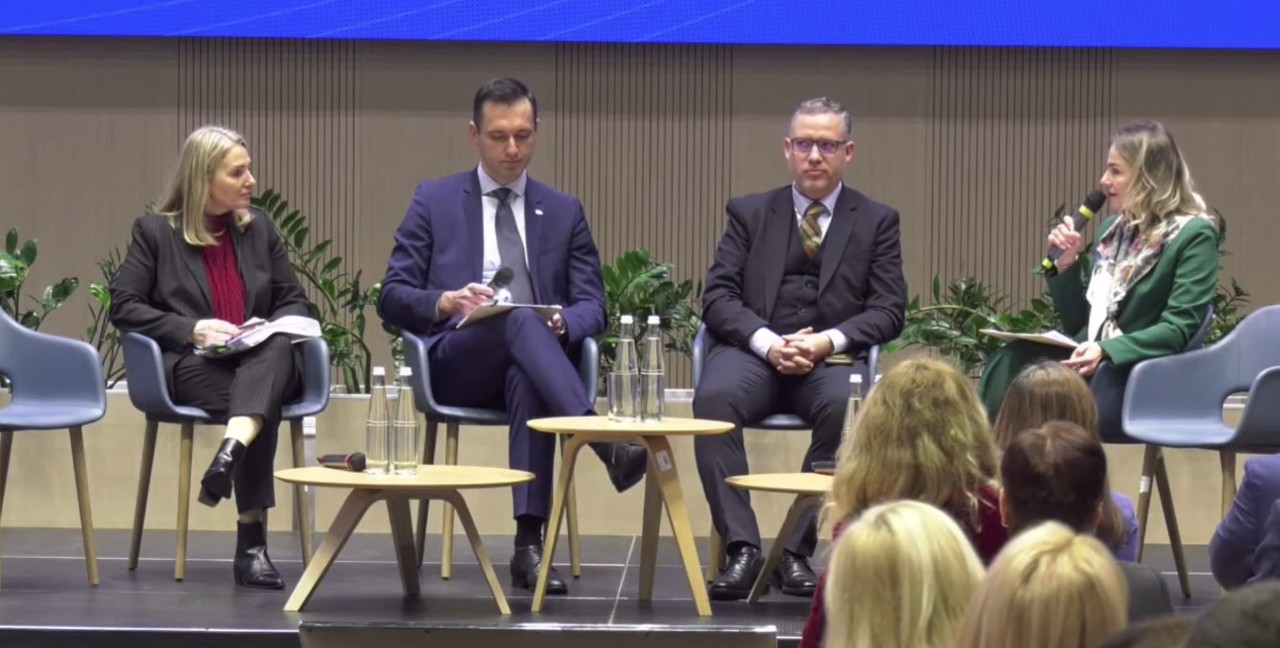
The pace of reforms implemented by the Republic of Moldova will dictate the speed at which it can open and close negotiation chapters with the European Union.
This key message came from Adrienn Király, a director within the European Commission’s DG NEAR, during the presentation panel for the 2025 Enlargement Report in Chișinău on November 11.
The Report confirms that the Moldova EU accession process has achieved a "huge leap," recording the highest growth among all EU candidate countries. The country’s average preparation level now stands at 2.38 points out of 5.The speed of opening and closing negotiation chapters hinges directly on the concrete execution of reforms and the country’s ability to sustain this current trajectory of progress. Ms. Király, who heads a directorate within the Directorate-General for Neighbourhood and Enlargement Negotiations (DG NEAR), elaborated on the Report’s significance, noting it accurately reflects Chișinău’s significant efforts on the EU accession path.
"The Report is crucial for the Commission to gain a deeper understanding of the Republic of Moldova's efforts," Király explained. "It is an absolutely vital document for strategic planning in the coming years, especially given the country's high ambition."According to the European official, the ongoing screening process, conducted in partnership with Moldovan authorities, will directly inform Brussels’ continued support. "We have completed the screening process for the acquis communautaire," the DG NEAR director stated. "This process will guide our next steps, including the Commission's support—be it technical assistance to further align legislation, or financial support across the various acquis chapters where aid is most needed.
"Adrienn Király highlighted that Moldova demonstrates an excellent level of readiness in specific areas. However, she cautioned that advancements in complex sectors, particularly justice, will demand both time and consistent effort. "Some chapters are very complicated. We know which ones you will prioritize, specifically Chapter 23 from Cluster 1, which addresses very intricate areas. We acknowledge that progress here might take longer, yet you have other chapters where your level of preparation is excellent."Concluding her remarks, the DG NEAR representative praised Moldova's significant evolution and congratulated the government for the intensive pace of reforms. "I believe the Republic of Moldova has very clearly demonstrated this progress within the framework of this Enlargement Report. I want to sincerely congratulate you for all the work done," Király affirmed.Republic of Moldova achieved a fourfold greater leap than in 2023Rodica Crudu, the Deputy Secretary General of the Government, presented key findings from the Enlargement Report, emphasizing that "a huge leap was made this year in the level of preparation.
"She underscored that the Republic of Moldova has achieved the highest rate of progress among all EU candidate countries, increasing its preparation level by $+0.39$ points and its rate of progress by $+0.60$. This advancement has positioned it ahead of states with longer EU accession experience.
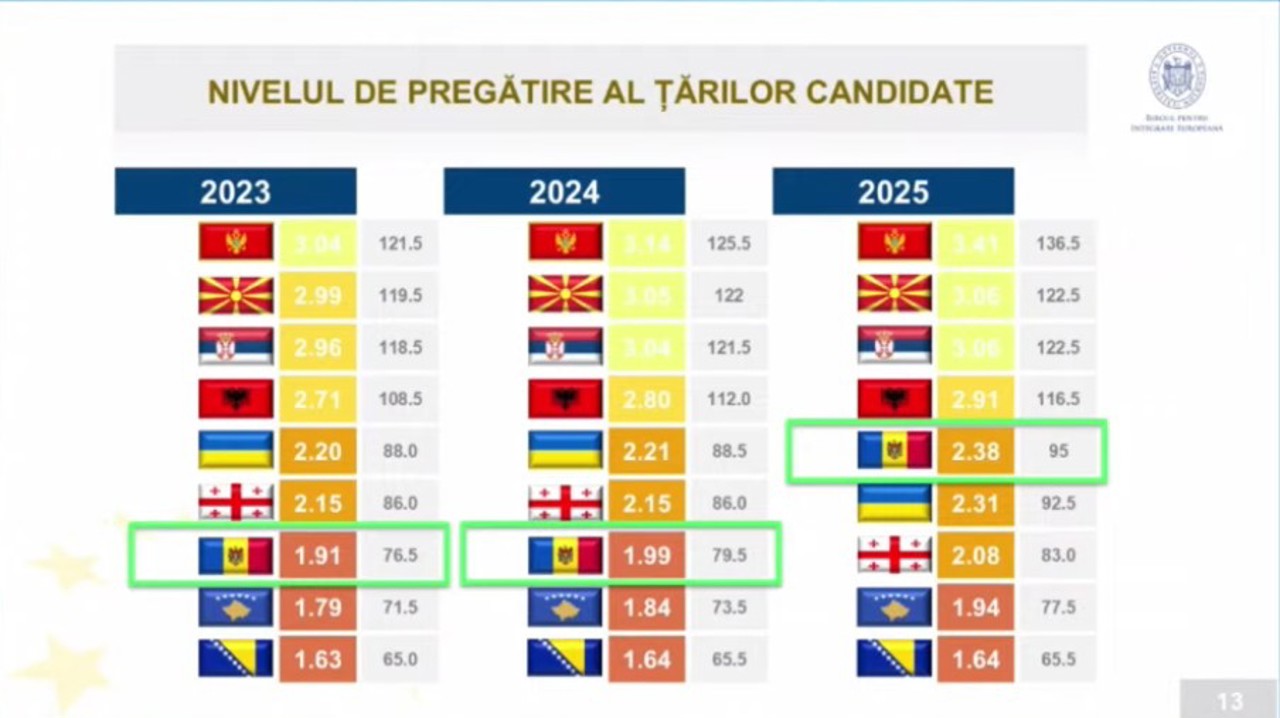
"We climbed in the ranking of EU candidate countries from position 7 in 2023 and 2024 to an average score of 2.38 in 2025. This allowed us to surpass Ukraine and other countries with richer experience," Crudu detailed. "We are halfway there; to successfully close the negotiation chapters, we require Level 5, the advanced level."European integration is a national project, not an isolated effortAlso speaking at the panel was Adrian Ermurachi, co-executive director of the Institute for European Policies and Reforms (IPRE), who stressed the crucial role of civil society. "Civil society and our organizations are not separate actors in European integration. We are all in the same boat," he stated.He noted that NGOs "have participated from day one—from the initial questionnaire stage to the bilateral screening process, and now we stand on the threshold of the negotiations proper.
"Furthermore, civil society representatives reiterated the necessity of active involvement and collaboration with the authorities. "Civil society organizations act as the watchdogs of democracy, monitoring reforms and ensuring the voice of citizens is heard in the decision-making process," commented Sergiu Gurău, national facilitator of the National Platform of the Eastern Partnership Civil Society Forum.
Moldova's progress over the past year toward European integration is detailed in the EU Enlargement Report, which the European Commission approved on November 4. European Commissioner for Enlargement, Marta Kos, specifically highlighted that the Republic of Moldova has recorded the most substantial progress in a single year throughout the entire EU accession process. The country has accelerated its pace and significantly deepened cooperation with the bloc, despite continuous hybrid threats and attempts at internal destabilization.
Translation by Iurie Tataru