Full or partial scholarships for studies in the USA or the UK: how much parents in Moldova need to contribute
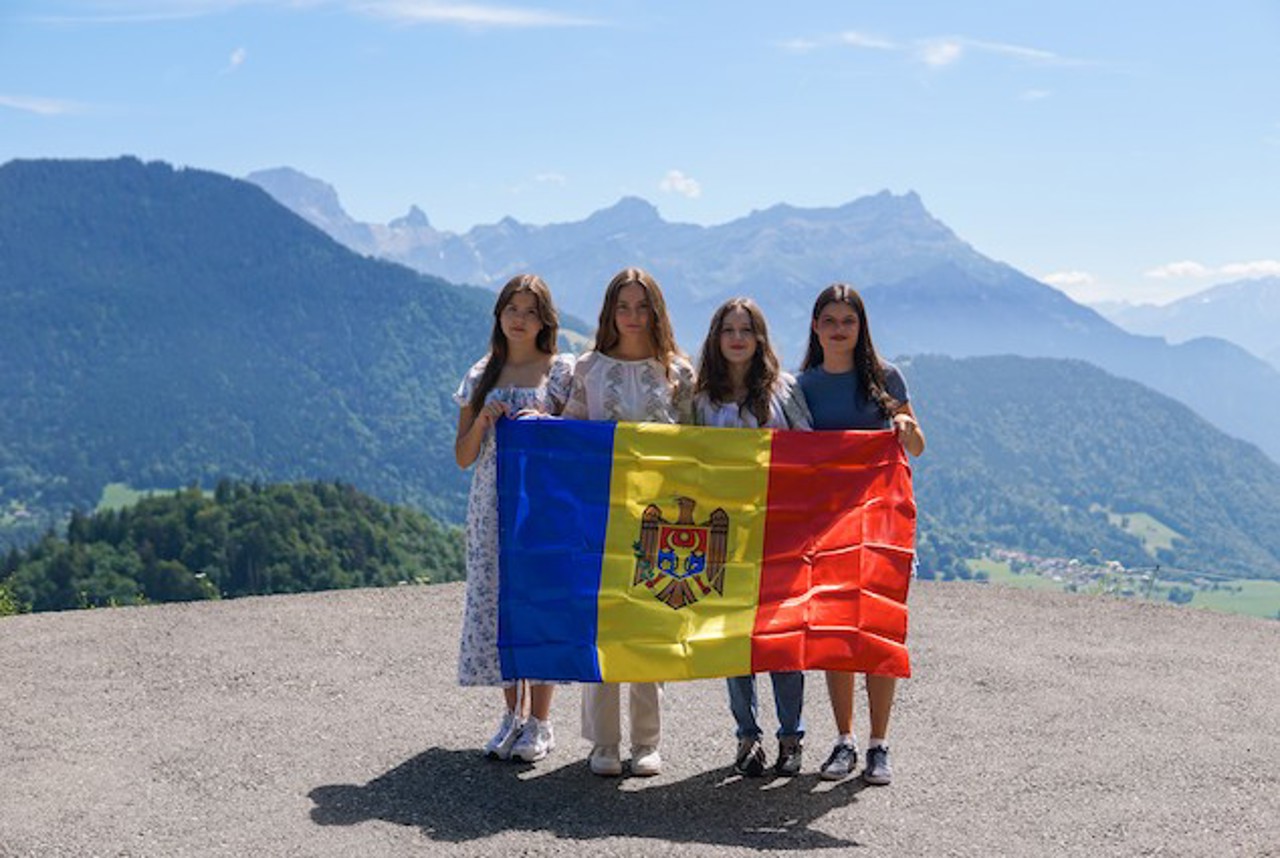
Each year, over 200 students from 20 districts in the Republic of Moldova apply for scholarships to the UK and the USA through the HMC and ASSIST programs. Of those applicants, only 50 to 60 make it to the final stage, and between eight and 15 students are awarded full scholarships annually.
Ala Guțu, president of ISCEO and the official representative of the programs in the Republic of Moldova, states that the scholarships are aimed at middle school and high school students with excellent academic records, with an average grade requirement of at least 8.5.
“The first two basic eligibility criteria are that you must be a student enrolled in a lyceum in the Republic of Moldova, and the eligibility depends on the specific scholarship. In the United States, students in 9th grade are eligible, while in the United Kingdom, students in 10th grade can apply. Students in the 9th grade cannot apply for the UK scholarships because they require two years of study starting in the 10th grade. They want to ensure that middle school is completed first, allowing our students to graduate high school in the UK by studying in the 11th and 12th grades,” Ala Guțu explained during the “Spațiul Public” show on Radio Moldova.
The programs offer full or partial scholarships based on family income.
"For instance, in Great Britain, families earning up to £30,000 per year (approximately 670,000 lei) are eligible for full scholarships. Families earning a net income between £30,000 and £50,000 qualify for partial scholarships. The school typically covers 75% to 80% of the remaining expenses. Parents may have to pay around £7,000 per year (about 155,000 lei) in the United Kingdom. In the U.S., scholarships tend to be more expensive, and our students usually do not opt for partial scholarships. In the United States, a partial scholarship can reach up to $37,000 (approximately 628,000 lei)," Ala Guțu detailed.
The Ministry of Education and Research (MEC) supports several international programs, including FLEX and EU4 Understanding, which provide numerous additional scholarships for Moldovan students.
“If we consider FLEX, a program by American Councils, we offer around 40-50 scholarships annually. Through the EU4 Understanding Program, we have about ten scholarships, in addition to those in the ISCEO program,” said Ludmila Pavlov, Deputy Secretary General of the MEC, during the same show.
After returning to the Republic of Moldova, students' academic studies are automatically recognised by their school or the specialised district directorate, without needing to travel to Chișinău.
“The subjects passed in the country where the program was held are recognized and recorded in the students' personal files. For subjects that were not studied at all, such as Romanian Language or History and Geography, an individual recovery plan will be developed that will last three to four months until the New Year. During this time, the child, together with the subject teacher, will schedule specific recovery sessions,” Ludmila Pavlov explained.
Among last year’s scholarship recipients is Daniela Guțu, a student at the “Ștefan Vodă” Theoretical Lyceum in Ștefan Vodă, who studied at an American school through the ASSIST program.
“The teachers there are very approachable. We have a special connection, especially since the classes are much smaller. The smallest class has three students, and the largest has fifteen, compared to my lyceym where we have at least 25-30 students," Daniela shared.
The teaching and learning methods differ significantly, according to Mariana Gurghiș, the mother of a student who studied abroad.
“It is a fast-paced environment, and they rely heavily on the expectation that you will learn independently at home. Your responsibility is to read and take notes. No one will explain the theoretical parts during lessons,” she mentioned on the public radio station.
For parents, sending their child abroad requires courage and trust.
“A parent meeting is scheduled online, typically after the first two months of studies. There is a specific week or two set aside for this, during which parents can schedule a 10-minute meeting with their child’s teachers. During the meeting, you discuss your child’s progress. It focuses a lot on the psychological aspect rather than just the academic side; the academic progress can be seen in the electronic agenda,” Mariana Gurghiș described her experience.
Interest in scholarships to study abroad is steadily increasing, according to Ala Guțu.
“We usually receive between eight and fifteen scholarships annually. Last year, we awarded 13 scholarships: eight to Great Britain and five to the United States. Each year, more than 20 districts participate, and around 200 children register for the competition. At the final stage, only 50 to 60 children reach the last round since not everyone passes all stages,” the ISCEO president stated on Radio Moldova.
These programs provide students with not only knowledge but also maturity, independence, and a broader perspective of the world, say the organizers.