Moldova relies heavily on imported drugs, AMDM report shows
The Republic of Moldova is heavily dependent on foreign supplies, with imported medicines accounting for over 90% of the market.
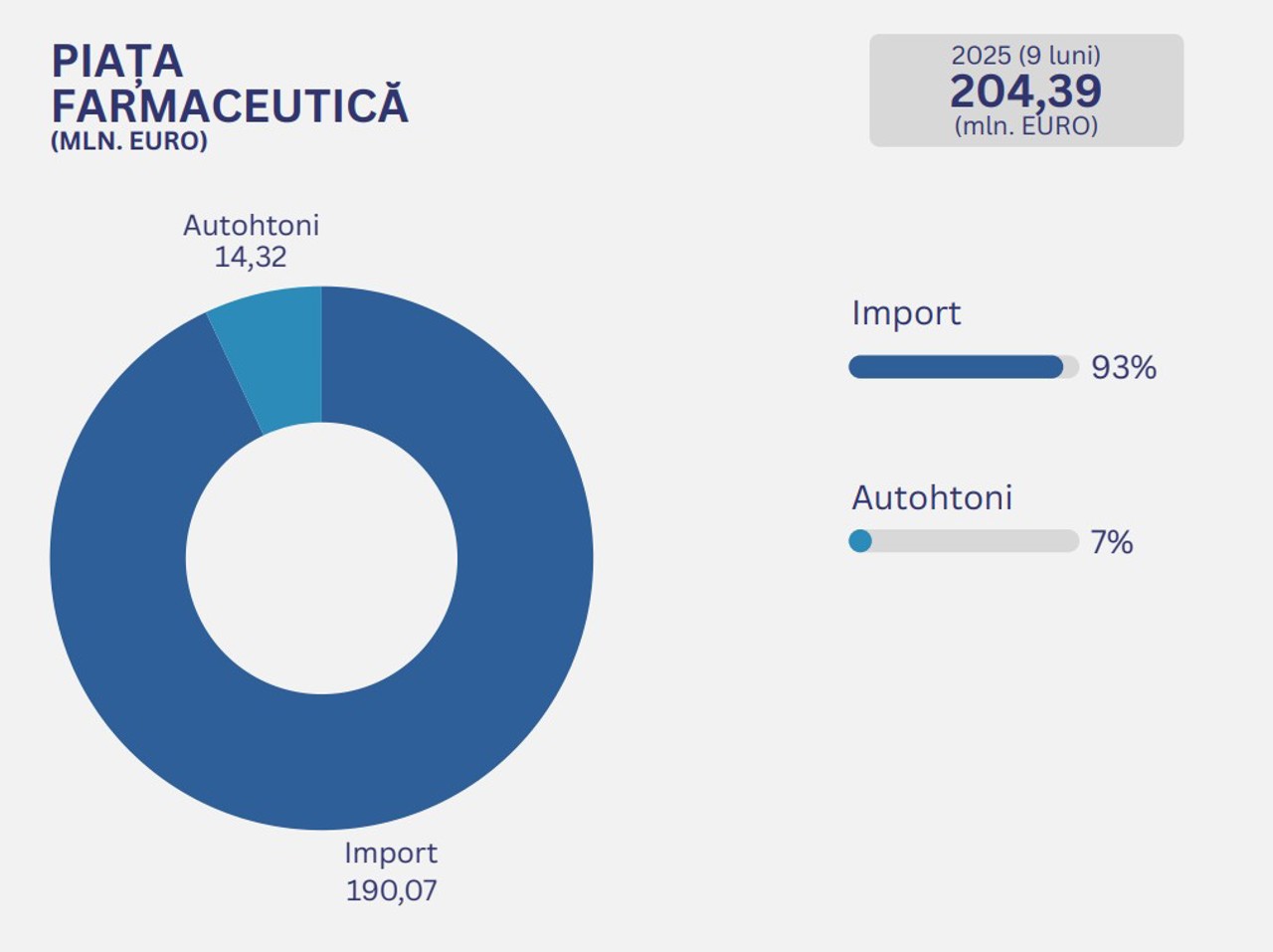
Only 7% of pharmaceutical products are domestically manufactured, according to a recent report by the Agency for Medicines and Medical Devices (AMDM) covering the first nine months of 2025.
Key import sources include European Union member states and Turkey, which has a well-developed pharmaceutical sector.
Imported products make up approximately 93% of the total market value and 85% of the total volume (in units) sold across Moldova's pharmaceutical market.
In contrast, domestic production represents about 7% of the value and 15% of the volume. This segment, however, is showing a positive quantitative trend, signalling the slow consolidation of local manufacturers.
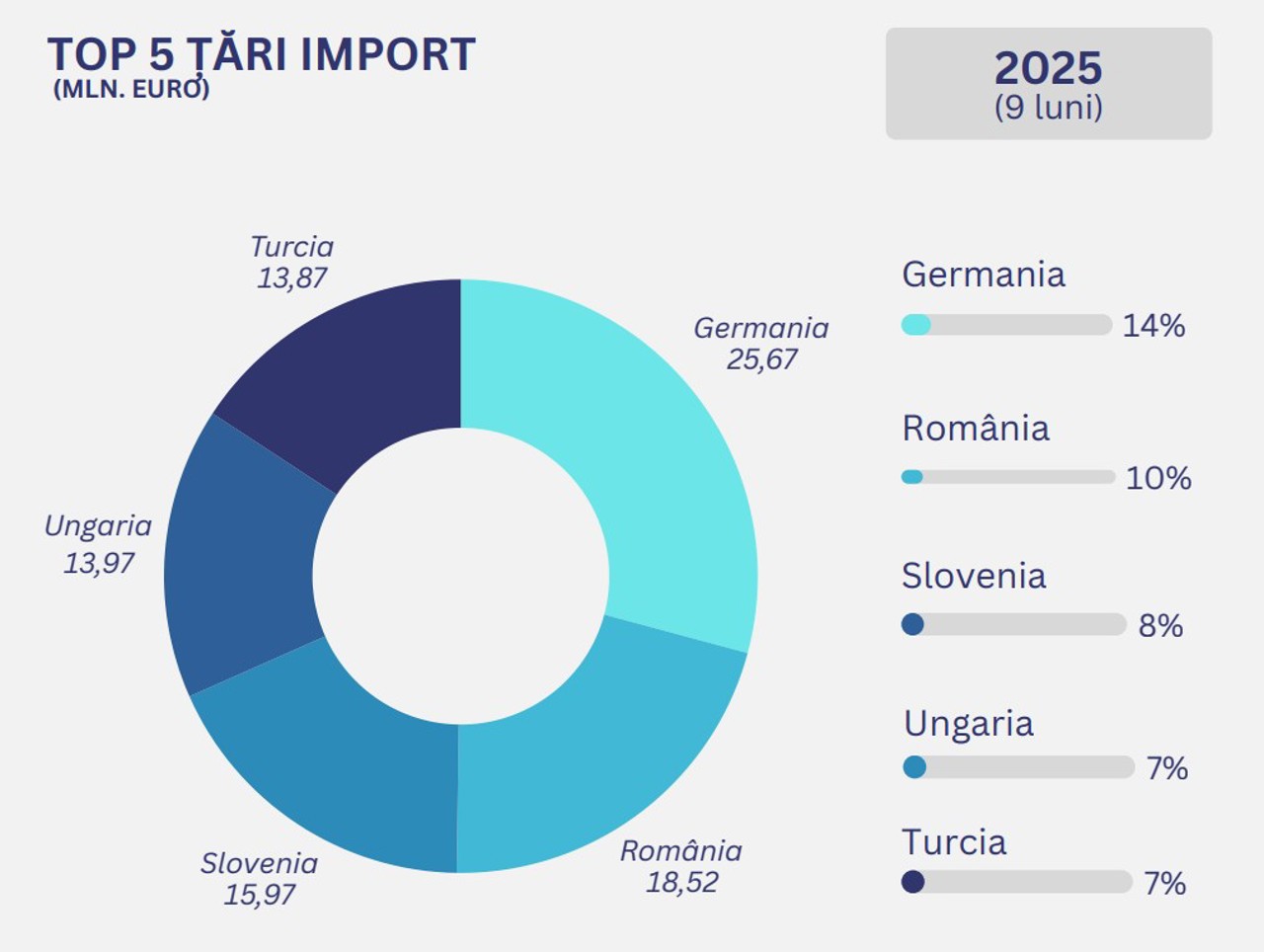
The largest shares of imports originated from Germany (14%), Romania (10%), Slovenia (8%), and both Hungary and Turkey (7% each).
For context, in 2024, 91.6% of medicines were imported, while 8.4% were produced domestically.
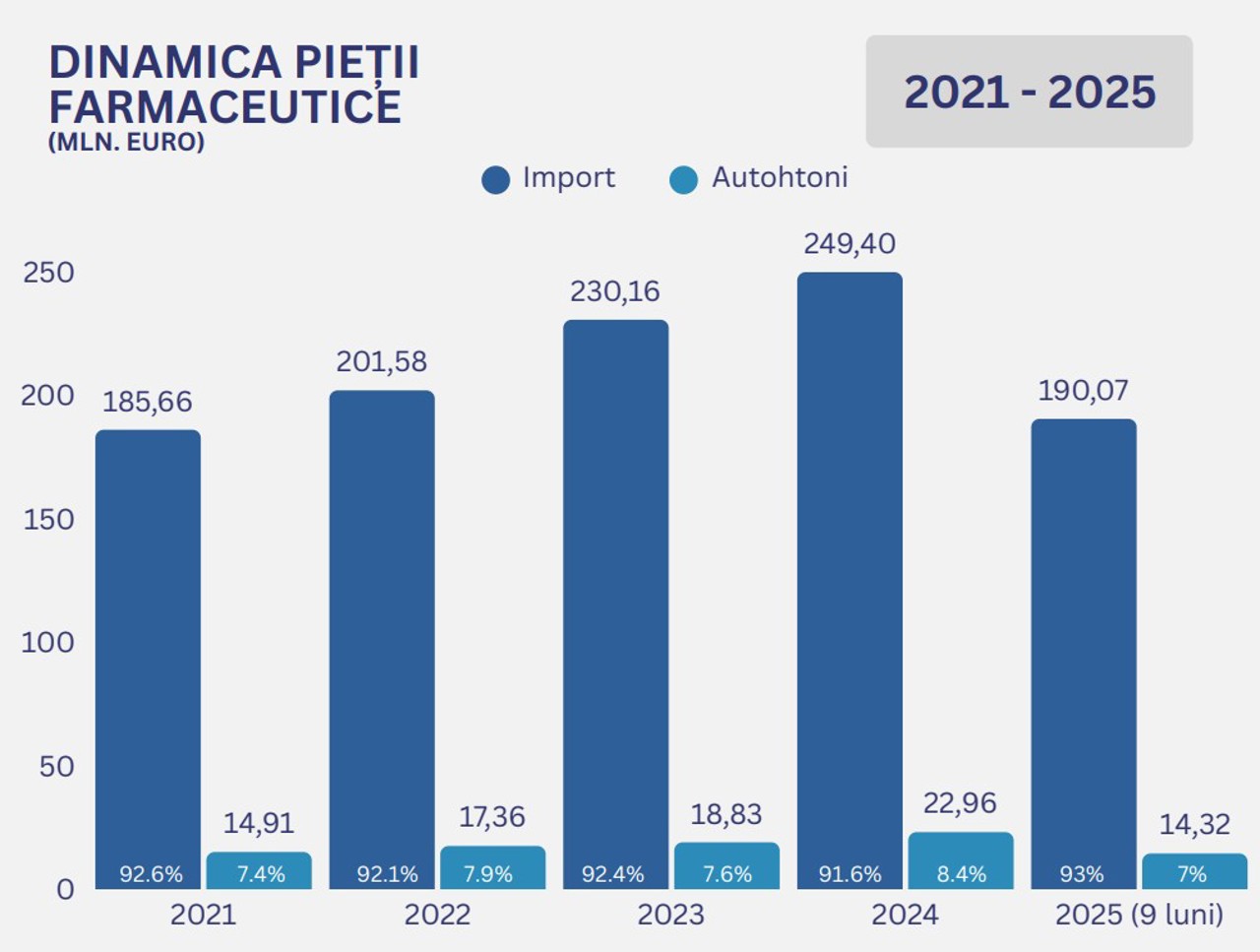
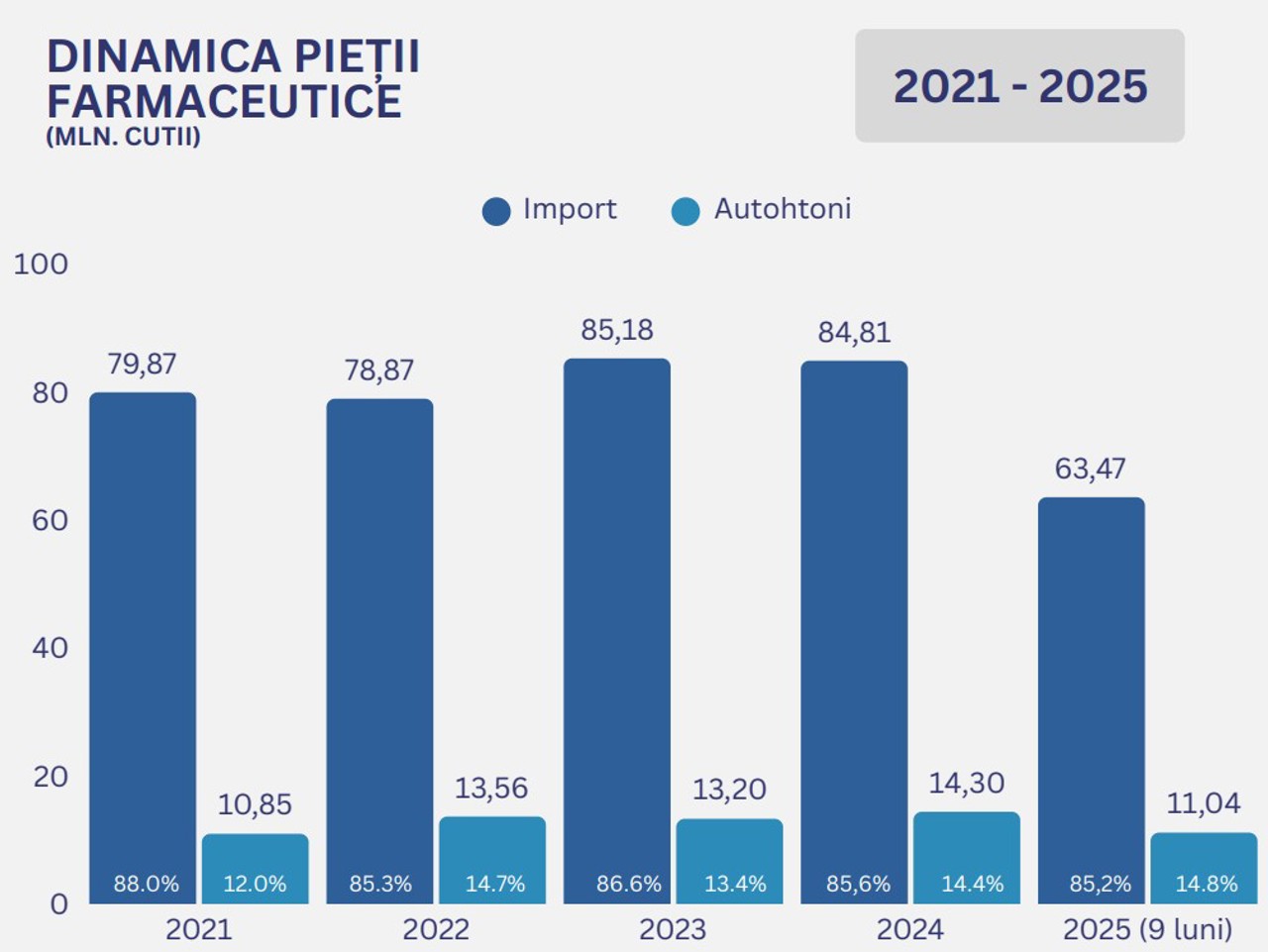
During the January-to-September 2025 period, the overall pharmaceutical market value saw a slight increase of 5.5%, with volume (units) growing by 4.6%.
The AMDM report also noted a shift towards the procurement of treatments for chronic diseases within the top ten International Non-proprietary Names (INN).
Authorities approved a new Law on Medicines earlier this year. This legislation aims to align the national regulatory framework with European Union standards. Its objectives include reducing the drug deficit for essential medicines, attracting external producers, enhancing market competitiveness, and facilitating participation in international clinical studies.
The Ministry of Health has stated that these strategic changes are intended to provide patients with wider access to quality medicines at competitive prices.
Translation by Iurie Tataru