Ilie Ilașcu, political prisoner, betrayed by Moldovan security
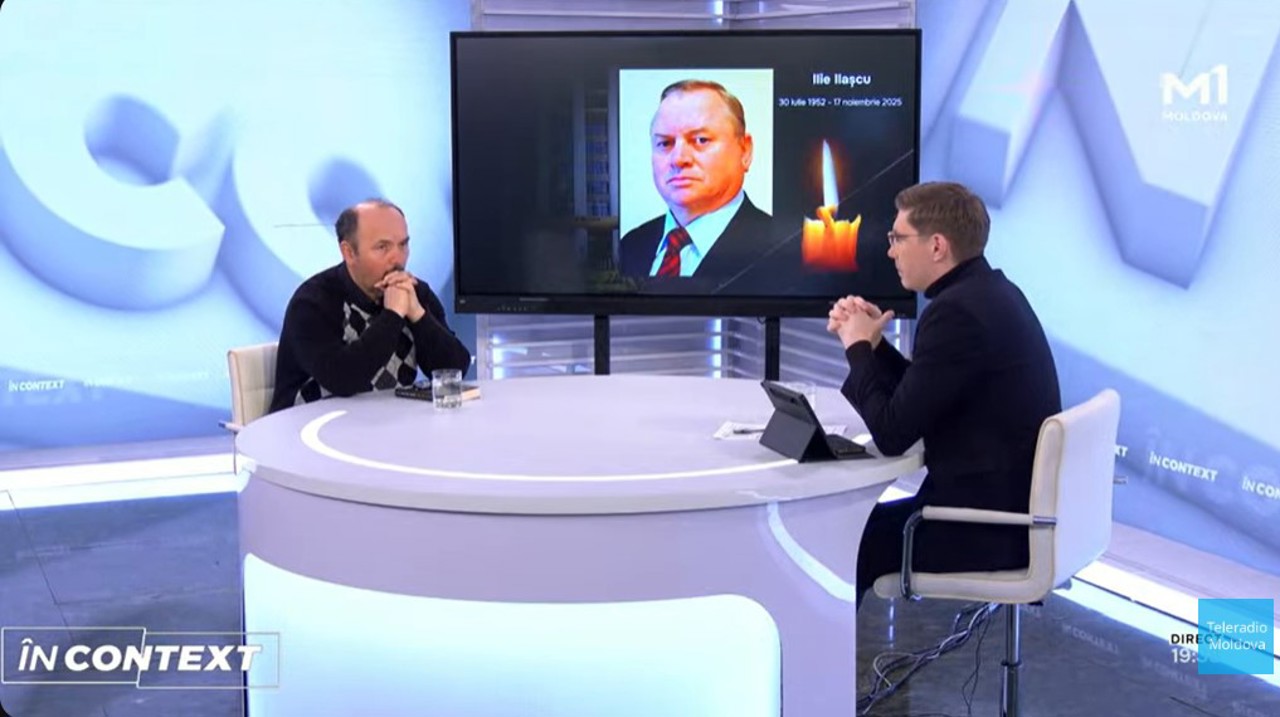
lie Ilașcu was an "unfearing man with a heart of iron, who resisted torture and betrayal," states writer Dumitru Crudu.
According to the publicist, Ilașcu’s unyielding resistance was fueled by the ideal of Romanian re-unification, which kept the Moldovan political prisoner unbowed during his nearly ten years of inhuman detention on the left bank of the Dniester, in Transnistria.
"Ilie Ilașcu was an incredibly strong man; this is evident from all his interviews and from the images of him in prison. He was unfearing and had a heart of iron, resisting torture. He endured because he believed in an idea and was animated by an ideal," Dumitru Crudu declared on the ÎN CONTEXT show on Moldova 1.
Crudu emphasized that the ideal of Romanian re-unification kept him alive for ten years in an "iron cage," a place where only animals are kept. "Remarkably, he managed to keep both his mind sound and his soul pure, and afterwards, to continue his activity," the writer added.
Addressing the circumstances of his 1992 arrest, Dumitru Crudu recalled the issue of betrayal from within the Moldovan security apparatus that "delivered" Ilașcu to the Russian forces.
"It is clear now for everyone that Ilie Ilașcu was effectively handed over; he was betrayed by our own people, our security, and individuals from Chișinău. They furnished the Russian military security agents with all the information about Ilie Ilașcu, allowing them to capture and arrest him in broad daylight," Crudu recounted.
The writer asserts that such subversive actions critically weakened the national resistance.
"Perhaps if he hadn't been betrayed, his destiny would have been completely different. Who betrayed him, why did they betray him, for how many pieces of silver did they sell him? The people who betrayed him were on the payroll of the Russian Federation, working within the Moldovan security apparatus," the publicist explained.
He continued: "It could have been known, it was surely known who betrayed him, as this incident was followed by other betrayals, and other activists of the Popular Front were subsequently arrested."
Dumitru Crudu also stated that Ilașcu's fight was primarily against Russia, "which was arming Tiraspol and was present there with munitions, personnel, and espionage structures." He concluded that Ilașcu's sacrifice, for which he endured the "iron cage," must remain in the memory of future generations.
"Ilie Ilașcu was a nuisance to Russia first and foremost, and that's why they arrested him. He was a political detainee, a prisoner of war of Russia first and foremost. (...) He fought. I believe he is the representative hero of this period from '90 until today. I don't think we have a more important man," the publicist concluded on the public television channel.
In the same edition, journalist Andrei Captarenco brought up the 25-year-old footage of the visit by Dumitru Diacov, then Parliament Speaker, to Ilie Ilașcu in the Tiraspol prison. Even under the surveillance of separatist guards, Ilașcu demonstrated a moral courage and freedom superior to any official power in Chișinău.
"From the first moment, Ilie Ilașcu was very upset with the Parliament Speaker who came to visit him and refused to shake his hand. He began to berate him, stating it was inappropriate to visit an elected deputy in prison," the journalist recalled.
"I was impressed by the strength with which Ilie, despite being in that cell, felt much freer than Dumitru Diacov. It was an embarrassing situation for all of us, because we were conscious that this is what happens with our politicians: the Parliament Speaker meets a deputy in a prison controlled by illegitimate armed people," Captarenco reveals.
Captarenco emphasized the historical irony: the very politician Ilașcu disdained for compromising with Moscow, Vladimir Voronin, was the one who, a year later (in 2001), under major international pressure, ordered his release.
"During the interview, Diacov tells him he talked with Voronin, and Ilie says: 'Leave Voronin alone, I could not care less about Voronin.' And yet, a year later, in 2001, Voronin did everything to free Ilie. We can realize that it was a game of political ego, one that could have solved the problem earlier. But, we have what we have," Captarenco added.
Ilie Ilașcu, the former political detainee of the separatist Tiraspol regime, died on Monday, November 17, at the age of 73. He will be buried on November 20 in Bucharest, where he settled shortly after his 2001 release from illegal detention in Tiraspol.
Translation by Iurie Tataru