Education Ministry’s fix for Chisinau’s overcrowded schools: two buildings handed to local authorities
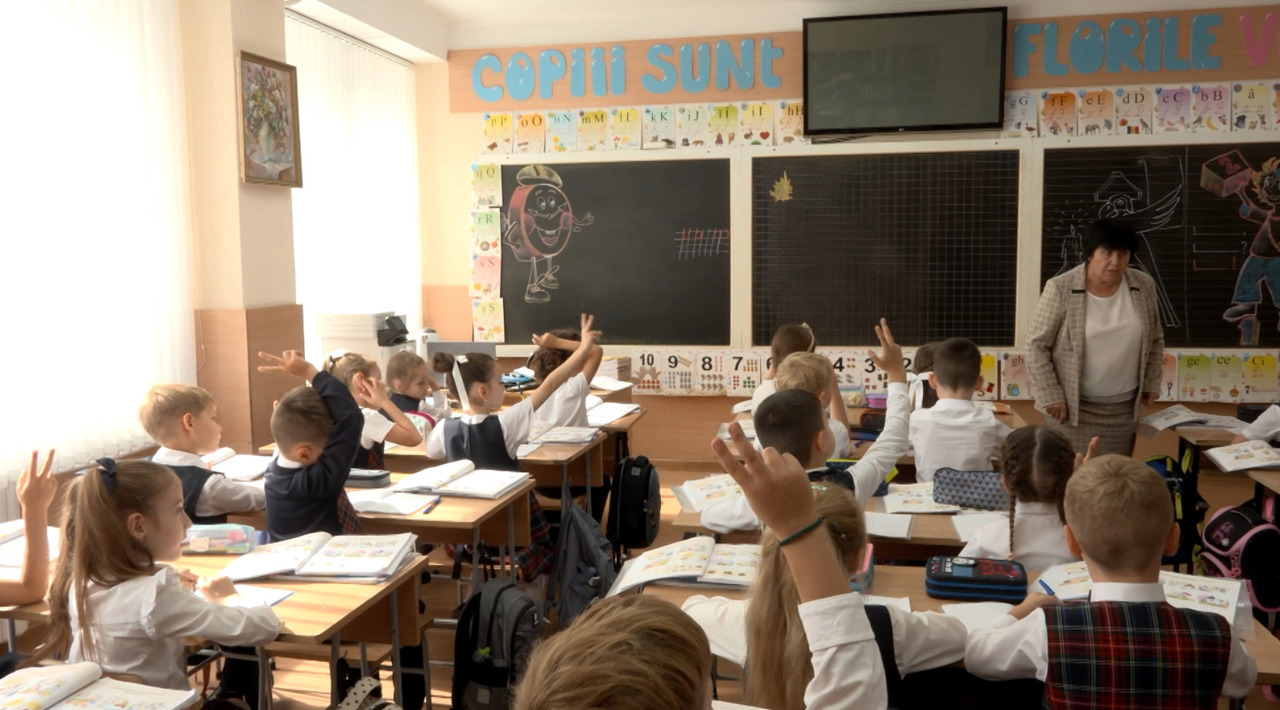
The Ministry of Education and Research (MEC) has proposed that municipal authorities in Chisinau lease two large buildings to expand the school network and alleviate classroom overcrowding. The proposed buildings are the Center of Excellence in Energy and Electronics and the current headquarters of the Academic Lyceum of Fine Arts "Igor Vieru." This announcement was made by Minister of Education Dan Perciun during a press conference on November 25. The authorities in the capital have stated that they will review the proposal.
By utilizing available spaces and relocating the "Igor Vieru" Lyceum to the former Technological College building on Bogdan Voievod Str., the school capacity in the Ciocana and Râșcani sectors could increase by approximately 1,600 new places starting from the next school year. Both buildings are in good to excellent condition and can be quickly repurposed. The City Hall can decide whether to open new schools or expand existing ones in these locations. The Ministry is prepared to allocate additional resources for equipping and modernizing these spaces, if necessary, so that they can provide even better conditions for students starting in September 2026. This solution is quick to implement, has an immediate impact, and does not require new construction, helping to alleviate overcrowding in schools.
According to a study conducted by the Ministry of Education, the number of students in Chisinau has increased by 15,000 over the past five years.
In this context, Minister Dan Perciun urged the municipality to develop a coherent strategy for addressing overcrowding, reorganizing school districts, and modernizing abandoned buildings.
“We propose that the Municipal Directorate create a clear plan to reduce overcrowding, present it to the mayor, and seek approval from the Chisinau Municipal Council. It is crucial to halt unjustified transfers to already overcrowded schools, open new classes in institutions with available spaces, and allocate investments for the modernization of underused schools. Additionally, districts must be reorganized so that each child has access to at least two nearby institutions. The school enrollment system and kindergartens should also be integrated with the State Population Register to verify parents' residency status,” the minister explained.
Andrei Pavaloi, the Deputy Head of the General Directorate for Education, Youth and Sports (DGETS), stated that the MEC proposal would be reviewed. Still, he expressed concern about how the information was communicated through the press.
“We will analyze this offer and provide a clear position. However, I do not understand why, if there is a genuine desire to address the issue, press conferences are held to announce information that does not align with the facts. The City Hall is in close contact with the Ministry of Education, and the relevant departments are aware of how to reach each other. If true collaboration were desired, concrete solutions could have been reached rather than relying on unproductive press statements,” Pavaloi declared during a briefing.
He also highlighted that the overcrowding of schools in Chisinau is further exacerbated by the significant population exodus.
“In the last four years, over 240,000 citizens have left the Republic of Moldova, which equates to the loss of approximately 120 large villages. Consequently, dozens of schools have closed, and students are transferring to institutions in the municipality. The Ministry is closing schools, and Chisinau is accommodating these students. The real number of additional students is over 23,000, not just 15,000 as stated by the Ministry of Education,” Pavaloi emphasized.
The deputy head of DGETS also noted that Chisinau City Hall has created approximately 3,000 new school places, over 4,000 kindergarten spots, and an additional 3,800 new places for students from other localities.
According to data from the Chisinau City Hall, the number of students enrolled in schools in Chisinau has increased by 22,703 over the past eight years. In 2017, there were 85,458 students in the capital; this year, that number has risen to 108,161, reflecting an increase of over 26%. There are currently 151 schools operating in Chisinau, 18% of which are overcrowded.