Moldova’s democratic resilience plan for 2026–2027 approved
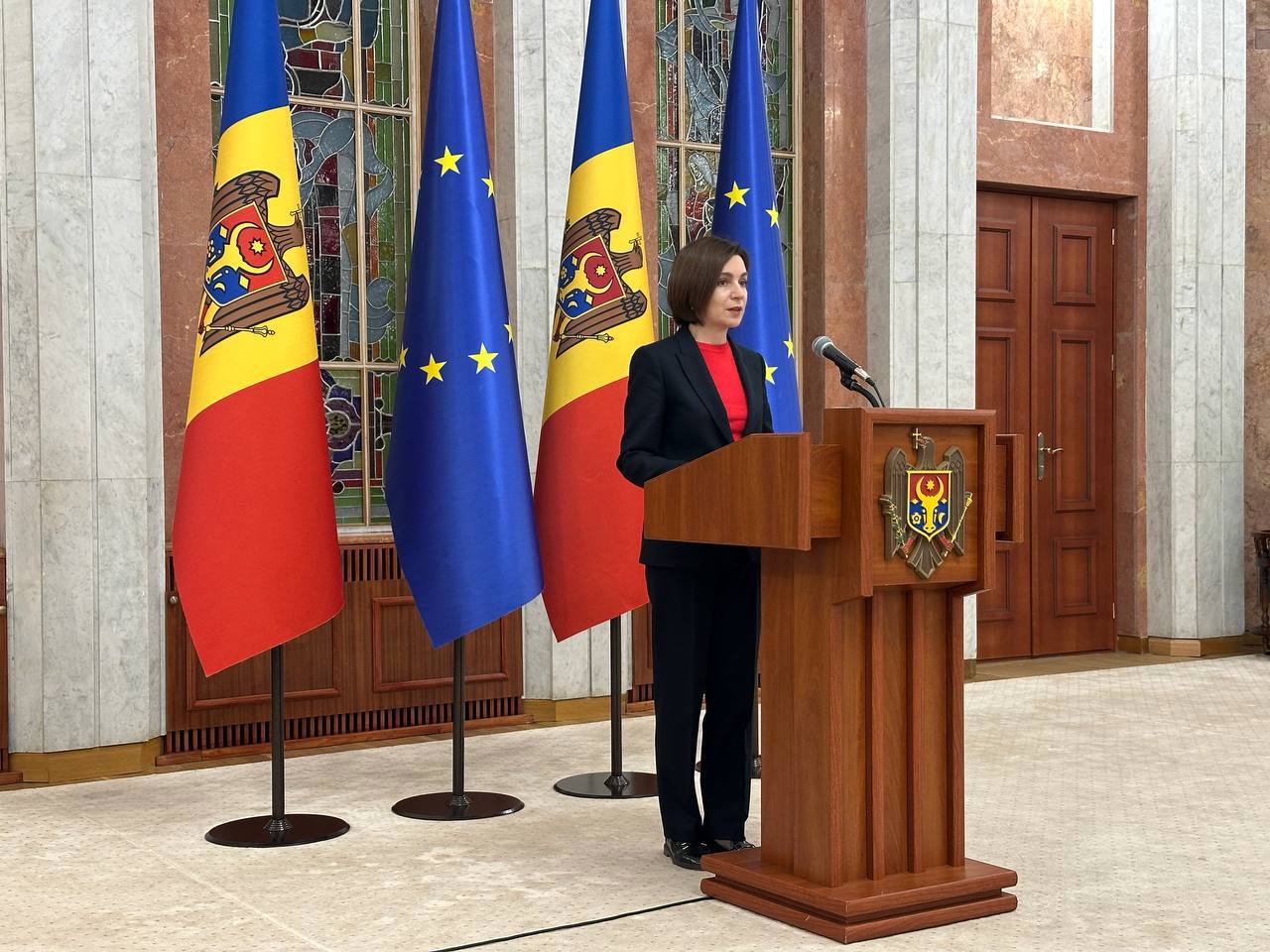
An extensive plan of measures designed to reinforce democratic resilience throughout the 2026–2027 period was approved on Tuesday, December 2, by the National Security Council (CNS), during a meeting convened by President Maia Sandu.
The document focuses on informational resilience, cybersecurity, and combating illegal electoral financing—all areas identified as key vulnerabilities in recent elections.
President Maia Sandu asserted that the plan directly tackles issues stemming from external interference, cyber attacks, and opaque political financing mechanisms that have undermined democratic processes in recent years.
"We discussed and approved the plan for consolidating democratic resilience. It is a two-year action plan, 2026-2027, designed to address the need to strengthen state security and resilience," the head of state declared.
Sandu stated that informational manipulation will remain the most significant risk to future elections, particularly given the rapid development of digital technologies and artificial intelligence tools.
"Informational resilience is arguably the most complex task facing all of us. We see the enormous role of artificial intelligence and how easily these new technologies can be used to manipulate public opinion," the President noted.
She clarified that while some measures will be publicly disclosed, others will remain confidential to prevent exploitation by hostile actors.
Cyber Vulnerabilities and Institutional Obligations
A major component of the plan addresses strengthening cybersecurity. This follows recent elections that exposed significant weaknesses in the digital infrastructure of several public institutions.
"Cyber resilience: The last elections revealed vulnerabilities in certain institutions. This primarily means immediate investments in cybersecurity. We demand that all state institutions adopt a very serious approach to cybersecurity," Sandu emphasized.
The head of state also warned that attacks target not only public institutions but also critical sectors in the private sphere, such as the banking system.
Illicit Funding: The Cryptocurrency Challenge
Another key measure targets illicit political financing. The President explicitly mentioned the Kremlin's involvement in the last three electoral processes and called for refining the tools available to combat these operations.
"Here we have seen the actions of the Kremlin in the last three electoral scrutinies, and how state institutions mobilized in response. Now, we must refine these instruments for combating the illicit financing of political parties and electoral campaigns," the head of state added.
Specifically, Maia Sandu drew attention to the use of cryptocurrencies for illegal transfers. "Cryptocurrency poses the greatest challenge. We have seen how many opaque operations were carried out in recent months for illegal funding, specifically through crypto. These are just a few examples of the measures we discussed," the President concluded.
Digital Literacy and Public Responsibility
The plan also includes public information campaigns. This comes after authorities found that some citizens were unknowingly drawn into illegal schemes by ceding their bank accounts to third parties for illicit purposes.
"We know there were situations where people gave away their bank accounts to be used by third parties for illicit purposes. These actions are sanctioned and will be sanctioned," Maia Sandu suggested.
Furthermore, the head of state insisted on the crucial need for digital education and critical thinking to avoid the traps of disinformation.
CNS Approves New Operating Regulation
During the same session, the new operating regulation for the National Security Council was approved, aligning its function with the updated security law.
Authorities consistently warn that the Republic of Moldova faces complex hybrid threats, primarily emanating from Russia. These threats combine cyber, informational, economic, and military pressures. Risks are heightened by the war in Ukraine and the presence of Russian troops on the left bank of the Nistru.
Recently, Russian drones used in attacks on Ukraine have violated the country's airspace multiple times. This has led to temporary airspace closures, flight diversions, and heightened security alerts. Officials view these incidents as part of a broader pattern of hybrid actions aimed at destabilizing the Republic of Moldova.
Translation by Iurie Tataru