Maia Sandu’s first message to Russia after taking office in 2020. Gas supply cuts, crises, and pressure followed
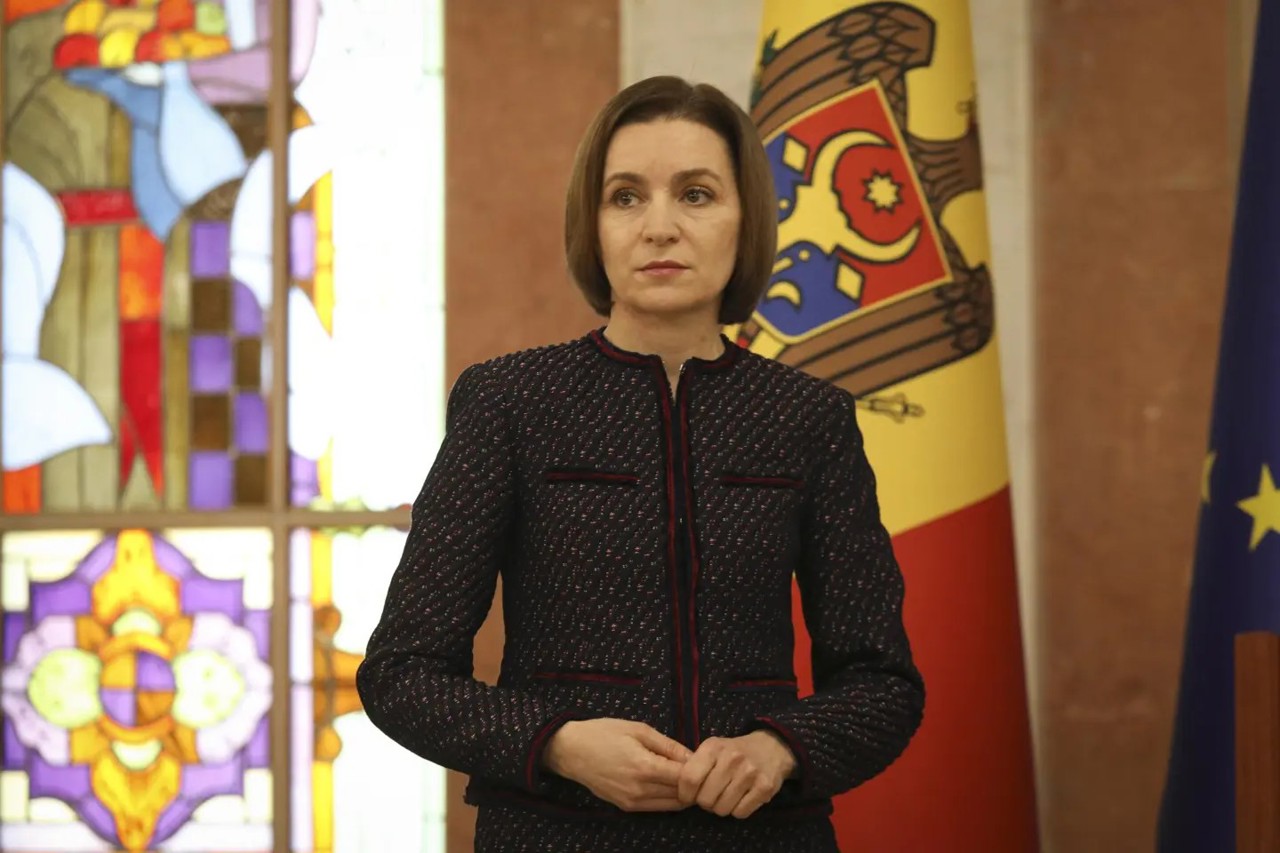
Shortly after taking office as president and after the Action and Solidarity Party won the 2021 parliamentary elections, Maia Sandu sent Moscow a message of openness, stating that the Republic of Moldova sought “normal, decent relations based on mutual respect” with the Russian Federation. Russia responded differently. An energy crisis erupted in the autumn of 2021, followed by economic pressure and growing tensions around the Transnistrian issue and Moldova’s European path.
“I said that we want a normal, decent relationship based on mutual respect,” Maia Sandu recalled in an interview with British journalists, explaining that the new government sought stability and fair cooperation, not confrontation.
Gas. The first sign of deteriorating Moldovan Russian relations
According to the head of state, Moscow did not respond in kind. On the contrary, bilateral relations worsened rapidly, and the first major crisis emerged in the energy sector in the autumn of 2021.
“One month after I sent these messages, Russia reduced gas supplies. They told us they would respect the contract, but they delivered only 30 percent of what we needed, right before winter,” Maia Sandu said.
She described the situation as political pressure at a time when the Republic of Moldova lacked functional energy alternatives and depended entirely on Russian gas.
In the following years, Chișinău accelerated efforts to reduce its dependence on Russia. According to the president, Moldova’s energy situation now differs fundamentally from that of 2021.
“In 2021, the Republic of Moldova depended 100 percent on Russian gas. Today, we no longer consume Russian gas, except in the Transnistrian region,” the president stressed.
Also, authorities invested in energy interconnections with Romania and the European Union, a process seen as vital for national security.
Trade relations and migration. A shift in direction
The head of state also spoke about major changes in trade and migration, two other areas where Russian influence has declined significantly.
“Ten years ago, more than 50 percent of Moldova’s exports went to Russia. Today, only 4 percent reach the Russian market,” Maia Sandu noted.
A similar trend appears in labor migration. While Russia once served as the main destination for Moldovans working abroad, most now choose European Union countries.
“Russia must not have veto power” over Moldova’s European path
Regarding the Transnistrian region, the president reiterated that the Russian military presence remains the main obstacle to reintegration.
“The presence of the Russian army on the territory of the Republic of Moldova is illegal and represents the main impediment to resolving the Transnistrian conflict,” Maia Sandu said.
In the context of the Transnistrian issue and negotiations on accession to the European Union, she added that the Russian Federation must not block Moldova’s strategic decisions.
“We hope that the European Union will not give Putin veto power over the Republic of Moldova’s EU accession process,” the president said, noting that Chișinău aims to achieve peaceful territorial reintegration before joining the European Union.
“Our interest is to become members of the European Union as a reintegrated country, but Russia does not want this and will do everything possible to stop us,” Maia Sandu said.
The Transnistrian conflict dates back to the early 1990s, when the region on the left bank of the Nistru broke away from the Republic of Moldova amid the collapse of the Soviet Union. After the armed clashes of 1992, the situation froze, and Transnistrian region has functioned as an unrecognized entity with a Russian military presence.
Authorities in Chișinău have repeatedly stated that they support a peaceful resolution of the conflict.