Workforce halved in 35 years in the Republic of Moldova

The exodus of the working-age population is worsening. In 2025, nearly 923,000 economically active Moldovans were living abroad, compared to 610,000 in 2015, according to an analysis by Veaceslav Ioniță, an economic policy expert from IDIS "Viitorul." He notes that the most significant migration in recent years is among young people. This decline in the workforce and the aging population are increasingly straining the national economy and the pension system.
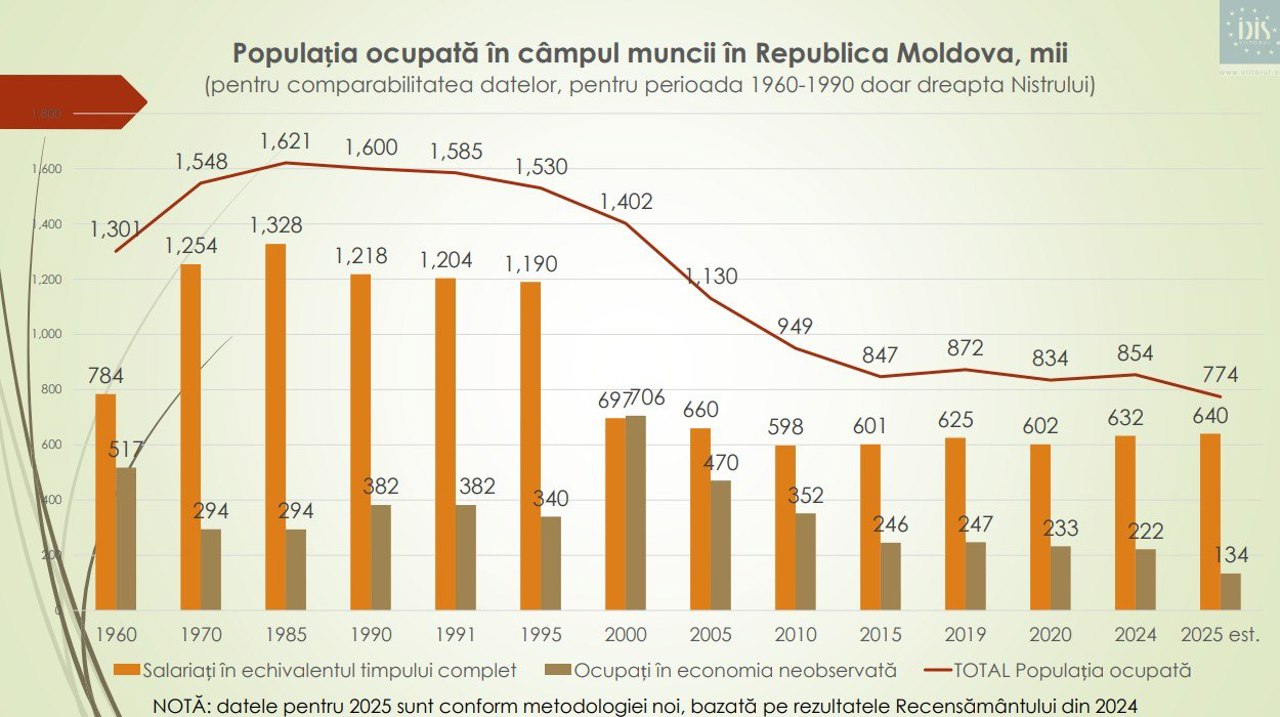
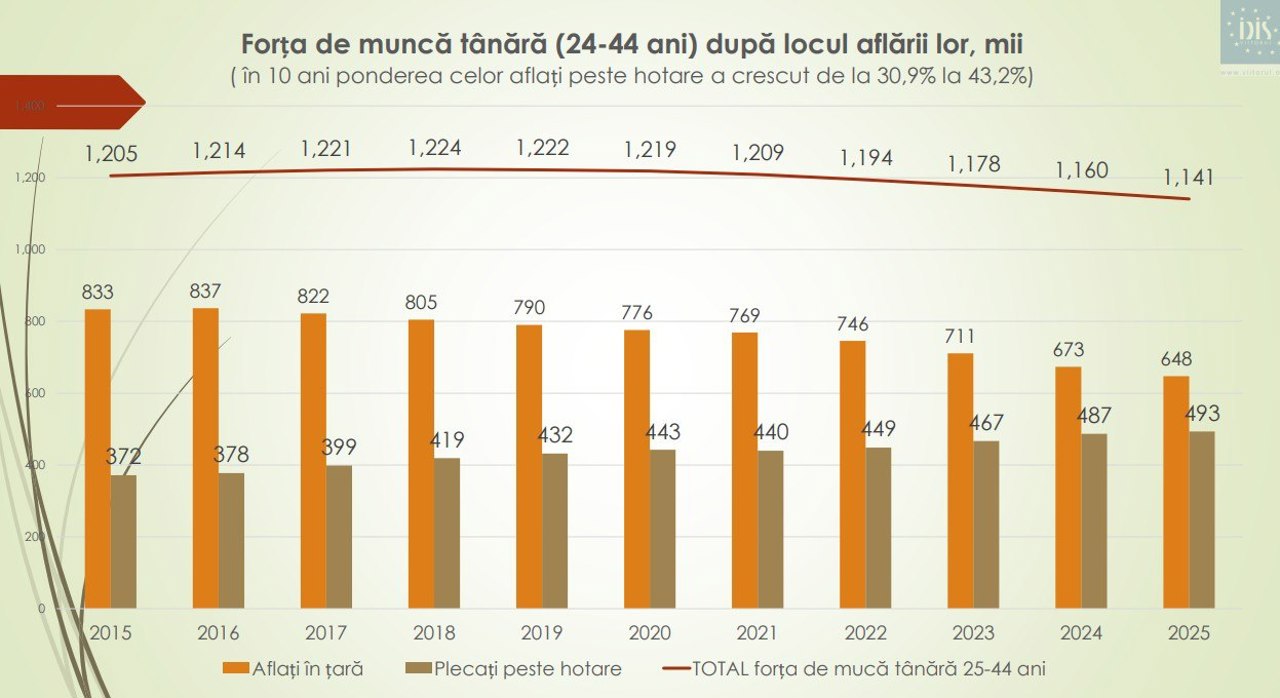
The expert's data show that of the 923,000 people eligible to work abroad in 2025, nearly 493,000 are aged 25 to 44, about 283,000 are aged 45 to 64, and approximately 147,000 are aged 18 to 24.
Veaceslav Ioniță warns that the current trend of youth migration poses a serious risk to the labor market in the Republic of Moldova. "If this trend continues, in five years, the young workforce—who should be paying taxes and contributing to the national economy—will be more numerous abroad than in the country," he stated.
The analysis highlights a significant demographic imbalance between the generations entering and exiting the active workforce. In 2015, the Republic of Moldova had 402,000 young people aged 15 to 24, compared to 327,000 people aged 65 and older. By 2025, the number of elderly individuals rose to 436,000, while the population of young individuals declined to 238,000.
“This situation demonstrates that in the Republic of Moldova, we have an increasing number of people who require pensions and a decreasing number of young people who can work and contribute to taxes,” noted the economic analyst.
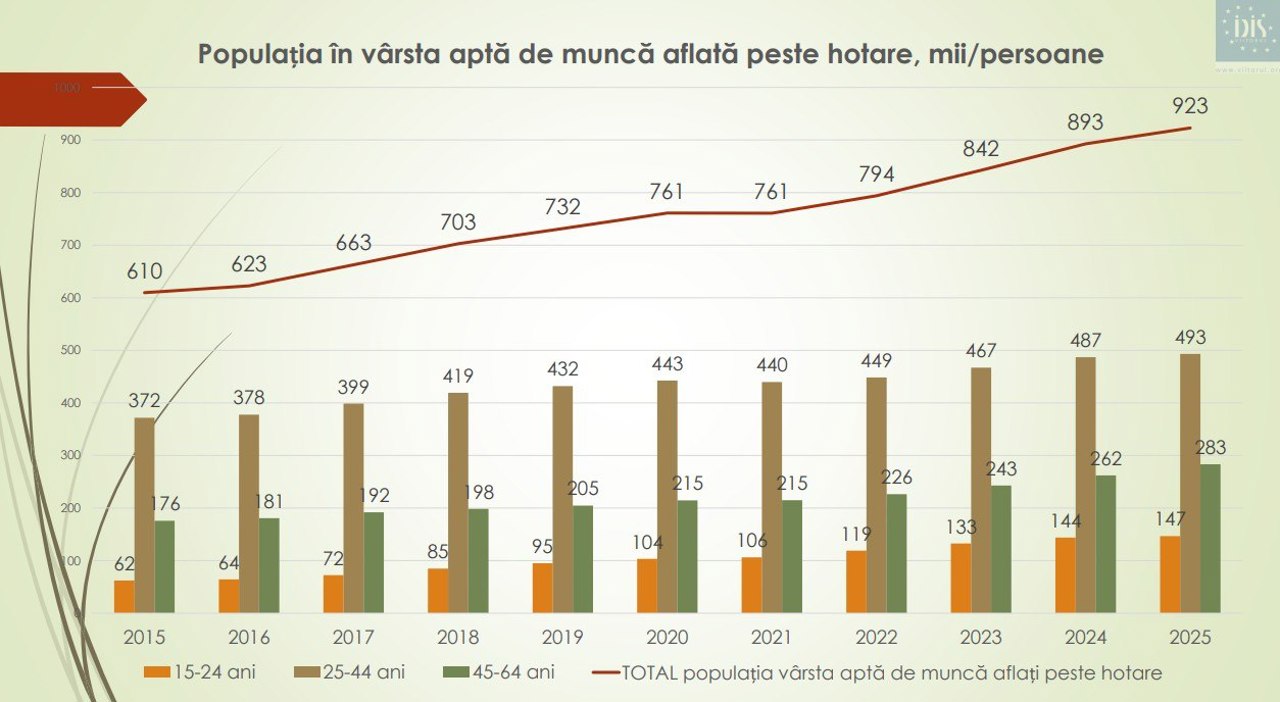
Furthermore, the workforce has been steadily declining over the past few decades. In 1990, there were approximately 1.6 million employed individuals in the Republic of Moldova. This number dropped to 1.4 million in 2000, 949,000 in 2010, and 834,000 in 2020. It is estimated that by 2025, this figure will further decline to only 774,000.
The expert emphasizes that although the number of officially employed individuals has increased in recent years, the general trend of a shrinking workforce has not changed. Currently, out of the 774,000 employed people, about 640,000 are officially registered, while 134,000 work informally.
Veaceslav Ioniță stated, "We are seeing a decrease in the number of employed individuals, and the rise in the number of officially employed people does not sufficiently offset this trend. Over the past five years, the number of officially employed people has increased by more than 38,400, while the number of those working unofficially has risen by 86,600. However, the current number of people engaged in the real economy is now half of what it was 35 years ago."