Kaja Kallas in an exclusive interview with Moldova 1 TV: “Europe wants Moldova in the EU”
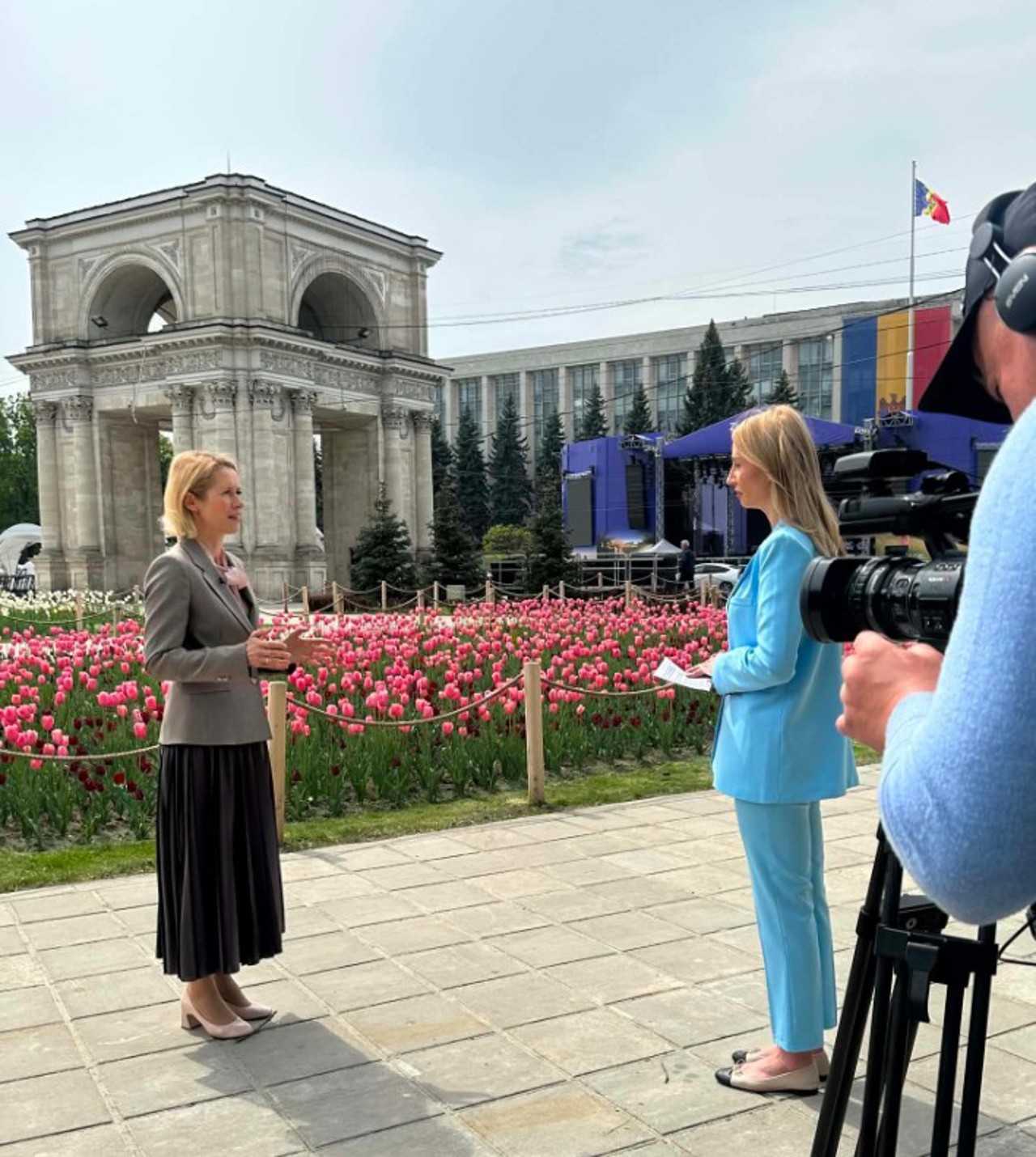
The Republic of Moldova aims to open all accession chapters for the European Union (EU) by 2026. However, how realistic is this timeline, and what challenges does Chișinău still face in implementing necessary reforms? Kaja Kallas, the EU High Representative for Foreign Affairs and Security Policy, addresses these questions in an exclusive interview with Moldova 1, held on the occasion of Europe Day, celebrated on May 9.
The head of European diplomacy, who visited Chisinau on May 7-8, praised Moldova's full alignment with the EU's foreign and security policy. However, she warned that there is still work to be done in judicial reform and the fight against corruption.
What concrete benefits does accession to the European Union bring for citizens? Find out in the interview below:
Moldova 1: Excellency, thank you for this interview in Chisinau during your visit, at such an important moment for relations between Moldova and the European Union, especially with clear signs that negotiations on the first group of chapters will begin in the coming weeks. What is the estimated timetable for opening negotiations for all chapters? Will the Republic of Moldova continue to progress alongside Ukraine, or will it focus only on the first group?
Kaja Kallas: Yes, everyone is asking about the deadlines, and what I want to emphasize is that we need to act as quickly as possible.
At this point, I cannot provide specific deadlines, but I know that our teams are working very closely together.
The Republic of Moldova has made significant progress in implementing the necessary reforms, and we must also fulfill our part of the commitments.
Of course, there is still much to be done, but we are very determined to continue this process.
I believe that Europe wants to see Moldova as a part of the European Union.
EU ENLARGEMENT IS A GEOPOLITICAL CHOICE
Moldovan authorities have set a goal of opening all accession negotiations across all chapters by 2026. How realistic is this timetable?**
The issue of chapters is always very bureaucratic. It is important to consider what benefits Moldovan citizens will receive along the way and what joining the European Union truly means.
We are already seeing clear benefits, such as "roaming like at home," which people can directly feel.
We are utilizing various instruments, and our officials are working on opening and closing chapters and everything necessary to move forward.
The process is both bureaucratic and geopolitical. Enlargement has always been a geopolitical choice, and it is crucial to have more countries with us in Europe.
MOLDOVA HAS MADE SIGNIFICANT PROGRESS
Where do you see the Republic of Moldova’s biggest challenges in the EU accession process, and what reforms are still urgent?
We have already implemented a number of difficult reforms, and there is still work to be done. I would not emphasize a single area, as this is a complex and evolving process.
We have made significant progress in judicial reform, and this effort must continue.
Moldova is also fully aligned with our foreign and security policy, which represents a key advancement.
What are the most challenging areas in the Republic of Moldova’s EU accession process, and what are the main obstacles slowing progress in these sectors?
The major challenges are related to fundamental areas such as the rule of law, judicial reform, and the fight against corruption.
These reforms need to be effectively implemented in practice.
Moldova is already making significant strides in these areas, including improvements in fundamental values like freedom of the press and the strengthening of the rule of law.
There is clear progress, but much work remains.
KAJA KALLAS: “TOGETHER WE ARE STRONGER”
Your Excellency, what message do you convey to Moldovan citizens on Europe Day, considering the current context of fragile security marked by hybrid threats?
Europe is a space of peace that promotes stability across the continent.
The more united we are, the stronger we become. Together we are stronger.
I warmly invite all citizens of Moldova to celebrate Europe Day and the path we are taking.
Thank you for the interview!
Who is Kaja Kallas, also known as the "Baltic Hawk"
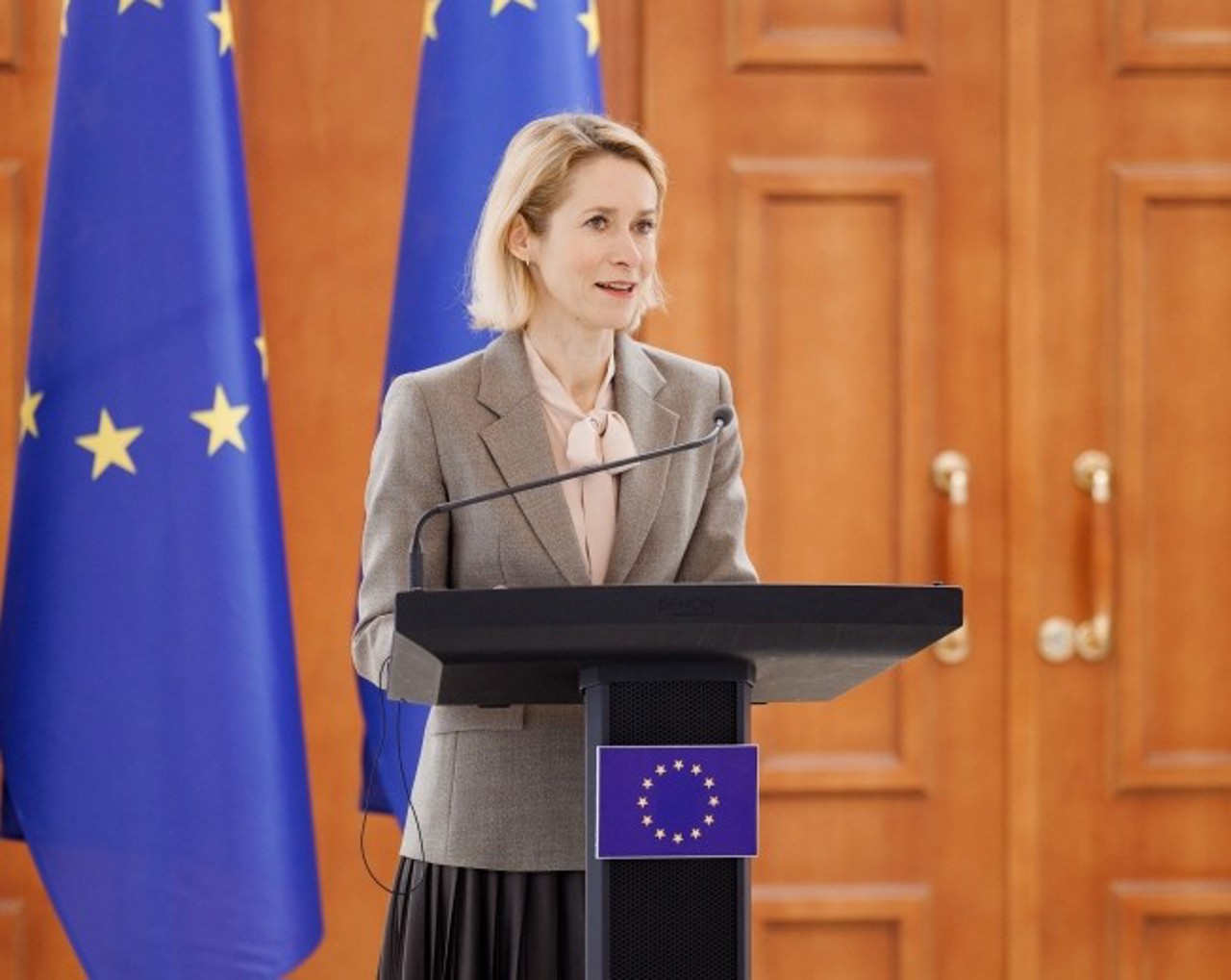
She was nicknamed the "Iron Lady" of Estonia, and today she is one of the strongest European voices against the Kremlin and the narratives Vladimir Putin uses to justify Moscow's expansionist ambitions. Kaja Kallas has a political career built on firmness, diplomacy and constant support for European values.
Born on June 18, 1977, in Tallinn, Estonia, Kaja Kallas carries the story of a family deeply marked by the Soviet occupation. Her mother was only six months old when she was deported with her family to Siberia, where they lived for ten years.
Her grandfather died in a Soviet camp. This painful memory of the past has not remained just a family story, but has become the foundation of a clear political vision, in which Russia is perceived not as a partner, but as a threat.
The daughter of former Prime Minister Siim Kallas, Kaja built her own career by studying law in Tartu and obtaining a master's degree in Florence. She worked as a lawyer and entrepreneur before entering politics.
She was first elected as an MEP in 2011 for the Reform Party, a liberal party founded by her father. In the European Parliament, she has been listed among the most influential MEPs on several occasions.
She returned to the national political scene in 2018, taking over the Reform Party's leadership and becoming Estonia's first female prime minister in 2021.
A harsh critic of the Kremlin and Russian President Vladimir Putin within the EU and NATO, Kallas supported Ukraine when the country faced a full-scale invasion by Moscow in February 2022. The Baltic state with just 1.3 million inhabitants has become, proportionally, one of the most generous donors to Ukraine, its support exceeding one percent of GDP.
The war in Ukraine is propelling her onto the international stage. Her position is firm: maximum sanctions against Russia, heavy weapons for Ukraine, massive investments in European defense.
In 2024, Kaja Kallas left Tallinn and became the head of European diplomacy, succeeding Josep Borrell.
Dubbed the “Iron Lady of the North” or the “Baltic Hawk”, Kaja Kallas has established herself in the European public sphere through her direct and unequivocal discourse. In her interventions, she has consistently spoken about the need for a clear victory for Ukraine, the increasing costs China is bearing for its relationship with Vladimir Putin, and the shaping of a new global order in which brute force seeks to rewrite international rules.
These positions have transformed her into a landmark of contemporary European diplomacy and one of the most vocal supporters of security on the eastern flank of the European Union.