Russian attacks on Ukraine hydro plant pollute Moldova's Dniester River
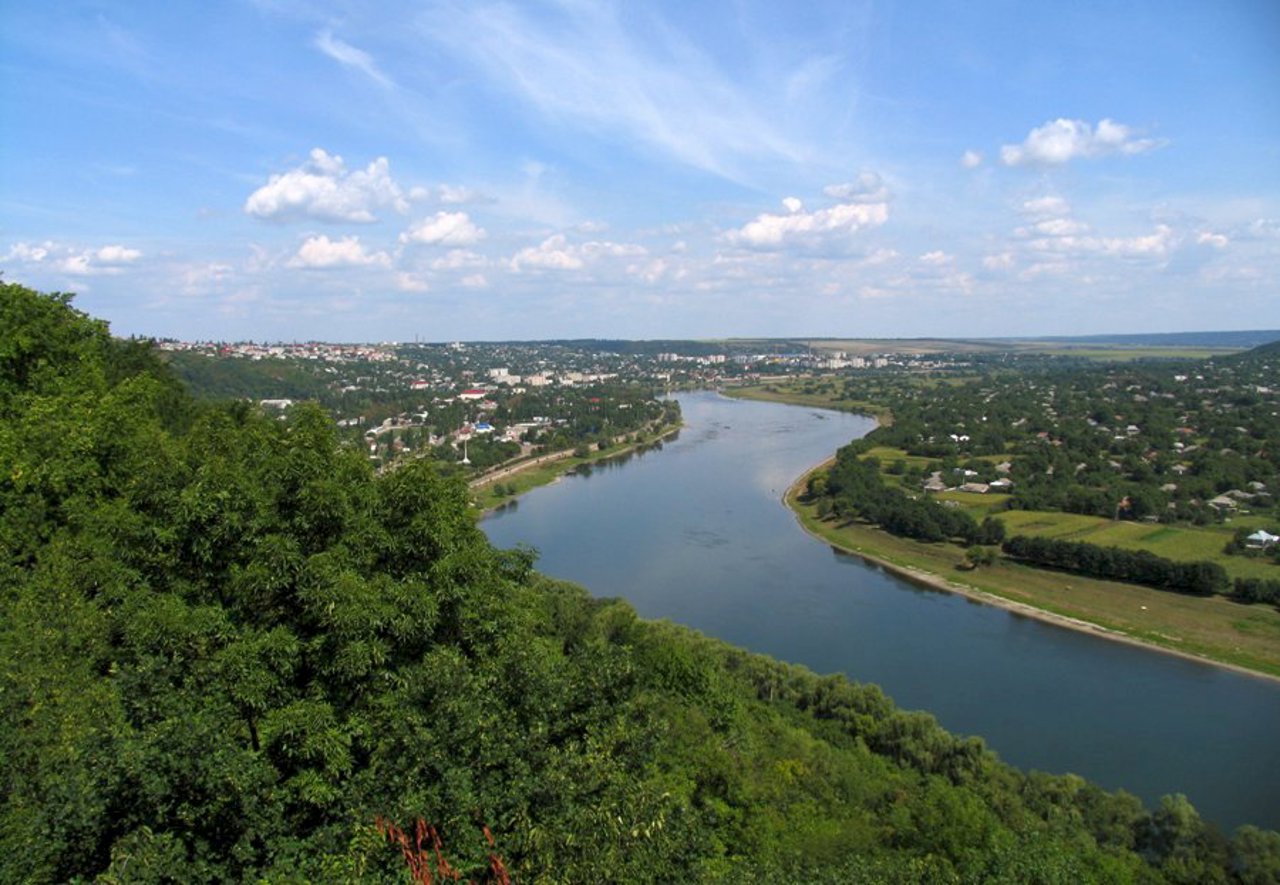
Russian missile strikes on Ukraine’s Novodnestrovsk hydroelectric power station in early March triggered a severe environmental crisis on the Dniester River, a vital water artery for neighboring Moldova. The attacks caused massive oil spills that threatened national security, nearly forcing a total shutdown of the centralized water supply in Moldova's capital, Chișinău.
Environmental protection agencies swiftly launched emergency containment operations to mitigate the toxic slick in the country's northern sector. While authorities successfully halted the immediate contamination influx, ecologists warn that the long-term biological footprint will devastate the river's fragile ecosystem for years.
Eco-systems under severe toxic stress
The aquatic fauna and fish populations have already sustained documented damage, according to Moldovan environmental expert Vladimir Garaba.
Sometimes, one liter – two liters of oil can affect a few hundred square meters. But, in this given case, it is about thousands of liters, which, indeed, deserves a very serious attention from the authorities. The whole animal and plant world on the Dniester River suffers, because oil is not a substance that it accepts. This oil, the petroleum substance, is toxic for all living things, whether plants or animals. Depending on the concentration in the water, of course, there is also the effect of this film. It greatly reduces the oxygen exchange of water with air, and the oxygen concentration gradually decreases, and some more sensitive animals, but also plants, suffocate. Any increase in the concentration of petroleum products affects it.
Infrastructure vulnerabilities exposed
The emergency highlighted severe structural vulnerabilities in Moldova's alternative water infrastructure. Experts warn that the country remains unprepared for prolonged disruptions to centralized utilities.
Iordanca - Rodica Iordanov, Executive Director of the “Eco-Contact” Association said:
The lesson learned, do you know what it is? That we, in fact, in case centralized water is suspended, we cannot cope with alternative water. In Chișinău we have over 230 registered wells, how many of them are functional? Not even 30? How many of them are under public administration or private administration? We do not keep track. The fact that the Ministry's authorities and subordinated structures coped with this respective crisis, that is already obvious. But we must understand that from today onwards we must have very many rules established and we must have clarity on how we work further, because we also have a transboundary route.
State response and cross-border risks
Although the crisis triggered an unprecedented mobilization of state resources, Moldova's environment remains highly vulnerable as long as the war continues to rage along its borders.
The State Secretary of the Ministry of Environment, Gheorghe Hajder said:
What is important is for us to be much better prepared, so that we can intervene with a much greater speed. The authorities demonstrated an unprecedented consolidation and yet this pollution, for the most part, was mitigated in the north of the Republic of Moldova and it was not admitted to come to the center of the Republic of Moldova. If action had been taken even a day later than it was done, there was a risk that water would be stopped in the municipality of Chișinău. Our specialists are already well trained how to act much faster in such a case of pollution. I will ensure that we will also have regional warehouses, both in the north of the Republic of Moldova, because the flows come from there, in the center of the Republic of Moldova, and even in the south, so that in less than an hour and a half, we can be at any point of the Republic of Moldova, in any case of accident. We are not talking only about a consequence of the war, this thing can happen at any moment, for other reasons.
Climate strain exacerbates river crisis
The ecological fallout is further compounded by a multi-year hydrological drought. For the third consecutive year, low water levels prevented the deployment of the critical spring ecological flood, an absence that heavily disrupted the river's biological equilibrium.
The environmentalist Ilia Trombițchi said:
Obviously, the management of the basin must be discussed together with the Ukrainians, in order to take measures to increase the volume of water in the basin. We depend on the situation in Ukraine, because now only 20% of precipitation in the basin is on our side and 80% in the Carpathians.
Trombițchi concluded that with dry weather patterns projected to persist, the survival of the Dniester River remains uncertain. He emphasized that the hydrological situation can only be stabilized through large-scale afforestation of riverside areas, while urging the public to adopt strict water conservation measures.
These systemic environmental challenges shadow Moldova's annual observance of Dniester River Day, which the country marks every year on the final Sunday of May.
Translation by Iurie Tataru