Italy expels Russian diplomats over espionage allegations
Italy announced on July 9 the expulsion of two Russian intelligence operatives working under diplomatic cover, condemning their activities as a "grave and unacceptable interference" in Italian security.
The decision followed the arrest two days earlier of two former Italian intelligence officers accused of collaborating with Moscow.
Expulsion of military attaches
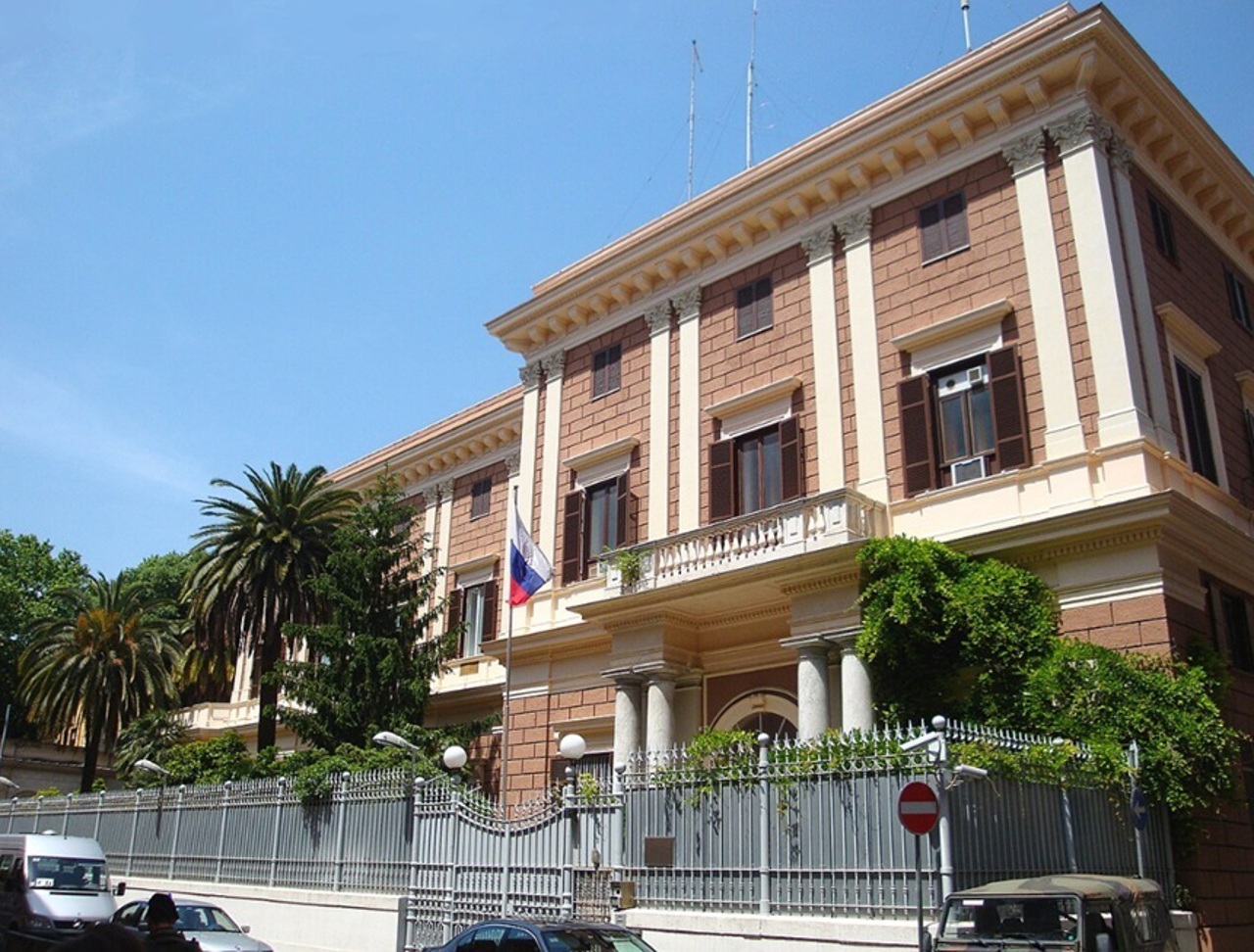
Foreign Minister and Deputy Prime Minister Antonio Tajani confirmed that the Italian government ordered two military attachés from the Embassy of the Russian Federation to leave the country.
"The Italian Foreign Ministry has informed the Russian ambassador in Rome that Ivan Petrovich Gorbachev and Mikhail Vasilyevich Stakhov must depart within three days," Tajani stated, citing findings from the Rome Prosecutor's Office.
The expulsions come amid an intelligence crackdown detailed by Italian daily newspapers La Repubblica and Il Messaggero.
Targeting NATO missile systems
Investigative reports reveal that at least one of the Russian operatives paid for sensitive information regarding the Franco-Italian SAMP/T air defense system, which Ukraine is set to receive this year.
The Russian contacts also sought technical data on Franco-Italian ASTER missiles already delivered to Kyiv, details on the NATO Mission in Bulgaria, and operational data from Avio, an Italian aerospace manufacturer producing engines for hypersonic missiles.
Counterintelligence identities compromised
According to Corriere della Sera, one of the arrested Italian ex-spies is accused of handing over the identities of Italian counterintelligence officers assigned to neutralize Russian espionage operations.
Defense counsel for the accused former agent denied any act of treason, stating that his client—scheduled for a court hearing on Friday—only collected publicly available information.
Italian Defense Minister Guido Crosetto warned that the arrests represent "merely the tip of the iceberg," pointing to a broader hybrid conflict orchestrated by Moscow across Europe.
Translation by Iurie Tataru