Foreign student demographics in Moldova: Top countries of origin
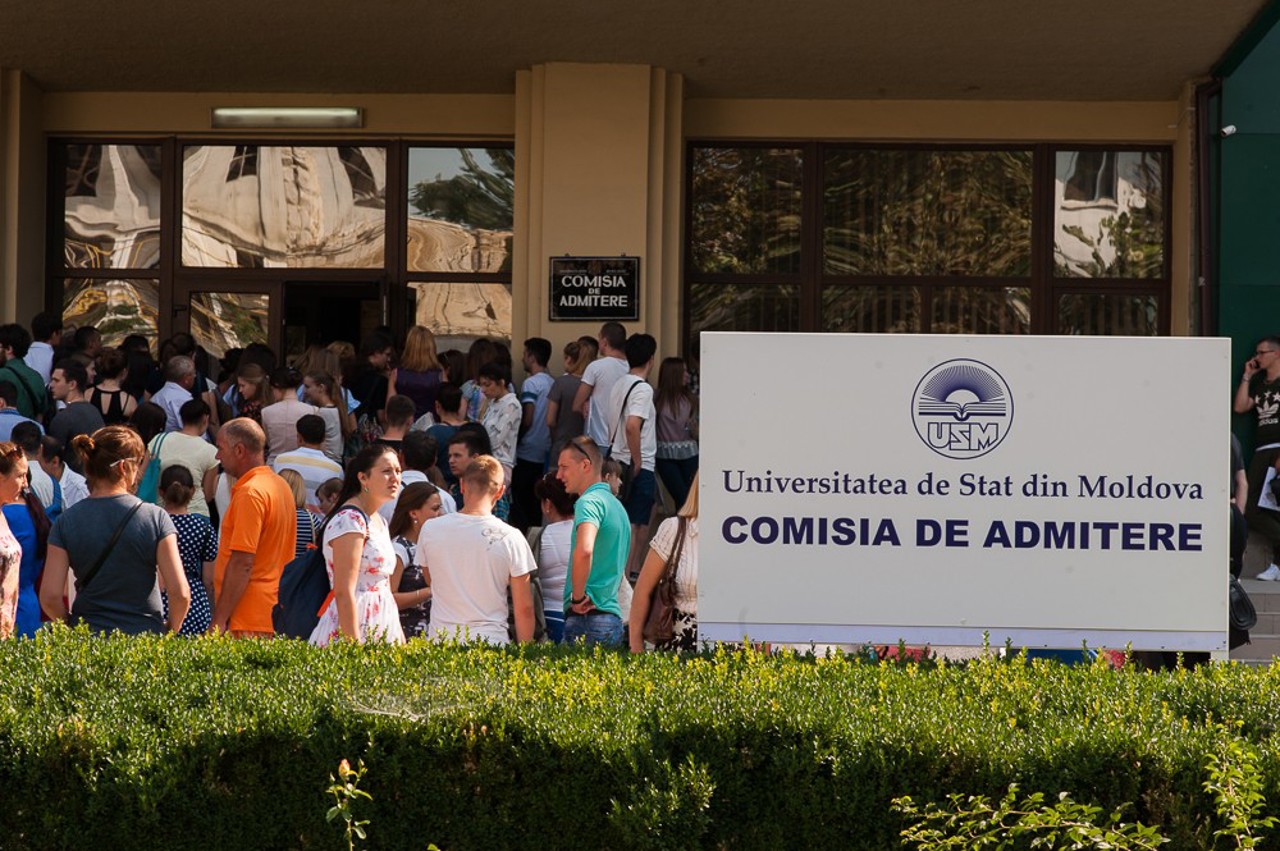
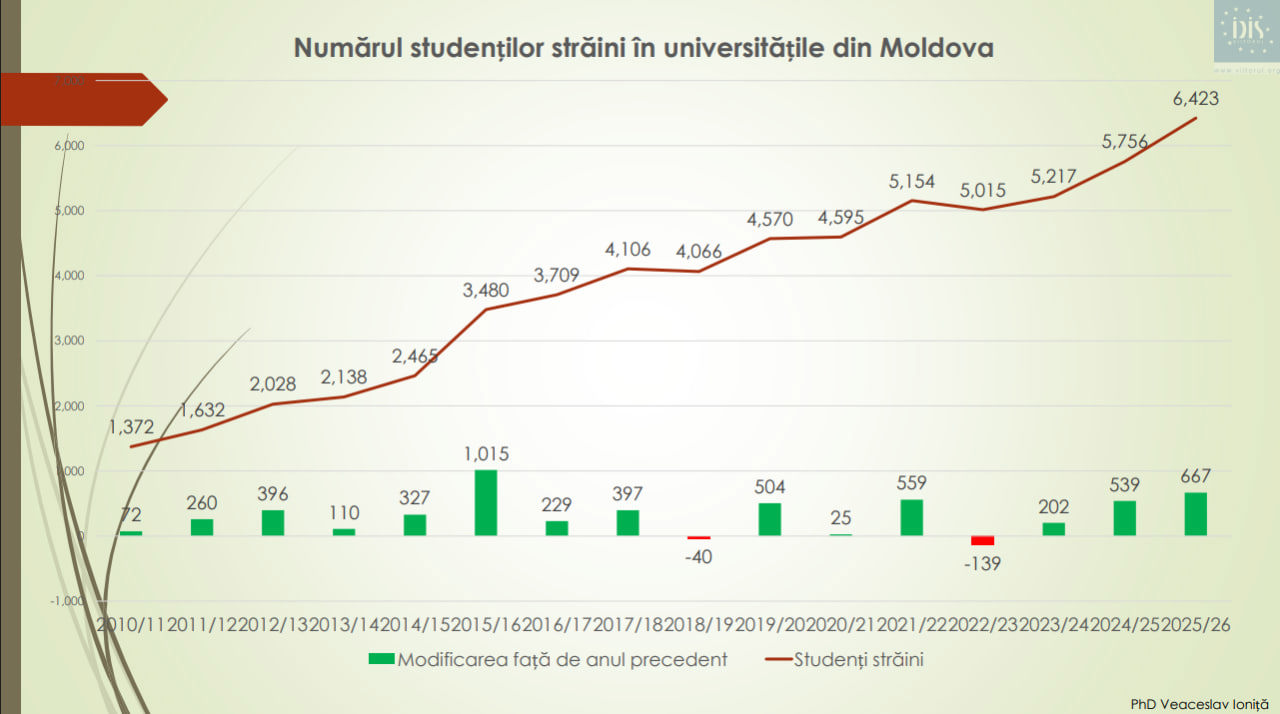
A record number of 6,423 foreign students studied in the Republic of Moldova during the 2025–2026 academic year. Despite this historic high, expert Veaceslav Ioniță argues that the economic and educational opportunities brought by foreign young people are still being underutilized.
The number of foreign students increased by 667 compared to the 2024–2025 academic year, and they now account for 10.2% of the total number of students in the Republic of Moldova. In 2010, their share was only 1.3%.
The war in Ukraine brought more foreign students to the Republic of Moldova.
Attracting young people from other countries can contribute not only to strengthening the financial position of universities but also to improving the quality of the educational process and developing the export of educational services.
“Foreign students are a phenomenon worth considering and represent an opportunity that the Republic of Moldova has not yet fully explored,” says Veaceslav Ioniță.
One of the Republic of Moldova's advantages is the growing interest among young people from Romania in pursuing university studies in our country, particularly due to the opportunity to study in Romanian. At the same time, Moldovan universities could attract more international students through Romanian language learning programs.
Veaceslav Ioniță argues that the war in Ukraine has also created an opportunity to attract a larger number of Ukrainian students; however, this opportunity has not been fully capitalized on.
Romania, the main country of origin for foreign students
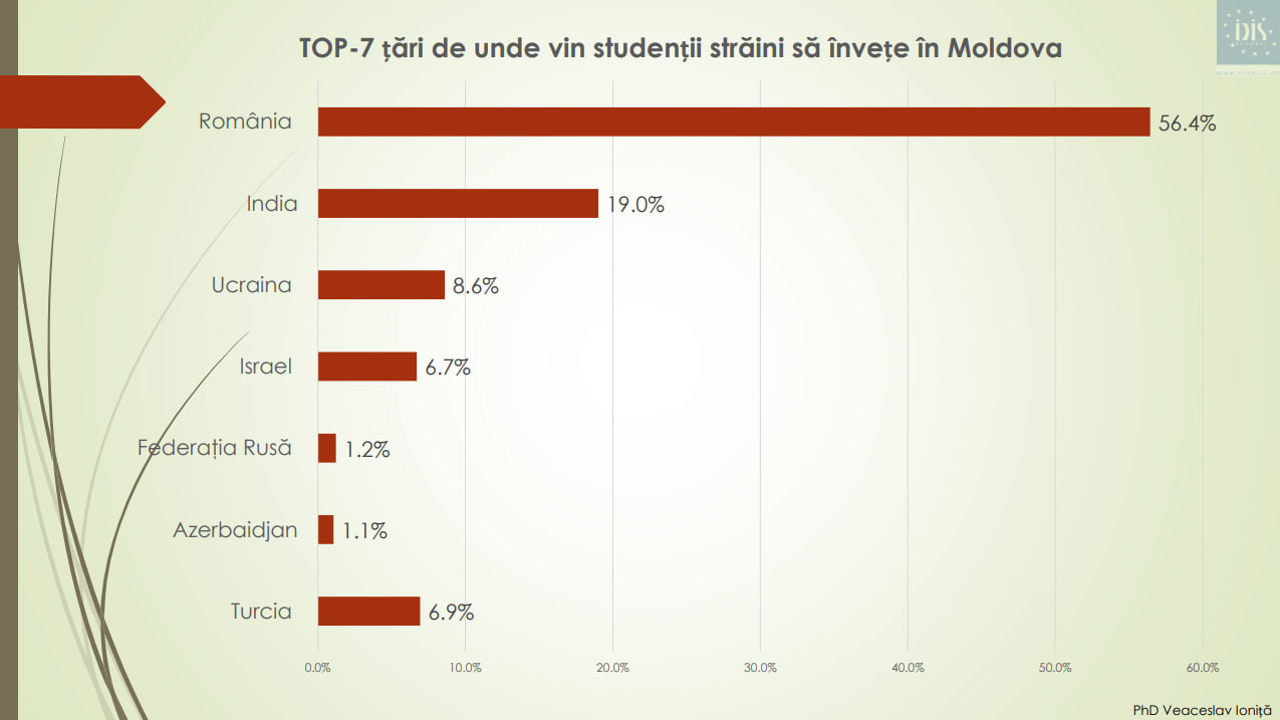
Most foreign students at Moldovan universities come from Romania—56.4% of the total. They are followed by India with 19%, Ukraine with 8.6%, Turkey with 6.9%, Israel with 6.7%, the Russian Federation with 1.2%, and Azerbaijan with 1.1%.
At the same time, the expert draws attention to the decline in the number of students coming from certain countries that, in the past, represented important markets for universities in the Republic of Moldova.
Thus, the number of students from Israel has dropped from more than two thousand to just 431. Only a handful of students remain from Syria and Jordan, compared to several hundred in previous years.
Overall, the Republic of Moldova has lost approximately 3,500 foreign students over time, including due to the decrease in the number of young people coming from Ukraine, Turkey, the Russian Federation, India, Italy, Sudan, and the United States.
“The Ministry of Education, the Ministry of Economy, and university rectors must make additional efforts to attract foreign students. They can become a lifeline for our universities and contribute to improving the quality of education and the institutions’ capacity to generate knowledge and conduct research,” said Veaceslav Ioniță.
The total number of students has halved over two decades
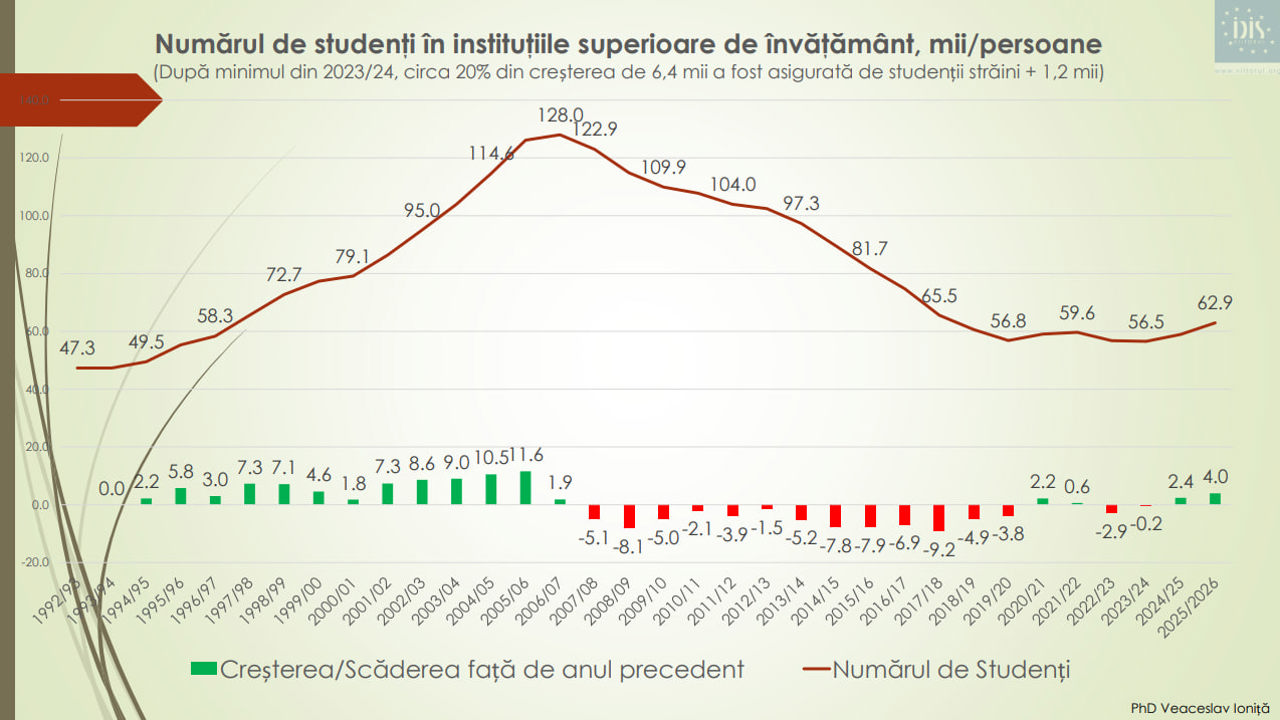
The higher education system in the Republic of Moldova has undergone major changes over the past two decades. The total number of students declined from approximately 128,000 in the 2006–2007 academic year to 62,900 in 2025–2026.
However, over the past two years, the trend has reversed. The number of Moldovan students increased by 2,400 in the 2024–2025 academic year and by another 4,000 in 2025–2026—the largest increase in the past 20 years.
Approximately 20% of this positive development was driven by the growth in the number of international students.
The decline in the number of students has also affected university staff. The number of academic and teaching staff decreased from 6,571 in the 2006–2007 academic year to 3,601 in 2025–2026, representing a decline of approximately 45%.
At present, each university professor is responsible for an average of 17.5 students, compared with more than 20 two decades ago.
Export of educational services, a source of income for the economy
Veaceslav Ioniță argues that the development of higher education should also be analyzed through the lens of its economic impact. In an economy dominated by services, the export of educational services can become an important source of income for the Republic of Moldova.
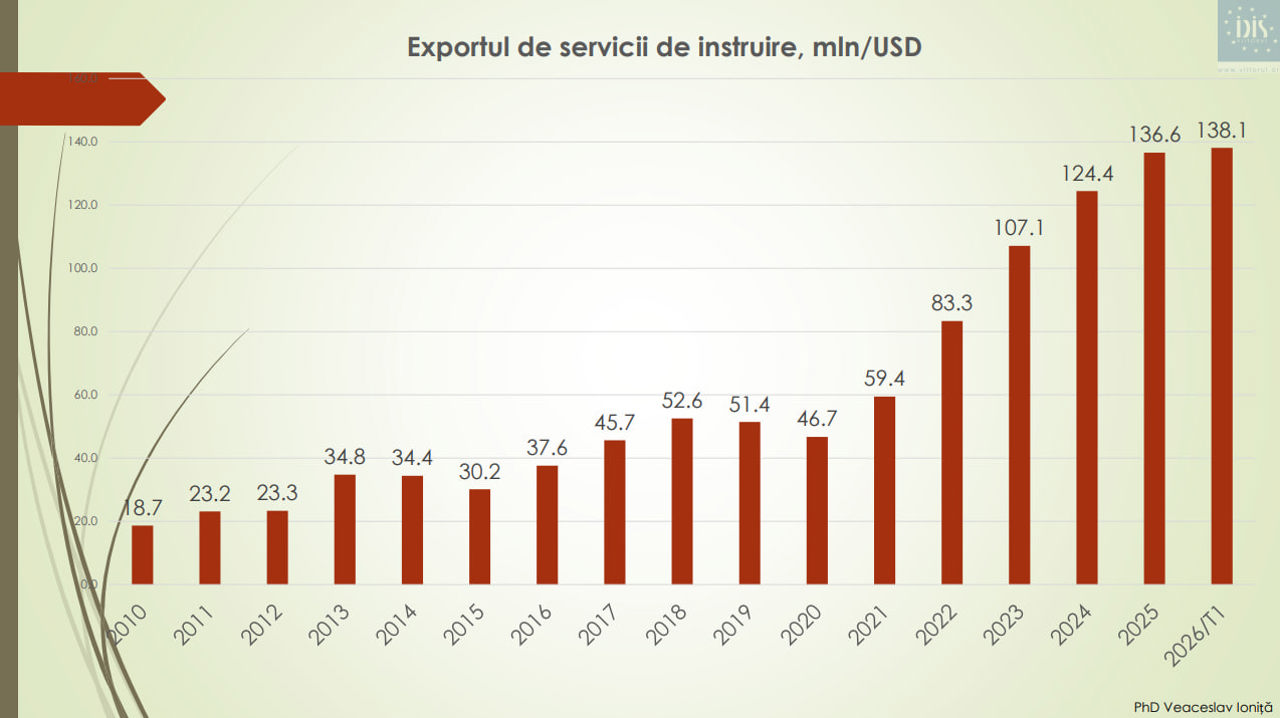
According to the data presented by the expert, Moldova's exports of educational services reached an annual value of $138.1 million in the second quarter of this year, with the sector recording noticeable growth in recent years.
In the expert's view, transforming the Republic of Moldova into a leading educational destination in the region depends on prioritizing investments in education, effective international promotion, and coordinated action between the authorities and universities.