World leaders gather for 81st UN assembly amid multiple global crises
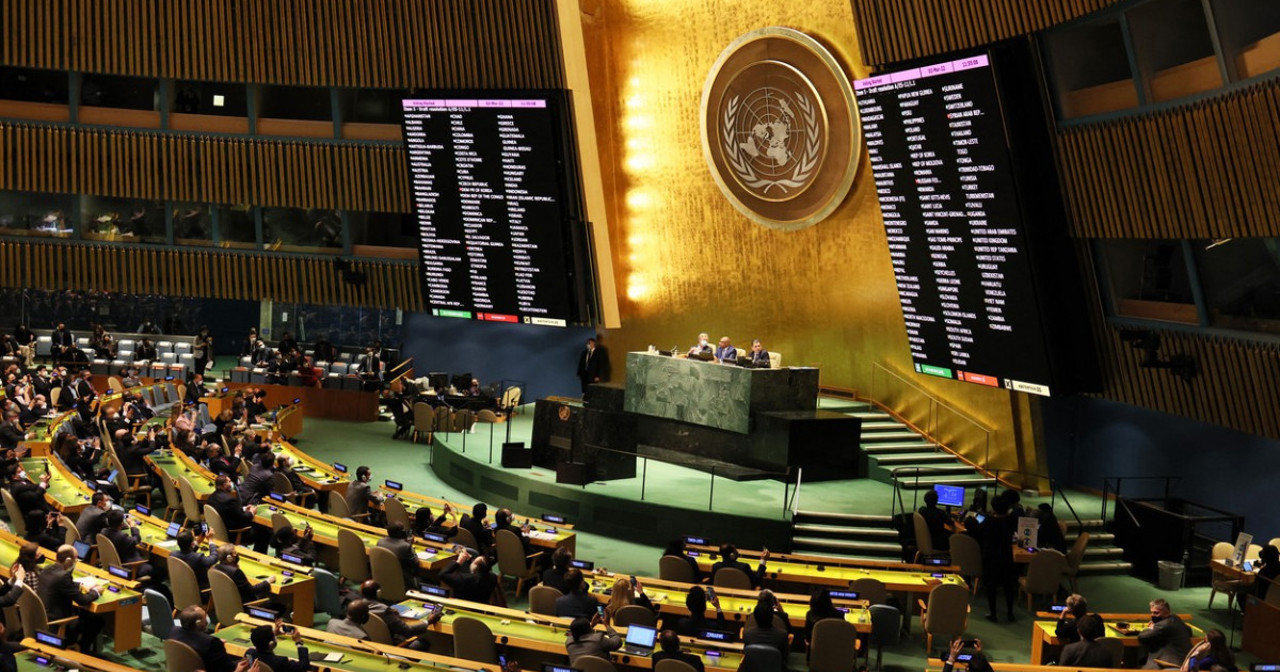
World leaders gathered in New York on Monday for the 81st UN General Assembly, opening a high-level summit overshadowed by conflicts in Ukraine and the Middle East alongside rapid technological disruption.
Nearly 130 heads of state and government are convening as the post-World War II international order faces unprecedented structural strain. The United Nations is simultaneously addressing internal funding pressures, following significant US contribution reductions and Washington's withdrawal from several associated bodies.
Institutional strains and leadership uncertainty
Chinese President Xi Jinping bypassed the New York assembly, opting instead for a bilateral meeting with US President Donald Trump in Washington scheduled for Thursday.
The 80-year-old organization also faces impending leadership transition, with Secretary-General Antonio Guterres set to complete his mandate at the end of 2026. Behind the scenes, the 15-member UN Security Council plans high-level discussions addressing Ukraine, artificial intelligence governance, and Middle Eastern stability.
“We would no longer say the UN is in free fall, but we would say it is stuck in an endless crisis,” said Richard Gowan of the International Crisis Group. “The organization may not be in intensive care, but it appears held in a trauma center for the foreseeable future.”
Washington averted losing its General Assembly voting rights after paying $725 million in regular budget dues this week. However, the United States still owes over $1 billion and continues to demand extensive administrative reforms.
Artificial Intelligence and regional conflicts
Diplomatic discussions follow urgent appeals from technology leaders for coordinated limits on artificial intelligence development to prevent self-improving systems from evading oversight. Guterres warned that leading nations must establish common safeguards “to avoid a race to the bottom that could trigger global catastrophe.”
Trump dismissed such concerns as unfounded, arguing that regulatory caution would merely give geopolitical rivals an advantage.
In the Middle East, prolonged confrontations involving the US, Israel, and Iran continue to threaten maritime transport along the Bab el-Mandeb strait and disrupt energy markets. Iranian President Masoud Pezeshkian and Israeli Prime Minister Benjamin Netanyahu are both scheduled to address delegates later this week.
Meanwhile, Ukrainian President Volodymyr Zelenskyy and Russian Foreign Minister Sergey Lavrov will deliver addresses concerning the protracted war in Eastern Europe. Guterres stressed the vital need for safe maritime navigation to protect global food and energy distribution chains.
European Council President António Costa will represent the European Union on Thursday, participating in the Crimea Platform and environmental initiatives. A Moldovan delegation led by Prime Minister Vasile Tofan is also attending the high-level debates, with an address scheduled for September 26.
Translation by Iurie Tataru