Maia Sandu convenes National Security Council after major cyberattack on Moldova
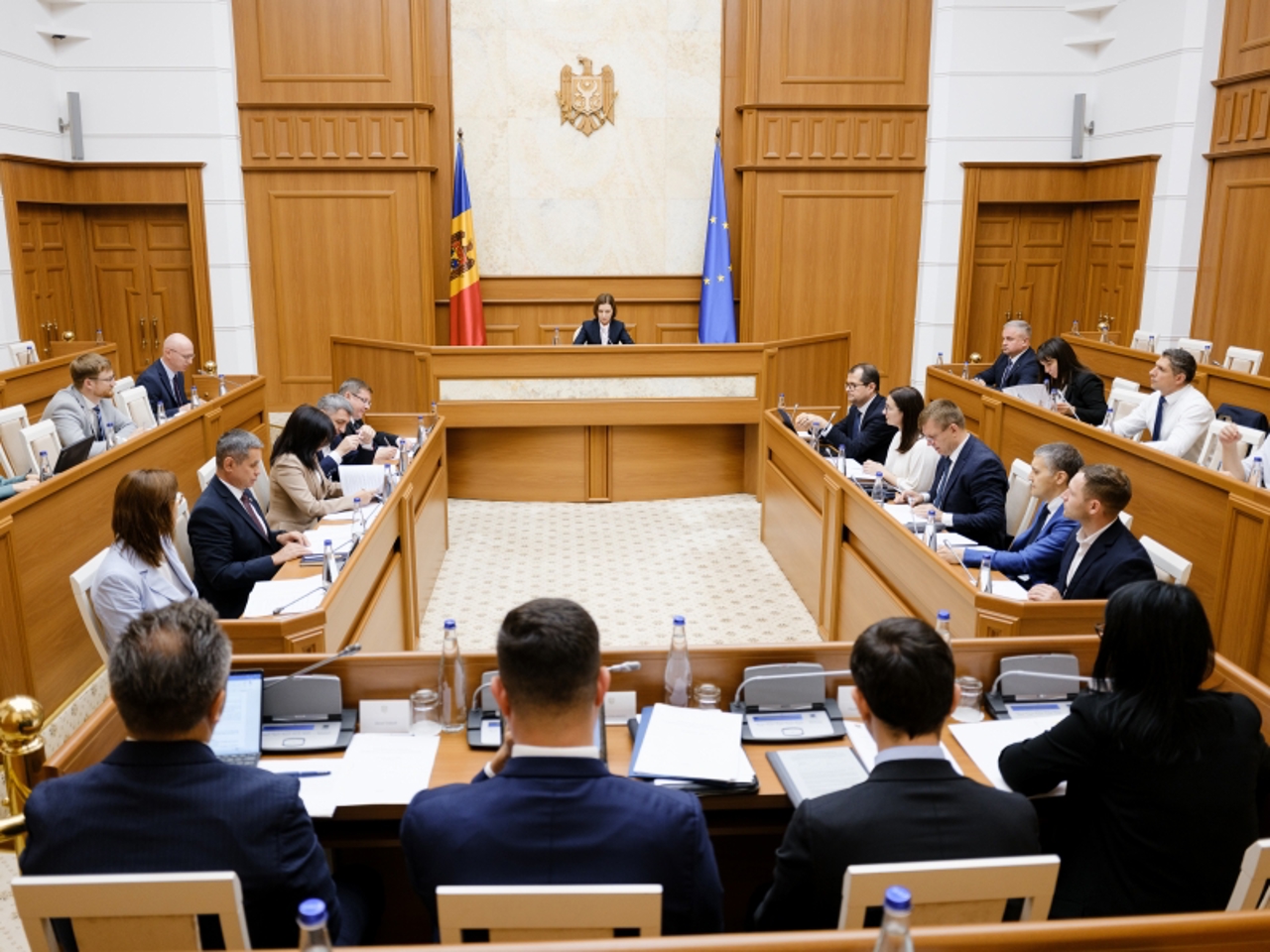
The large-scale cyberattack facing the Republic of Moldova will be analysed at a National Security Council meeting, to be convened by President Maia Sandu in the coming days. Authorities suspect that the attack may have been facilitated by artificial intelligence.
The Presidency made the announcement on Wednesday, October 28, after the head of state participated in an international meeting on the risks posed by the most advanced artificial intelligence systems.
During the National Security Council meeting, the scale of the cyberattack will be assessed, along with the measures needed to address the threats. For now, the Presidency has not announced the meeting date or provided further details on the potential use of artificial intelligence in carrying out the attack.
Maia Sandu also addressed cybersecurity during a virtual meeting attended by over 30 heads of state, heads of government, and ministers. The President drew attention to the growing risks that artificial intelligence may pose to national security and emphasized the need for closer international cooperation.
According to the Presidency, Maia Sandu stressed the importance of access to international technologies and expertise to help states prevent and combat AI-facilitated cyberattacks. This point is particularly relevant given that such tools can be used not only for technological development but also to create increasingly complex threats.
The President of Finland, Alexander Stubb, and the Prime Minister of Norway, Jonas Gahr Støre, convened the meeting. The discussions focused on the need to establish common rules for the development and use of the most advanced artificial intelligence models, known as "frontier models."
These systems are capable of performing complex tasks and are evolving at a rapid pace, raising concerns regarding safety, control, and their potential use for dangerous purposes. The participating leaders discussed ways in which states can verify the safety of these technologies and collaborate to mitigate risks.
The initiative was launched last month, on the sidelines of the UN General Assembly, through an international call advocating for the maintenance of human control over artificial intelligence. The document calls, among other things, for testing the most advanced models before release, independent evaluation, and the establishment of international safety standards.
The Republic of Moldova is among the first countries to have signed this call. To date, more than 30 states and the European Commission have joined the initiative.
Between October 19 and 23, several state information systems were targeted by a large-scale cyberattack involving approximately 11 million data access requests. According to the E-Governance Agency, the attackers attempted to obtain personal information linked to one million unique national identification numbers (IDNPs); preliminary checks indicate that they succeeded in extracting data pertaining to approximately 750,000 individuals. The targeted information includes names, dates of birth, family member details, pension and social benefit records, driver's licenses, and certain financial information. To contain the attack, authorities examined 82 digital services and disconnected several government systems as a precaution. Although the unauthorized data extraction was halted on October 23, further access attempts were recorded in the following days, all of which were blocked. On October 28, Prime Minister Vasile Tofan stated that the authorities are investigating, among other possibilities, the potential involvement of foreign state actors and the use of artificial intelligence to identify system vulnerabilities. According to the authorities, bank card data has not been compromised; however, the extracted personal information could be used in fraud attempts via phone calls, messages, or emails.