Explore Moldovan winter traditions at Chișinău museum
The National Museum of Ethnography and Natural History in Chișinău is hosting an exhibition that highlights Moldovan winter traditions, including malanca and mălăncuța.
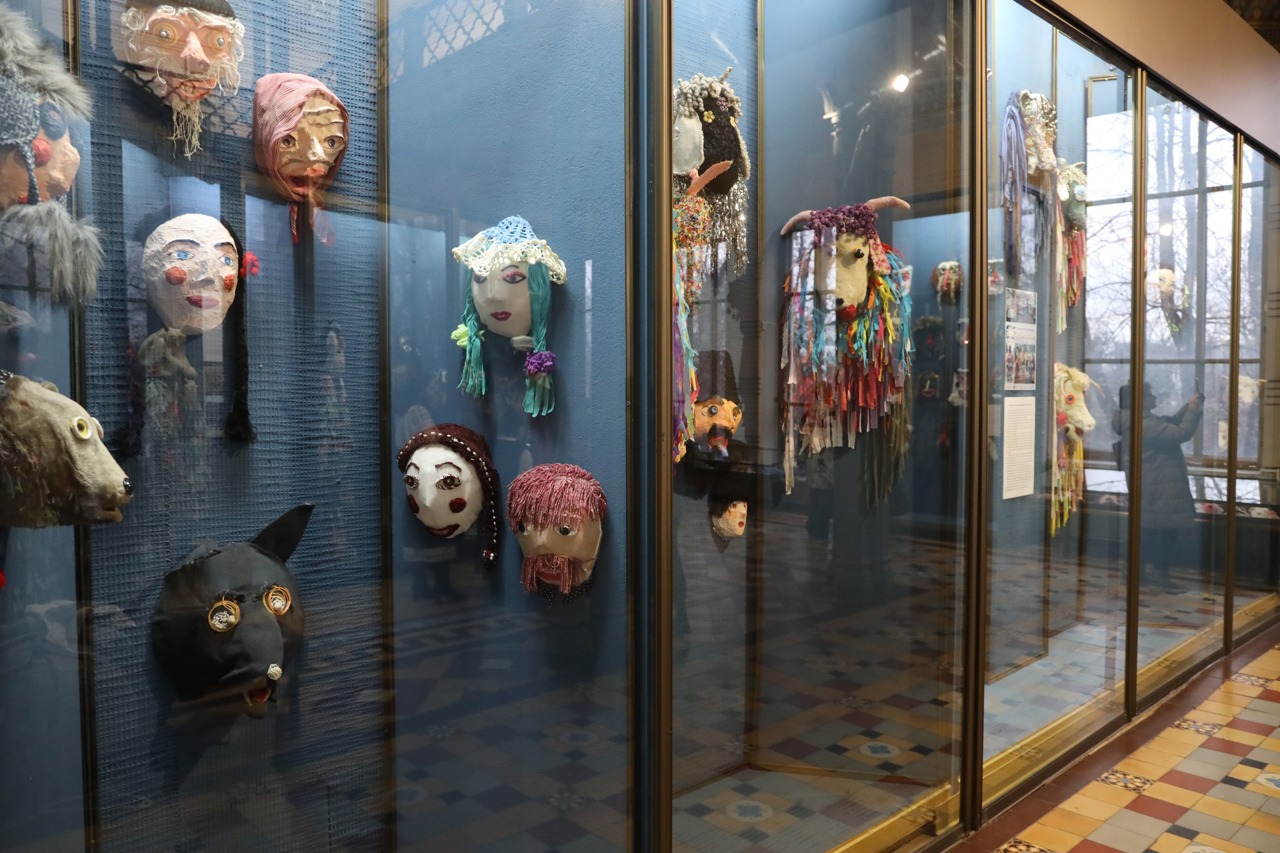
Visitors will have the chance to learn more about our traditions through the treasures displayed on the museum’s shelves.
At the exhibition’s opening, several artistic groups from the Ungheni district performed an authentic show of winter customs, carefully preserved and honored in their communities.
“We had the honor of presenting a live performance of the mask dance, a traditional practice from our district,” said Mihai Ganga, the artistic director from the village of Măcărești. “Through our traditions, clothing, dance, and folk songs, we will endure as a people through time. Once these traditions and customs are lost, we, as a people, will essentially disappear.”
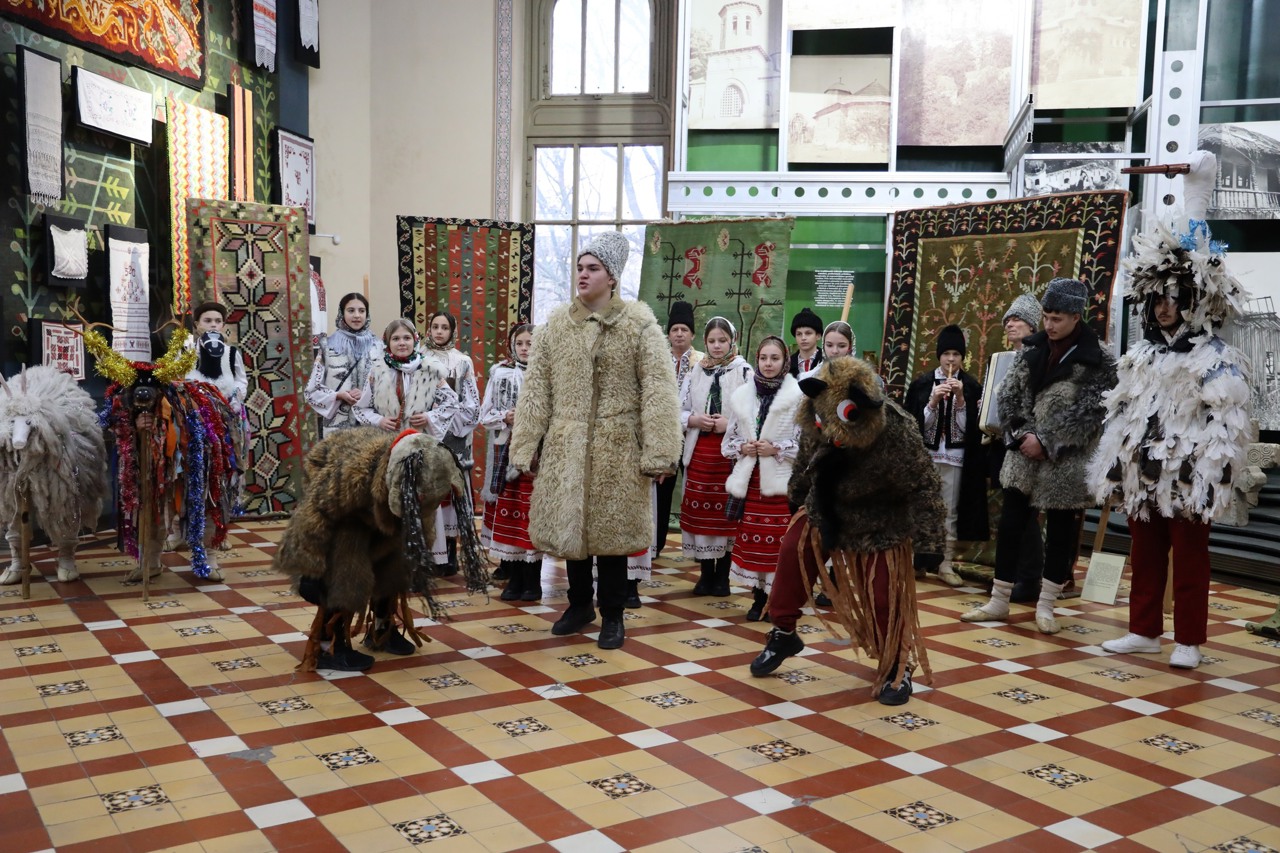
“In my opinion, it’s crucial that these values are not lost because they are vital to the culture of our people, our nation, and to preserving these traditions,” he continued. “It’s not that hard to learn the role of the stork; the movements aren’t too difficult. We don’t have much to dance, but the hardest part is the stork’s head, which is heavy.”
“How heavy is it?” “I don’t know, about 5-10 kilograms,” mentioned the participants.
“These masks represent the connection between nature and humans, between nature and society, and between good and evil. Most notably, the tălăncile masks symbolize driving away evil spirits from the village,” explained Silvia Poiană, a history teacher from the village of Petrești. “Thus, every person in the village would participate in malanca, a household game designed to drive away evil spirits and welcome the new, the beautiful, and the good.”
Visitors say they are amazed by the exhibition:
“I had the chance to meet a history teacher from the village of Petrești, and she told me a bit about this tradition, malanca, as well as mălăncuța, which is for both men and women. I was very interested to learn when and how this tradition is celebrated.”
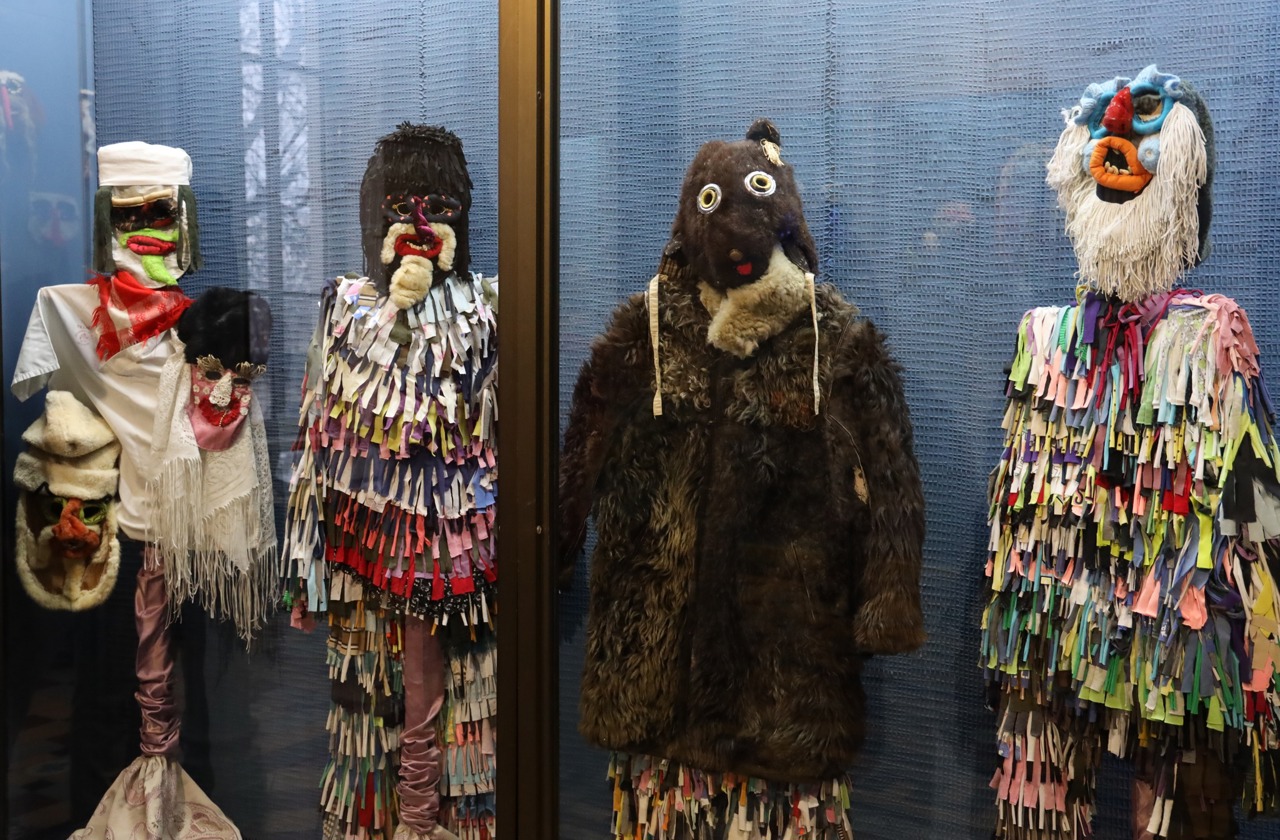
“They are quite beautiful, creating a strong impression. It’s fascinating to learn where your roots lie. Honestly, studying the culture of the village, I understand that it is rich and hidden. Only by visiting the museum or perhaps walking through the villages, studying, and observing, can you realize that it is a treasure that must be preserved.”
The exhibition of traditional Malanca masks will be open to the public for one month at the National Museum of Ethnography and Natural History in the capital.
Translation by Iurie Tataru