Unpopular but necessary reforms: Political analyst: Moldova’s EU integration depends on political will and social consensus
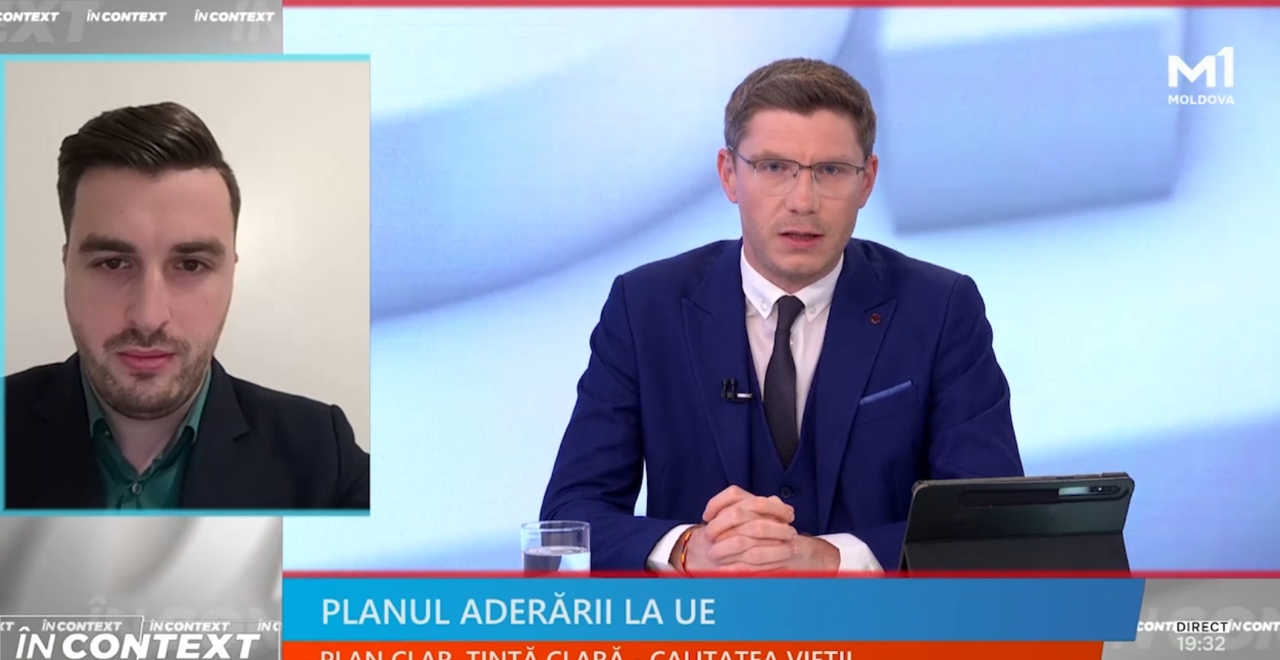
The reforms required by Moldova's path toward European integration are largely challenging and often unpopular, but they are necessary, according to political analyst Laurențiu Pleșca. He explains that the agenda for joining the European Union involves significant transformations of state institutions and the alignment of national legislation with European standards. This process not only demands technical effort but also requires ongoing political and social support.
In an interview for the show "In Context" on Moldova 1 TV, Pleșca said that the next few months are essential for public communication. "We need political debates. During the electoral campaign, we should talk more about ideas, not necessarily about populist things (...) It is important that, in the coming period, there is a real information campaign from all pro-European parties," the political analyst said.
In his opinion, the parliamentary elections on September 28 will represent the most crucial political test of this year. The European Commission is to publish a new progress report later, and the direction of the next legislative session will directly influence the pace of reforms.
Pleșca said that, beyond the technical component, the success of the process depends on the existence of a stable parliamentary majority capable of not only adopting the necessary legislation but also, at the right time, ratifying the Republic of Moldova's accession to the European Union.
The political scientist cited Romania as an example, which "understood that accession to the European Union was a national objective. Deep reforms were made, including "very unpopular" reforms, under pressure from society, citizens, and Brussels", and now the country's GDP has tripled, and the standard of living has increased.
We remind you that the government approved the National Programme for Accession to the European Union on Wednesday. It sets out the steps that will follow in the European integration process and the commitments undertaken to harmonise legislation and implement reforms. By 2029, 3,117 European acts will be transposed.
Experts say implementing this plan and fulfilling all its provisions is a great challenge. The Secretary of State for European Integration confirmed that the current government has undertaken an enormous task.