Russia's gas cuts spark Transnistrian region's deepening economic woes

The Transnistrian region is facing a severe economic collapse. As a result, from July until the end of 2025, public sector salaries in the region will be paid in two installments: the first by the 20th of the month, and the second by month's end.
The self-proclaimed Tiraspol authorities confirm the financial difficulties recorded across all local and district budgets.
The decision to pay salaries in installments was adopted by the so-called Tiraspol administration and is set to be applied for a six-month period, according to a purported draft law submitted by Vadim Krasnoselski, the leader of the separatist region.
The self-styled Tiraspol authorities justify this measure by citing the depletion of the region's reserves and their inability to execute the "regional budget," blaming the "energy crisis and geopolitical situation."
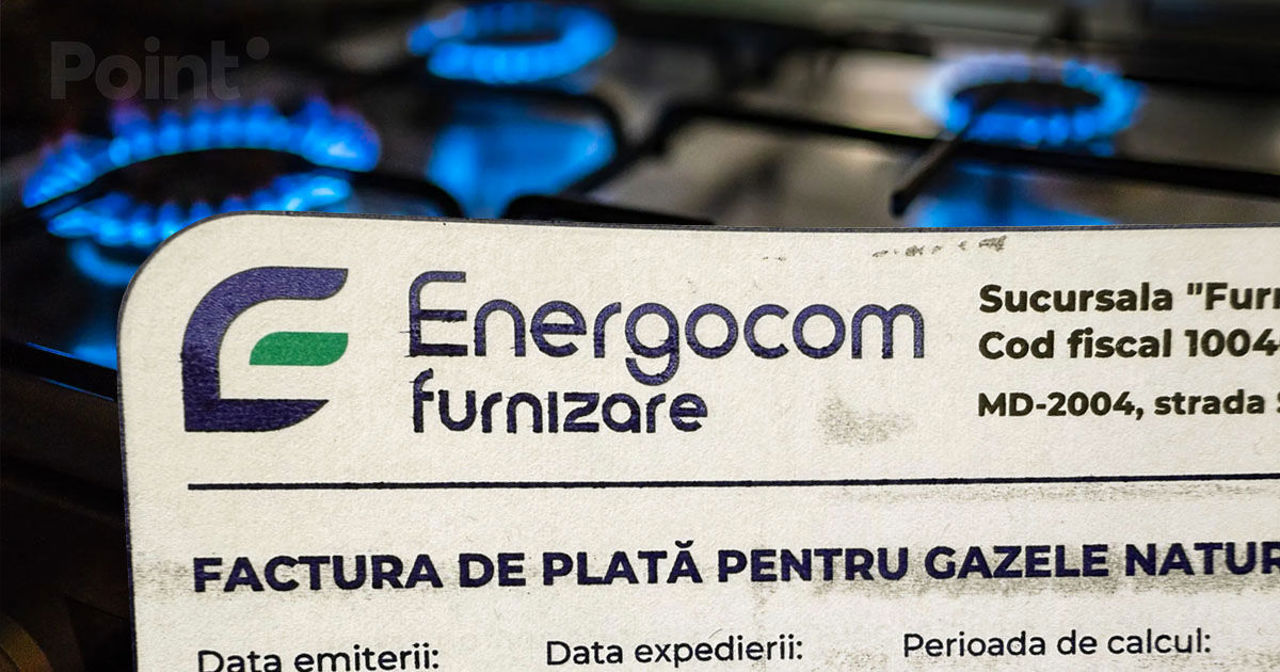
Although the current crisis was triggered by Moscow's refusal to supply sufficient natural gas to Transnistria, a region of Moldova, the Tiraspol administration continues to blame the constitutional authorities in Chisinau. However, government representatives assert that these accusations are attempts to promote false narratives in favor of the Russian Federation, especially with upcoming parliamentary elections.
Recently, Tiraspol received 35 million rubles (equivalent to over 37 million Moldovan lei) as "charitable aid" from Victor Gușan, the president of the local Sheriff company. According to the local administration, due to the energy crisis, the city faces severe financial difficulties, which is why the funds will be primarily used to address "household problems."
It's worth noting that the economic state of emergency, established in late 2024 by the separatist leader's decree, has been extended multiple times for 30-day periods in the territory on the left bank of the Dniester. This time, the state of emergency has been extended until July 11.
Earlier last month, gas stations in the region suspended the sale of liquefied petroleum gas (LPG) for two weeks, resuming it only on June 20. This crisis was caused by the Russian Federation's delays in paying for gas destined for Transnistria, as per its assumed obligation, leading to reduced deliveries—under one million cubic meters of gas per day—for several weeks.
In January 2025, Moscow completely ceased gas deliveries to Transnistria, leaving the population without heating and electricity. In response, Chisinau permitted gas transit to the region in February, based on a contract between Moldovagaz and a European trader, with advance payment. From February 1-10, the European Union paid 20 million euros for the purchase of gas intended for the separatist region.
Subsequently, Tiraspol rejected a 60-million-euro grant offered by the EU for continued gas supply after February 10. However, the region opted to receive gas paid for by a Dubai company and delivered by one from Hungary. Under these conditions, the local administration restarted part of its heavy industry, using natural gas, despite prior agreements stipulating that the resources were to be used exclusively for the population's needs.
President Maia Sandu confirmed that the gas currently reaching the region is paid for by the Russian Federation, but she specified that Moldovan authorities do not have clear information about the payment mechanism.
The head of state also emphasized that resolving the region's economic problems is impossible as long as Russia illegally maintains its military troops in Transnistria.
Translation by Iurie Tataru