Russia's industrial sector on brink of recession
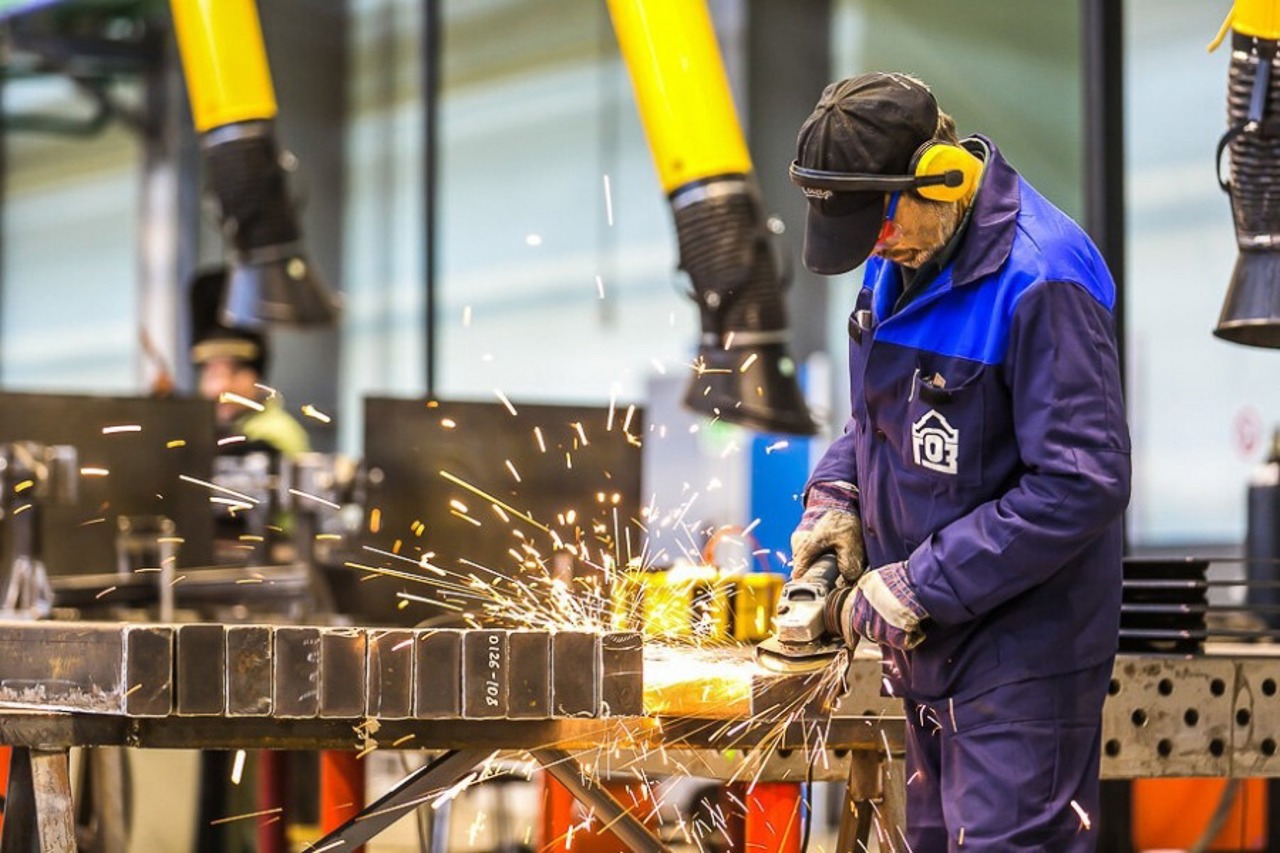
Russia's slowing economy is revealing deep-seated problems. Despite continued industrial growth, a closer look reveals a peculiar trend.
According to a pro-Kremlin think tank, most sectors are now experiencing a production decrease, The Moscow Times reports.
The Centre for Macroeconomic Analysis and Short-Term Forecasting (CMASF) compared production dynamics for 129 essential products with those of the previous year. The Centre's analysis shows that most are in decline, and their proportion is growing. While the share was 66% in the January-April period, it had grown to 73% after the first seven months.
According to Rosstat data, total production from January to July was 0.8% higher than the previous year. This is being propped up by growth in a handful of key sectors like energy extraction, shipbuilding, and aeronautics, the think tank noted.
However, Rosstat reports that after seven months, production is down in fields like food and beverages, leather and textile goods, clothing and footwear, vehicles and tires, furniture and construction materials, refrigerators and washing machines, and metallurgy.
Russia's industrial sector is on the verge of a recession, according to the CMASF. "The slowdown in the restructuring of the Russian economy has brought to light the development problems in civilian sectors, which are heavily dependent on market conditions," the centre concluded. Its experts had previously calculated that production in civilian processing sectors (excluding oil refining) had decreased in each of the first seven months of the year.
CMASF believes the main cause is the high key rate, which has reduced the profitability of businesses and pushed up the yields of risk-free financial instruments. By the second quarter, the average profitability of companies fell below the yield of government bonds (OFZ). This has reduced investment incentives and affected demand. Currently, profitability exceeds risk-free yields only in the extractive sector, while in processing industries, the situation is the reverse. "The high yields of financial instruments continue to discourage the development of processing production in the civilian economy," the CMASF noted.
The Central Bank's own monitoring shows the situation has worsened for most businesses over the last year, with August marking the lowest assessment levels since October 2022. The Manufacturing PMI index, calculated by S&P Global, has been in the contraction zone for the third consecutive month, and in August it was 48.7 points (the threshold is 50). The index hit a low point in July. S&P Global highlights the continuous reduction in production and orders, including those for export, The Moscow Times notes.
Translation by Iurie Tataru