Von der Leyen faces new EU no-confidence motions
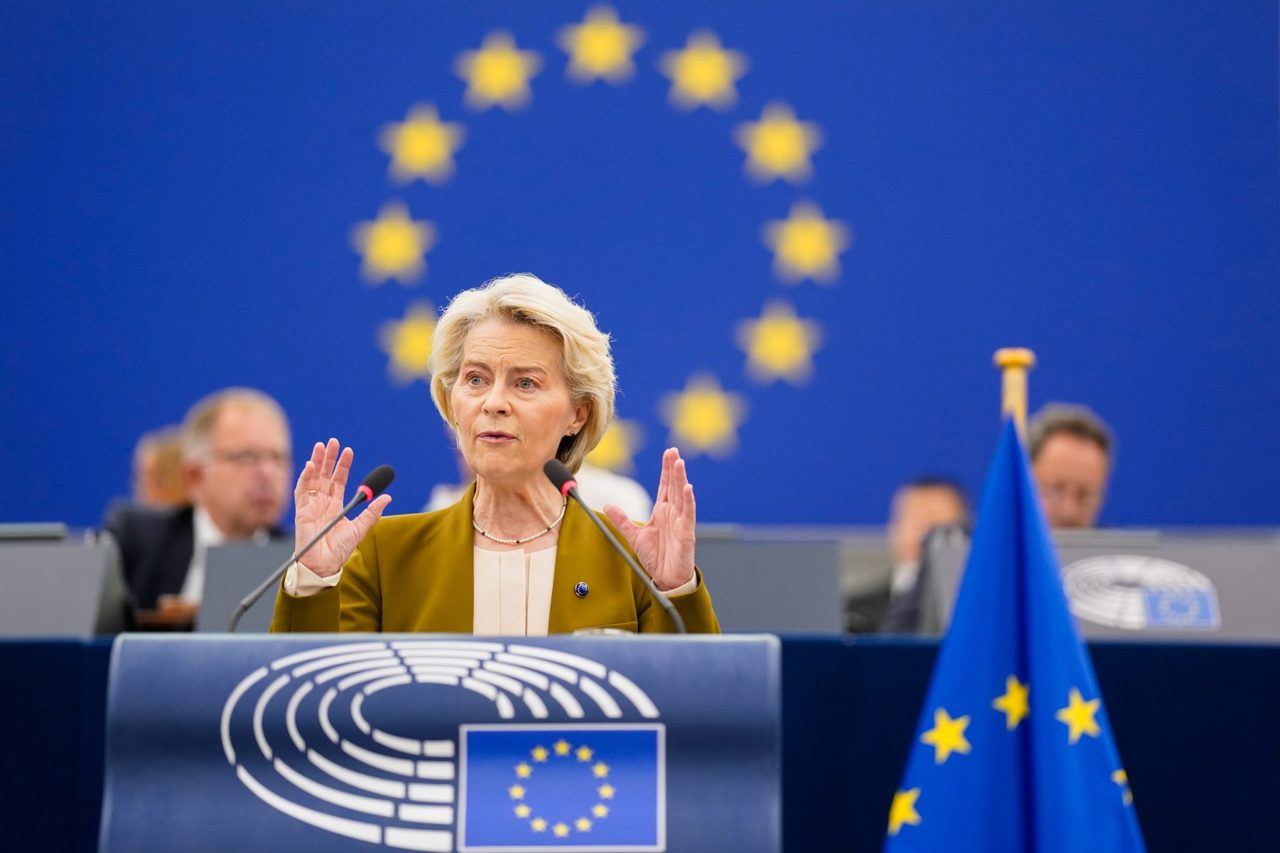
European Commission President Ursula von der Leyen faces two new confidence motions in the European Parliament.
In a plenary speech, Ms von der Leyen called for unity among pro-EU forces against those she believes are trying to destabilise Europe, mentioning Russian President Vladimir Putin.
"The objective of this unity is not necessarily to agree on every detail: tension and debate are an inherent and important part of the policymaking process. The objective is the big picture: to unite around what we have in common to support Europeans in this dangerous world," she said in a speech to MEPs in Brussels.
The two motions were submitted by the Patriots for Europe and The Left political groups.
Although their chances of success in the vote scheduled for Thursday are virtually zero (a two-thirds majority is needed), they reflect a change in the atmosphere in the European Parliament, where sovereignist parties made gains in the 2024 European elections.
However, they failed to fundamentally shift the balance of power. Pro-EU groups—the European People's Party (EPP), the Socialists & Democrats (S&D), the Liberals (Renew), and the Greens—formed a majority that supported Ms von der Leyen for another term at the helm of the European Commission, with the current motions serving as a test for this majority.
The criticisms mainly concern the US trade agreement signed by Ms von der Leyen and former US President Donald Trump—an agreement seen as unbalanced in favour of the US. Also mentioned are the Mercosur trade agreement, as well as the EU's inaction in the face of the serious humanitarian situation in the Gaza Strip.
Speaking to the Parliament, where she was accompanied by most European Commissioners, Ms von der Leyen particularly addressed undecided MEPs who share the criticisms leveled against the European Commission, promising them that her team is available to discuss any issues.
"I know there are real and legitimate concerns. I want to reaffirm my commitment to the dialogue of my Commissioners with you in whatever format is necessary to try and find answers together. It is a shared responsibility, and I know that this House is prepared to assume it," said Ursula von der Leyen, according to Agerpres.
According to the head of the European Commission, the European Union's adversaries "are not just prepared to exploit any division" within it, but "actively incite these divisions."
"Russian President Vladimir Putin does not hide his contempt for our Union and its foundations. Nor does he hide his support for the 'obedient friends' in Europe who do his work. This is the oldest trick in the book: sowing division and spreading disinformation to make Europeans fight among themselves and drop their guard," she affirmed.
In Ms von der Leyen's view, this is a "trap" that the EU cannot fall into, and the strongest message it can send "is that of unity."
Ms von der Leyen and the Commission she leads would be forced to resign if either of the two motions were adopted, although this is unlikely, given her majority support. Nevertheless, this move could offer her centrist allies a chance to secure concessions, as they did during the last confidence motion in July.
A majority of the European Parliament rejected the confidence motion against Ms von der Leyen on July 10. The initiative failed but left behind the image of a vulnerable leader. With 175 votes in favour, 360 against, and 18 abstentions, the Parliament rejected the motion. In this context, Ms von der Leyen adopted a defiant tone, defending her mandate and promising she "will never allow extremists to rewrite history."
Translation by Iurie Tataru