Russia faces growing budget deficit as military spending caps loom
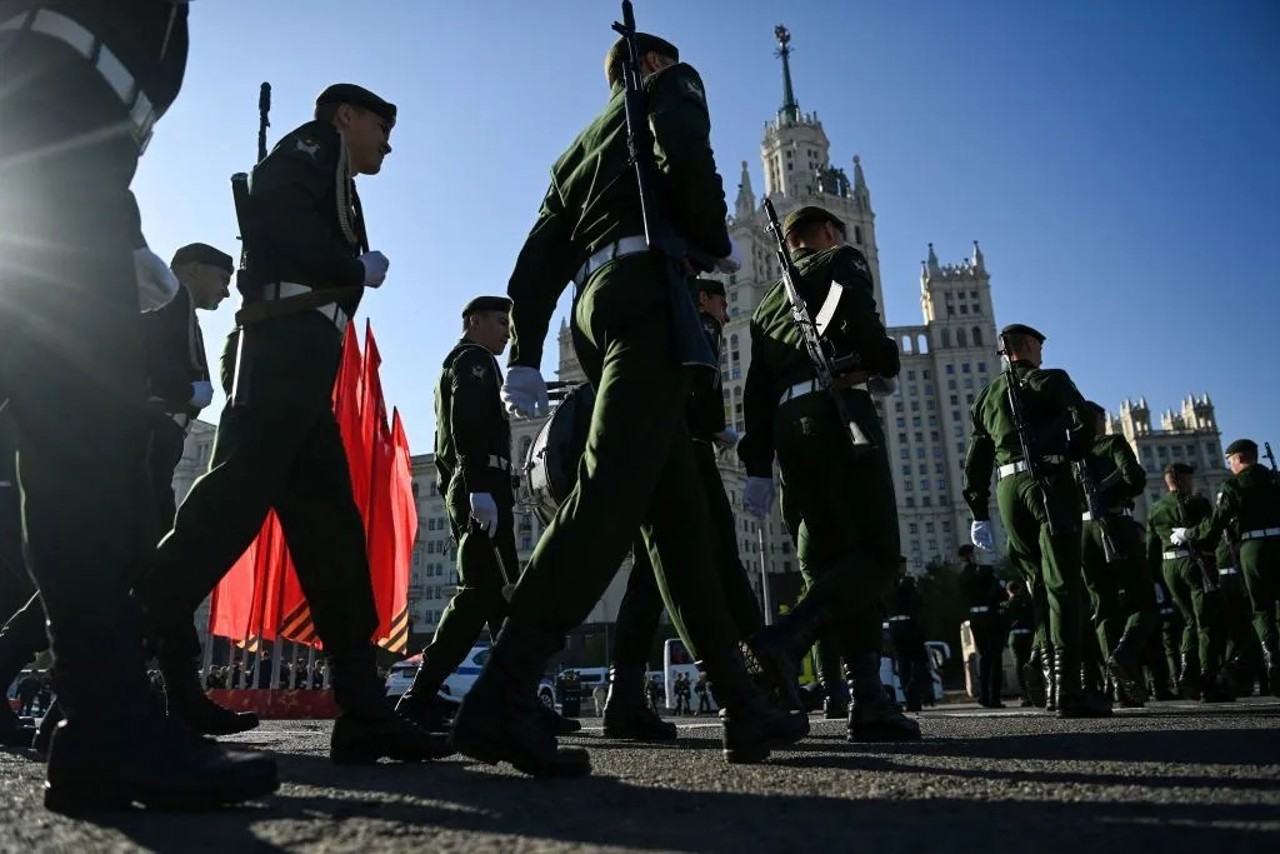
Russia is facing significant budget challenges, according to economic analysts, as the Kremlin grapples with a widening fiscal gap.
In early October, the Russian Government published the full draft of the federal budget for 2026-2028, outlining President Vladimir Putin's key political priorities for the coming years. Russian opposition politician Vladimir Milov, in a report for the Free Russia Foundation shared with the Kyiv Independent, stated that Russia's budgetary situation is far from "normal."
"To keep Russia's military machine functioning this way, you need a lot more money—and it simply isn't there," explained Milov, who served as an economic advisor to the Russian Government in the early 2000s.
Vladimir Dubrovskiy, senior economist at the Center for Social and Economic Research in Ukraine, emphasized that the deficit is "Russia's worst economic and political-economic problem." According to Milov's analysis, the country is set to face seven consecutive years of a high budget deficit (over 2%)—a streak not witnessed since 1999.
The Russian Government has officially abandoned its goal of limiting the deficit to below 1% of GDP. For 2025, the forecasted deficit was raised by 0.5% to a total of 2.6%. The government expects the 2026 deficit to fall to 1.6% of GDP, yet analysts, including the KSE Institute, deem this projection highly unrealistic.
"The deficit Russia is forecasting for 2025 is quite significant. The planned deficit for 2026 is smaller, but these figures are just an illusion," said Benjamin Hilgenstock, head of macroeconomic research and strategy at the KSE Institute.
Dubrovskiy believes the projected figures are understated: "If the war continues, the deficit will almost certainly grow significantly, as has happened in the past. Furthermore, this estimate does not factor in the potential impact of future Western sanctions."
Moscow remains excluded from international financial markets due to sanctions, forcing its dependence on domestic loans and limited reserves. China, once viewed as a potential creditor, has declined to grant government loans. This fiscal pressure compromises Russia's ability to finance the war against Ukraine.
The Kremlin has been compelled, at least in its public documentation, to cap further military spending increases to keep its accounts under control. The Government, however, no longer publishes actual spending data, providing only forecasts.
Moscow projects that defense spending between 2026 and 2028 will remain steady, slightly decreasing as a share of GDP from 6.3% in 2025 to 5.5% in 2026 and 2027, and further to 4.7% in 2028.
Vladimir Milov stated that these figures mask a deeper issue: "The military-industrial complex is facing financial difficulties. Keeping it functioning even at the current pace... is becoming increasingly difficult."
Sergei Chemezov, CEO of Rostec, Russia's largest arms producer, acknowledged in August that "the profitability of production remains low, and in some cases even zero, if not negative." The result, Milov said, is that Russia can only afford a limited, low-intensity war.
He observed that the current phase of the conflict "is not very intense" in terms of heavy military equipment use, relying mainly on drone attacks, missile strikes, and localized offensives. "They can sustain this type of war for a period of time," Milov concluded.
With traditional funding avenues exhausted, Russia faces limited options for deficit financing. The liquid portion of the National Wealth Fund—once Russia's principal fiscal buffer—has shrunk to 4.2 trillion rubles (approximately $50 billion), significantly below the 5.7 trillion rubles (approximately $70 billion) deficit projected for 2025 alone.
Internal borrowing through government bonds is functionally impossible under current conditions, as 10-year bond yields exceed 15%. The cost of debt servicing negates the amount that can potentially be raised.
Consequently, the only remaining option the government appears to be pursuing is monetary printing—in effect, credit granted by the Central Bank, Milov noted. "Large-scale internal borrowing would further depress the economy and immediately remind Russian elites of the disastrous financial collapse of 1998," Dubrovskiy said.
Milov argued that Europe must accelerate the phased elimination of Russian energy—reducing liquefied natural gas imports by 2027 and all other energy resources by 2028, to further disrupt Russia's war machine.
Vasily Astrov, a senior economist at the Vienna Institute for International Economic Studies, attributes Russia's worsening fiscal performance this year primarily to lower global oil prices and an overvalued rouble (Note: Changed "ruble" to "rouble" as per common BBC style).
Milov emphasized that Western sanctions—while not a single "magic bullet," but a complex system of restrictions—are working.
Translation by Iurie Tataru