UNICEF says Moldova needs to improve institutional capacity on child rights
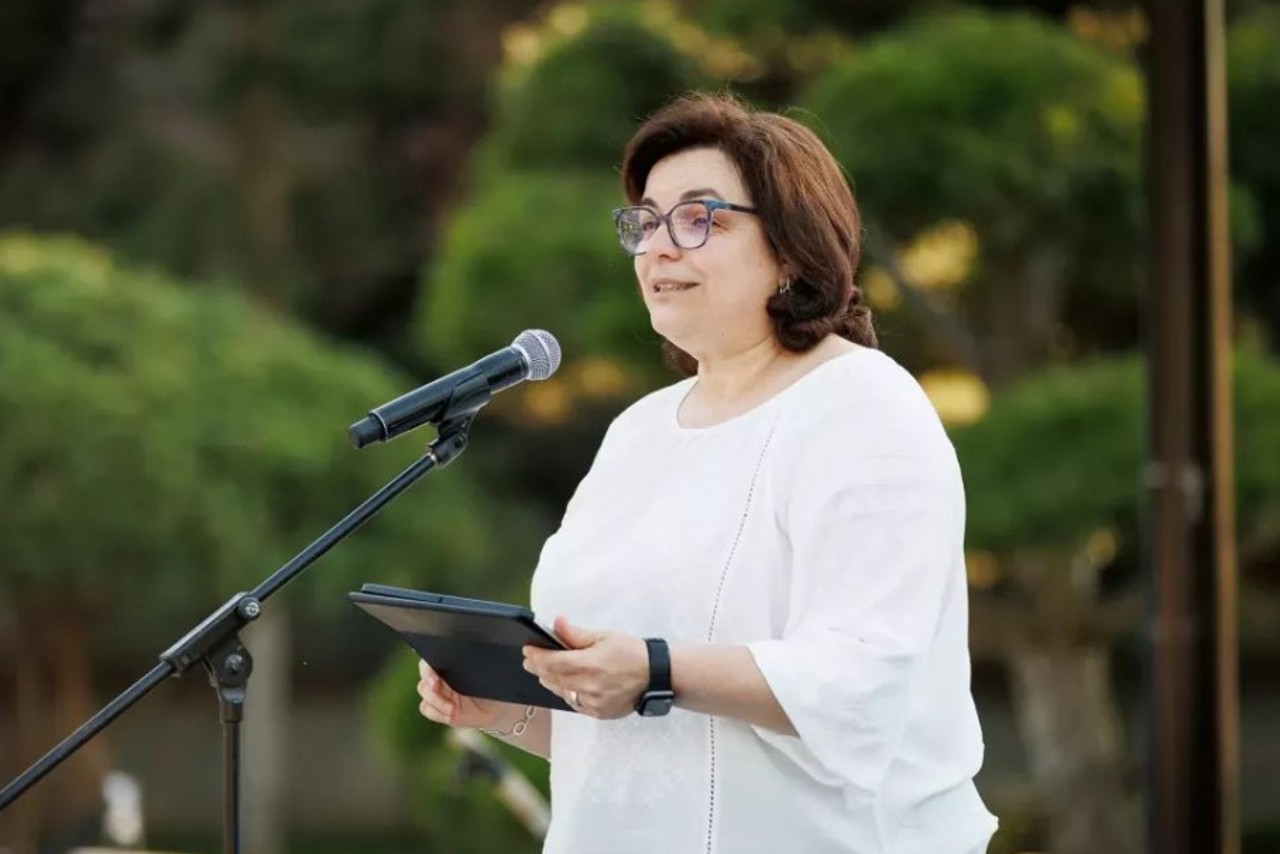
The Republic of Moldova has registered notable progress in safeguarding children's rights, yet significant challenges persist, particularly regarding institutional capacity, stated Maha Damaj, UNICEF Country Representative in Moldova.
Her comments were made in an interview with Moldova 1, released on the occasion of the International Day of Children's Rights on 20 November.
'Children's rights are not fully respected anywhere in the world. There is always work to be done, and progress must be viewed realistically,' noted Ms. Damaj.
'While countries should not be compared, I would say that Moldova is certainly showing a strong trend of improvement. Substantial progress has been achieved, but more is required; the country is moving in the right direction,' she highlighted.
Focus on Teachers and Educational Reform
Education is identified as one of the most pressing sectors. Ms. Damaj argues that genuine transformation hinges on core investment in teachers.
'The ongoing educational reform is ambitious and appropriately focused. In my professional opinion, teachers are fundamental,' the UNICEF official declared.
'Increased investment in teachers inherently improves the overall educational system for all children,' she explained.
Addressing Digital and Safety Risks
While digital transformation is beneficial, it creates growing risks to child online safety. UNICEF is addressing this by training thousands of teachers to the European DigiComp standard and delivering safety programmes for the virtual environment.
'The dangers of the online world are evolving significantly faster than the safety measures being implemented,' warned Maha Damaj.
To counteract this, UNICEF is collaborating with the Ministry of Internal Affairs to establish a mechanism for reporting online abuse. 'The aim is to ensure that children who may be exploited online receive necessary support to recover from trauma,' she confirmed.
Urgent Priorities: Mental Health and Violence Prevention
In violence prevention, UNICEF has supported the development of anti-bullying guides, which are now used in schools and include clear intervention procedures.
The organisation is simultaneously working with the National Agency for the Prevention of Domestic Violence on programmes designed to shift social norms, aiming to ensure violence is neither accepted nor ignored.
Youth mental health remains a critical concern.
"We have long supported youth-friendly health services, such as clinics that integrate psychologists and counsellors,” Ms. Damaj said. She detailed two methods for expanding coverage to remote areas.
The first is a 24/7 mental health hotline, operational since 2022. “The high volume of calls indicates significant demand for this service. We know the hotline has already helped prevent potential suicides,” she noted.
The second method involves mobile clinics and youth-friendly services reaching villages where psychological support is often limited.
“For the mobile clinics, a psychologist from the Youth Family Health Service joins the team. They follow a set schedule, visiting schools and vocational institutions in remote districts,” she explained. This outreach ensures young people have access to a trusted psychologist and peer support.
Reducing Rural-Urban Disparities
UNICEF promotes flexible models to reduce the rural-urban disparity. Solutions include regular school transport, better-trained teachers, and mobile educational or health teams, such as STEAM on Wheels.
“There is no single solution that works universally. We must begin with teachers,” Ms. Damaj stated.
“Teachers should be given the autonomy to focus on children's needs, moving away from overly rigorous curricula towards a child-centred approach,” she advised. “This requires not just training, but subtle adjustments to the curriculum and classroom approach. These are all interconnected components.”
Addressing the problem of long distances between schools, she acknowledged the difficulty: “Creating a closer school for a village with few students is inefficient and compromises teaching quality.”
“Therefore, the focus must be on facilitating transportation,” the UNICEF representative specified. “Regular, cost-free school buses enable young people to reach larger schools, accessing better facilities, teachers, and equipment necessary for their development.”
Maha Damaj concluded with a message on empowerment: “It is unacceptable that any child facing hardship or injustice should feel powerless to defend themselves. This self-protection is the most crucial aspect of children's rights.”
“The child must understand that their rights are protected by law, conventions, and the systems designed to support them, regardless of their circumstances,” she asserted.
Translation by Iurie Tataru