Expert: Trump’s plan implies Kyiv’s capitulation and gives Moscow new leverage in Eastern Europe, including Moldova
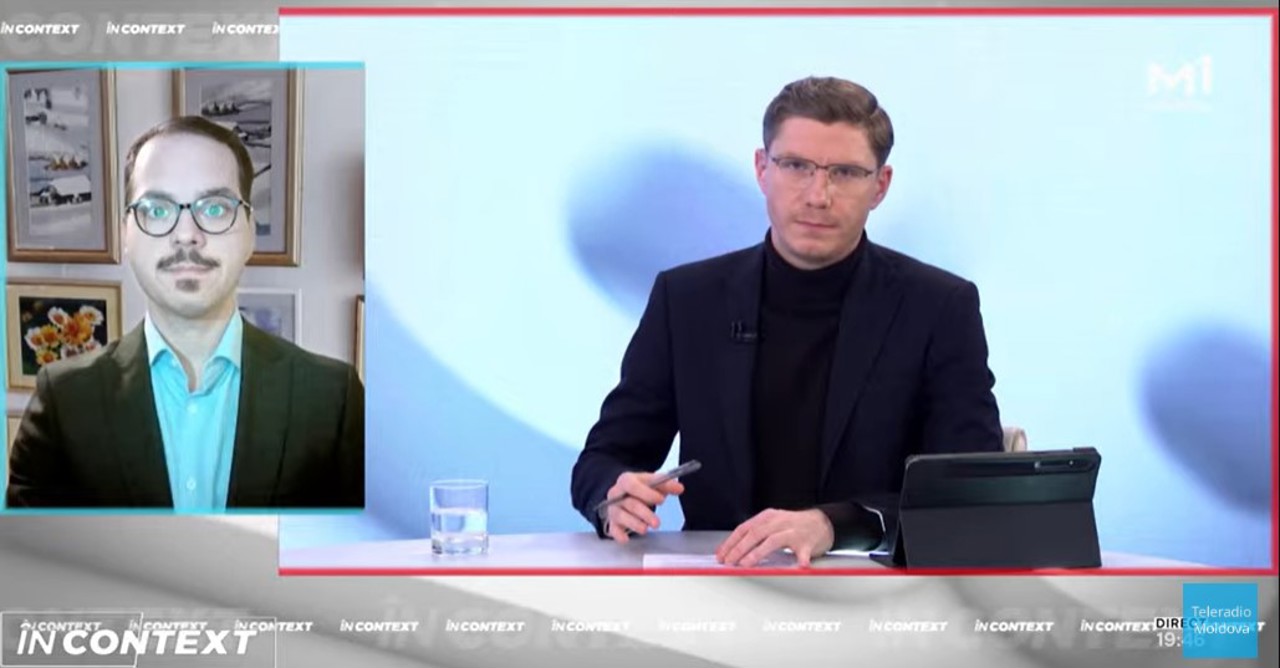
The "Peace Plan" for the war in Ukraine, which has been secretly developed by the United States and Russia, requires Ukraine to make territorial concessions and accept military limitations. This plan could have significant repercussions for the security and stability of the entire Eastern European region, including the Republic of Moldova. Romanian political scientist Cătălin Gabriel Done expressed concerns on the show ÎN CONTEXT on Moldova 1 TV, stating that the initiative would involve "political and military capitulation" and could lead to a change in the current leadership in Kyiv.
Cătălin Gabriel Done stated in an interview on Moldova 1 TV that “an agreement perceived as being imposed by external powers, specifically the US, which requires territorial concessions, would first and foremost fuel protests. Ukraine has a very strong civil society, and such an agreement would lead to political fragmentation. It would also weaken the government’s ability to respond to opposition and public sentiment. This situation would undermine the current political class in Kiev’s capacity to manage reconstruction and maintain social cohesion.”
Done described the implementation of such a plan as a political and military capitulation for Kiev, drastically diminishing Ukraine’s defense capabilities. He warned that the ceded territories could become permanent bases for Russian hybrid actions.
“In practice, these territories could serve as platforms for political pressure and hybrid activities by the Russian Federation, while also exerting long-term economic influence on Ukraine. A formal agreement with Russia, along with security guarantees from the US, would not eliminate the risk of renewed Kremlin aggression; rather, it would alter the format of confrontations,” he explained.
He cited historical precedents, noting that the security guarantees offered to Ukraine under the 1994 Budapest Memorandum did not prevent the Russian invasion.
Done emphasized that “the prospect of Western unity and the development of a negotiated plan between the US and Russia, with the marginalization of the European Union, could lead to significant friction in transatlantic relations. European capitals that currently finance and equip Ukraine might feel excluded and could reconsider their support for Ukraine, thereby limiting Kiev’s options both diplomatically and militarily.”
He warned that existing tensions between the US and the EU pose a risk to Western coordination: “The divergences between Washington and European capitals are currently increasing, which can result in weaker coordination during this critical geopolitical moment—one that threatens regional security in Eastern Europe, not just in Ukraine.”
Done also highlighted the regional impact on Moldova and Romania, explaining that changes in border control could immediately alter administrative maps.
“In the context of approving such an agreement, it would merely normalize territorial losses in Ukraine. This would provide Moscow with opportunities to influence the Republic of Moldova, including by strengthening Russian pro-Russian narratives and using Transnistrian region as leverage through energy pressure. The economic and political vulnerabilities, including dependence on certain markets and economic flows, mean that Moldova’s stability is closely linked to Ukraine’s ability to remain sovereign and stable—this applies to both Moldova and Romania,” concluded the Romanian political analyst.
The administration of U.S. President Donald Trump has secretly developed a plan to end Russia’s war in Ukraine, which would require significant concessions from Kyiv. According to reports from Reuters, Axios, and the Financial Times, the document outlines 28 points. It proposes, among other things, ceding territories in the east, reducing the Ukrainian army, and renouncing certain types of weapons, all in exchange for security guarantees from the U.S. and Europe.
A source within the White House revealed that this document was created in recent weeks by senior officials of the Trump administration, including special representative Steve Whitkoff, Vice President J.D. Vance, Senator Marco Rubio, and Jared Kushner, the president’s son-in-law, in consultation with the Russian representative Kirill Dmitriev.
On November 20, Ukrainian President Volodymyr Zelensky officially received the "Peace Plan," developed in secret by the United States and Russia, according to a statement from the Office of the Ukrainian President. Zelensky aims to work on the points outlined in the plan to reach a dignified end to the war and hopes to discuss it with U.S. President Donald Trump in the coming days.