Trump says US peace plan for Ukraine is not 'final offer'
Security officials from the United Kingdom, France, Germany, the United States, and Ukraine convened in Geneva, Switzerland, on Sunday, November 23, to discuss a peace plan drafted by the American administration aimed at ending Russia's war against Ukraine.
Ukrainian President Volodymyr Zelensky has called on allies to bolster his country’s air defense capabilities amid relentless attacks by the Russian military.
"It is positive that diplomacy has been activated and that discussions can be constructive," Zelensky stated in a message posted on Telegram. "Ukrainian and American teams, along with our European partners, are in close contact, and I very much hope for a result. We must stop the bloodshed and guarantee that the war will not be reignited. I await the conclusions of today's discussions and rely on all participants to be constructive. A positive result is necessary for us all."
According to Deutsche Welle (DW), the Ukrainian delegation met with representatives from London, Berlin, and Paris during the consultations. US Secretary of State Marco Rubio and President Trump’s Special Envoy Steve Witkoff also arrived in Geneva for the negotiations.
Europe Sets Red Lines
European Commission President Ursula von der Leyen issued a firm stance regarding the conditions the European Union considers essential for any peace deal. In a statement on X, she outlined three fundamental prerequisites:
Ukraine’s borders cannot be altered by force.
No limits should be imposed on Ukraine's armed forces that would leave the country vulnerable to future attacks.
The EU's central role in securing peace must be fully reflected, with a clear path for Ukraine to eventually join the bloc.
Von der Leyen argued that long-term stability depends on guaranteeing Ukraine's security and upholding international law.
"Any agreement must include the return of Ukrainian children abducted by Russia. We will not rest until every single one of them is reunited with their families, in their own homes," von der Leyen declared.
US Stance: Flexibility Amid Tension
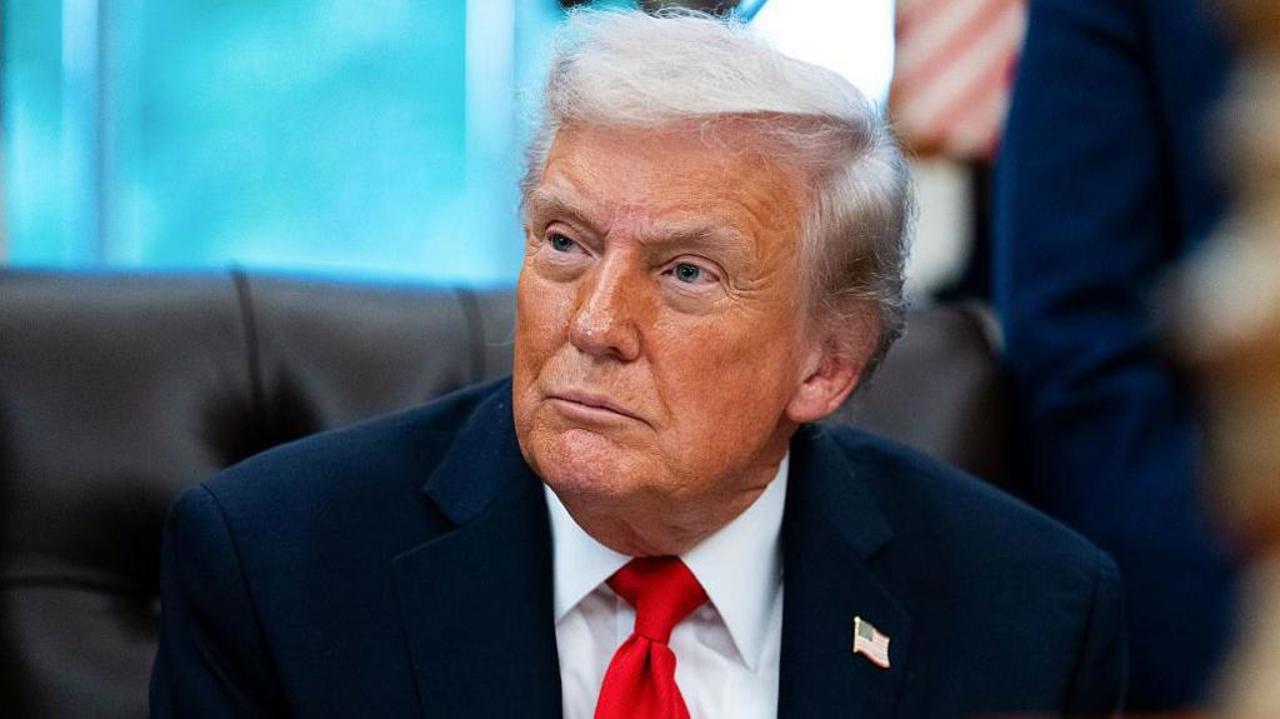
President Donald Trump stated that the US plan to end the war is not his "final offer" to Kyiv, following concerns raised by Ukraine's allies regarding the proposal. Secretary of State Marco Rubio later clarified that while the plan originated from the US, it was "based on inputs" from both Russia and Ukraine.
On Saturday, November 22, leaders from Europe, Canada, and Japan acknowledged that the plan contains elements "essential for a just and lasting peace" but noted it would "require further work," citing concerns over border modifications and military restrictions on Ukraine.
President Zelensky warned that Ukraine faces "one of the most difficult moments in our history" as pressure mounts from the US to accept a plan widely seen as favorable to Moscow. Trump reportedly gave Ukraine until November 27 to accept the 28-point plan, while Russian President Vladimir Putin suggested it could serve as a basis for an agreement.
When asked by reporters at the White House if the current draft was the final ultimatum, Trump replied: "No, it is not my final offer. One way or another, we have to end the war, so we are working on that."
International Pushback
According to News.ro, Secretary of State Marco Rubio and Special Envoy Steve Witkoff are attending the Sunday talks in Geneva. National Security Adviser Jonathan Powell is representing the United Kingdom.
A joint statement issued Saturday at the G20 Summit in South Africa—signed by leaders from Canada, Finland, France, Ireland, Italy, Japan, the Netherlands, Spain, the UK, Germany, and Norway, along with two high-ranking EU officials—read:
"We therefore consider the draft a basis that requires further work. We are ready to engage to ensure that a future peace is sustainable. We agree with the principle that borders must not be changed by force."
The statement also highlighted concerns regarding proposed caps on Ukraine's military strength, noting that implementation involving the EU and NATO would require the consent of their respective members, according to the BBC.
British Prime Minister Keir Starmer, attending the G20 in Johannesburg, spoke by phone with Zelensky on Saturday before calling Trump. A Downing Street spokesperson stated that Starmer relayed discussions held by the "Coalition of the Willing"—Ukraine's allies—ahead of the summit. Leaders agreed their teams would work together in Geneva on the 28-point US proposal.
"It is essential that Ukraine is able to defend itself if a ceasefire is reached," Starmer said, expressing concern over military limitations.
French President Emmanuel Macron also called for revisions to the US proposal, emphasizing that "borders cannot be changed by force" and that Europe’s stability relies on support for Ukraine. He insisted that the 28-point plan "must be consolidated" to prevent Ukrainian vulnerability and that any decision involving the EU or NATO requires member consensus.
Details of the Proposed Plan
The US peace plan proposes the following key points:
Territorial Withdrawal: Ukrainian troops would retreat from the parts of the eastern Donetsk region they currently control, as well as the neighboring Luhansk region and the southern peninsula of Crimea (annexed by Russia in 2014).
Frozen Frontlines: Borders in the southern regions of Kherson and Zaporizhzhia would be frozen along the current front line. Both regions are partially occupied by Russia.
Demilitarization: The Ukrainian army would be limited to 600,000 personnel.
Security Guarantees: European fighter jets would be stationed in neighboring Poland. The plan promises "solid security guarantees" for Kyiv, though specific details remain vague.
Geopolitics: It is expected that Russia would not invade its neighbors and that NATO would halt further expansion.
Economic Reintegration: The plan suggests Russia would be reintegrated into the global economy through the lifting of sanctions and an invitation to rejoin the G7, effectively restoring the G8.
Translation by Iurie Tataru