Ministry of Health plans investments in public hospitals to attract patients back from private clinics

In response to the growing trend of patients choosing private clinics, the Ministry of Health has announced significant investments in public hospitals and enhancements to medical services at the regional level. These efforts aim to improve the quality of care and restore the public's trust in the healthcare system.
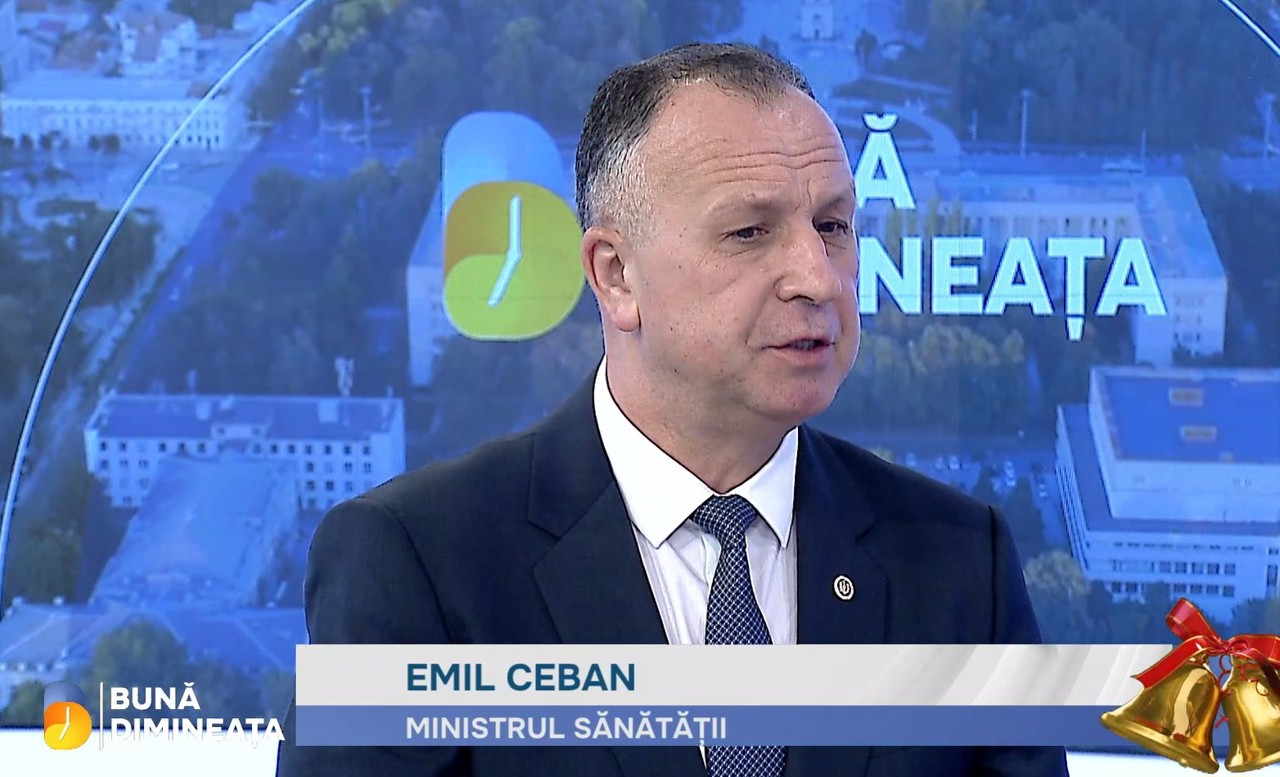
During the show Bună dimineața on Moldova1 TV, the Minister of Health, Emil Ceban, highlighted the government's ongoing efforts to modernize medical infrastructure. He noted that his recent visits to various hospitals revealed both the current state of healthcare facilities and the urgent needs of the system.
Ceban stated, "This month, I visited many hospitals and clearly saw what the problems are. Each year, within the limits of our budget and the country’s capabilities, we strive to develop the health system across all segments — from primary and pre-hospital medical care to hospital care."
He announced that 242 million lei were allocated to five major hospitals: the Republican Clinical Hospital "Timofei Moșneaga," the Mother and Child Center, the Institute of Emergency Medicine, the Oncology Institute, and the Institute of Cardiology. Each institution will receive approximately 40 million lei to enhance patient access to modern diagnostic services.
Additionally, authorities are working diligently to modernize oncology services and decentralize them at the national level. In this regard, the minister announced the signing of a letter of guarantee for the procurement of advanced equipment for treating patients with thyroid cancer.
"Until now, all patients had to travel abroad for iodine therapy, and the state was covering those costs. We need special facilities and treatments for these patients, and this investment will be a priority this year," promised the Minister of Health.
Commitment to combat corruption in the healthcare system
Emil Ceban highlighted the issue of an aging medical workforce, particularly in rural areas, and noted that authorities are implementing policies to encourage the employment of young specialists in hospitals.
"We have many colleagues who are nearing retirement or have already retired, especially in rural regions, where finding replacements for family doctors is challenging. After the Republic of Moldova gained independence, a complex period led to a significant number of young professionals, including doctors, leaving the country," the minister explained.
He emphasized that the healthcare system is undergoing a generational change, and in the last five to six years, the migration of doctors has decreased. Improved working and living conditions, along with positive social changes, are helping to retain young specialists in the Republic of Moldova and strengthen the healthcare system.
Additionally, the authorities are focusing on the implementation of the national health innovation strategy for 2026-2030, which aims to equip medical and healthcare institutions with modern technology and organize retraining programs for medical personnel.
"The health system requires continuous reform and modernization. Technology is evolving rapidly, and equipment must be updated regularly. A key element remains decentralization, bringing medical services closer to citizens," Emil Ceban stated.
Moreover, the minister reiterated the authorities' commitment to combating corruption within the public health system. He noted that this issue is frequently discussed in internal meetings, and there is ongoing analysis of the need to amend outdated regulations.
"We need to revise certain rules and update regulations from the 1990s, which could fundamentally improve the healthcare system, making doctors accountable and empowering patients. This would yield significant results," the Minister of Health concluded during an interview with public television.