“We are Europe, not imitators” — Moldovan writers’ manifesto in Brussels
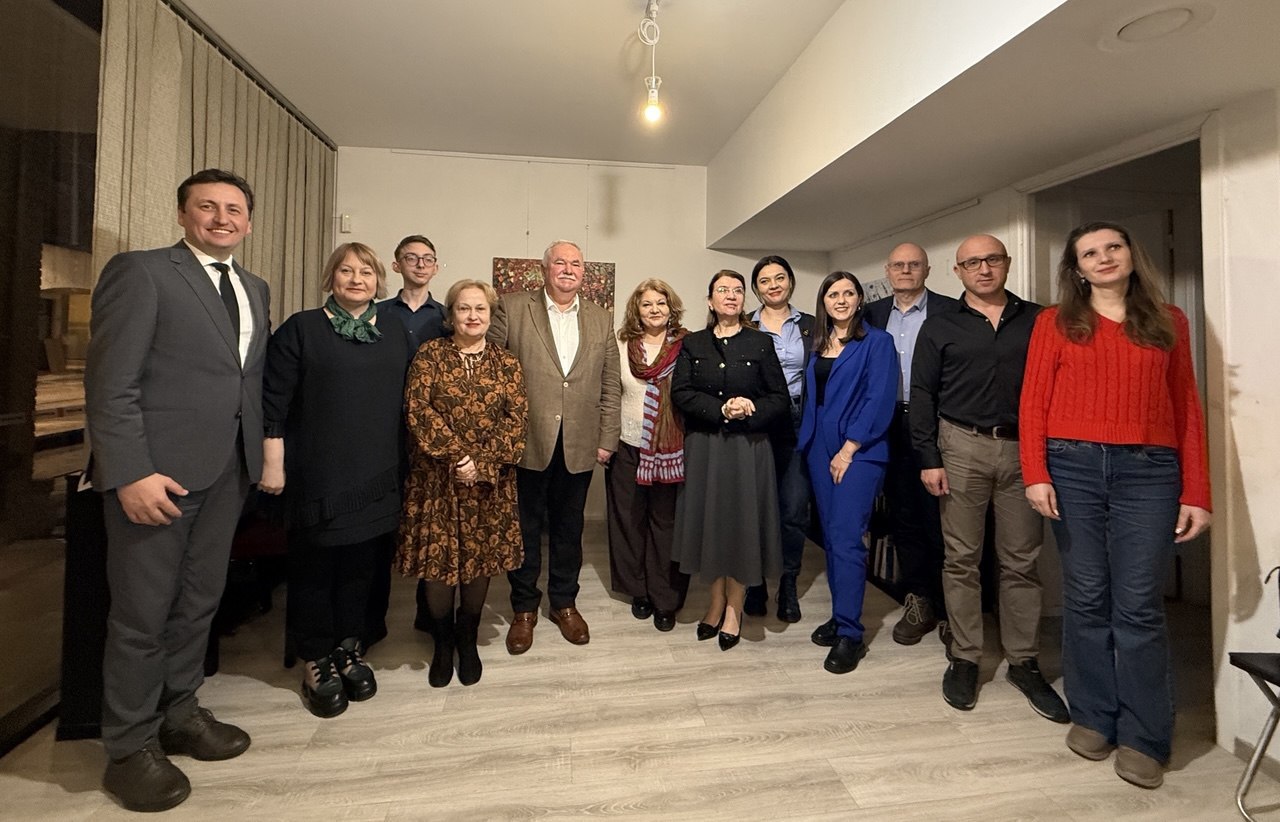
Writers from the Republic of Moldova have, for the first time in Brussels, read a European literary manifesto. The event took place on the occasion of the International Poetry Day. The authors are calling for the recognition of Moldovan literature as an integral part of the European cultural space, as well as for the free circulation, at international level, of books and poets from the country.
The initiative comes from a group of ten writers and poets from the Republic of Moldova. They assert that Bessarabian literature is not on the margins of European culture but is part of it.
Poet and literary critic Maria Pilchin delivered the opening of the manifesto. Her message was direct: “Europe is not a destination for us. Europe is a belonging. Our literature is European. We do not imitate Europe. We are Europe.”
Maria Pilchin spoke about the price Moldovan culture paid during decades of Soviet occupation. She mentioned the imposed alphabet, the memory erased from textbooks, and the language pushed to the margins: “We bring to Europe fragility transformed into strength. The experience of a culture that survived not through noise, but through patience. Through faith in people, language, and books.”
Poetry as civic act and shield against propaganda
Diana Iepure and Cătălina Bălan co-authored a section of the manifesto dedicated to the role of poetry in the democratic development of the Republic of Moldova. They call for poetry to be present in education, public spaces, and civic debate—not as a relic, but as a living practice.
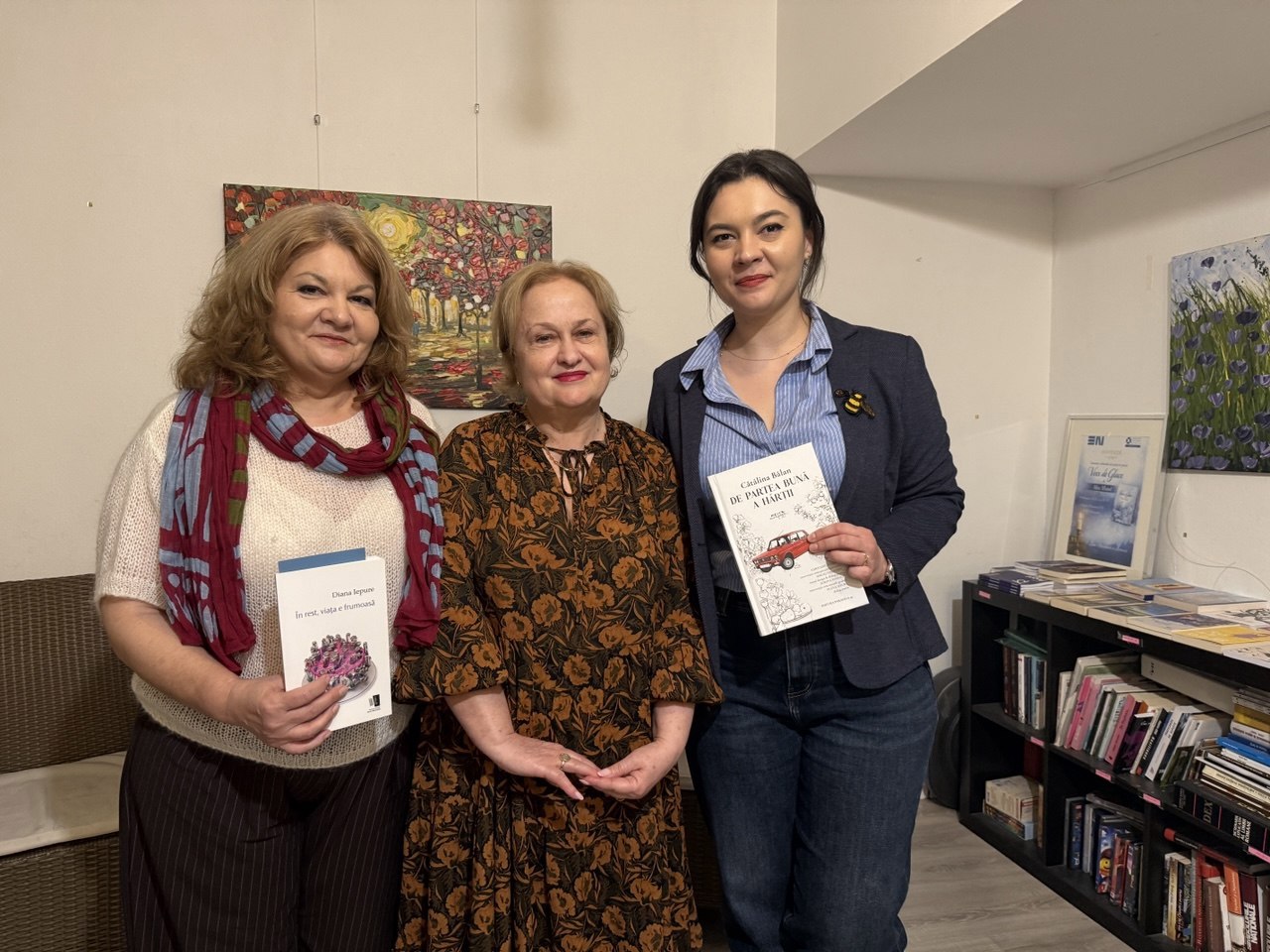
“Poets are not marginal witnesses of history, but active participants in its shaping”, wrote the two authors. The manifesto rejects the idea that poetry is a luxury or an ornament. The poets describe it as a tool to combat propaganda: “We believe in the power of the word written by poets, stronger and more authentic than any propaganda.”
They also support the translation and circulation of poetry from the Republic of Moldova in the European space as an “act of cultural justice” and demand that Moldovan poets and readers travel freely in the European Union.
“We refuse to be invisible”
Writer Anda Vahnovan addressed a firm message to European cultural institutions and publishers. She called for the inclusion of Moldovan authors in major international bookstores, festivals and anthologies: "We refuse to be invisible after everything that has happened to us and after everything we have suffered."
She also recalled that entire generations of Romanian writers from Bassarabia were censored, their manuscripts were "melted" or they were forbidden to write in the Latin alphabet. She calls for scholarships, residencies and fair fees for writers from the Republic of Moldova.
Writer Maria Ivanov insisted that literature from the Republic of Moldova is not peripheral. She evoked the immediate realities that it records: the war on the border, the refugees, the polluted water of the Nistru.
"We are not afraid to write about this. Courage is also a sign of Europeanness."
Breaking out of aesthetic isolation is a condition of cultural dignity, added Nadejda Ivanov. Writers from Bassarabia write “not from a center of power, but from a place of vulnerable memory, where the word was often the last form of freedom,” she said.
Adelina Labic-Lungu described Moldovan literature as a “laboratory of contradictions” and called on writers, publishers and cultural institutions to build together a Europe of real diversity. “Europe is not just institutions and rules, it is narrative, experiment and continuous dialogue.”
Why Brussels?
The event’s organizer, Liubovi Cibotaru, explained the choice of the European capital: “Integration through culture is absolutely necessary, it is paramount. The fact that a literary manifesto was read here is like a staking out of our path to Europe.”
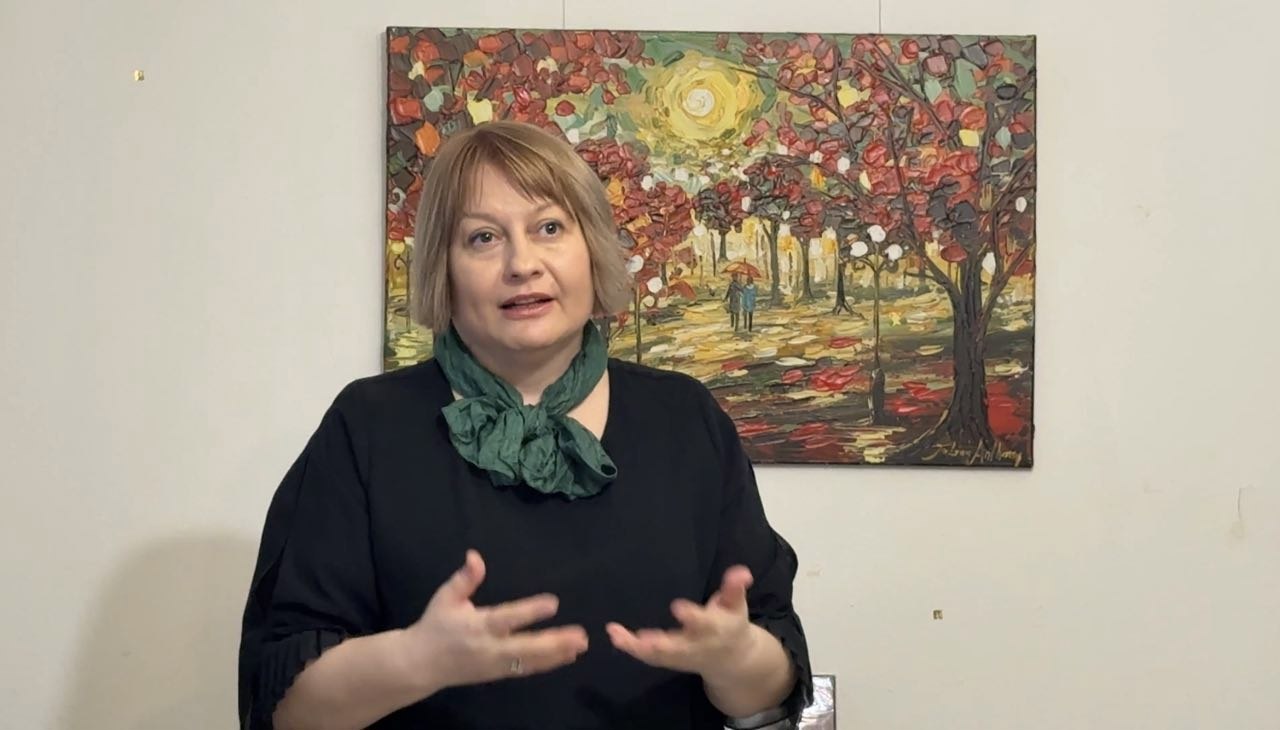
Maria Pilchin specified that the gesture also has a symbolic dimension: "Brussels is the symbol of normality. Our country is struggling to break away from an abrasive, traumatic past, in order to reach normality."
Diana Iepure, in turn, spoke about the personal emotion experienced at the event. She recalled participating in demonstrations at the Great National Assembly Square in the 1990s, when Moldovan intellectuals were fighting for the Romanian language and the Latin alphabet.
"This manifesto comes at a time when we see that everything we have achieved is not necessarily irreversible. That the fight never ends, but it was not in vain either"
"It is truly a national, popular project. And that is how it should be. I hope that this action will awaken other voices, and in other formats, both political and creative,", said Ambassador Viorel Cibotaru.
The event was attended, among others, by poets Cătălina Bălan, Nina Corcinschi, Diana Iepure, Constantin Ivanov, Maria Ivanov, Nadejda Ivanov, Ivan Pilchin and Maria Pilchin. Written contributions were submitted by Dumitru Crudu and Anda Vahnovan, the text of the Manifesto will be published in full.
The Manifesto of the Bassarabian authors was read in the presence of the Ambassador of the Republic of Moldova to Brussels and Luxembourg, Viorel Cibotaru, and the Ambassador of Romania to Belgium, Andreea Păstârnac. The event was organized by professor Liubovi Cibotaru.