“Peaceful solution”: Valeriu Chiveri rejects claims of alleged threats against Russian citizens in Transnistrian region as unfounded
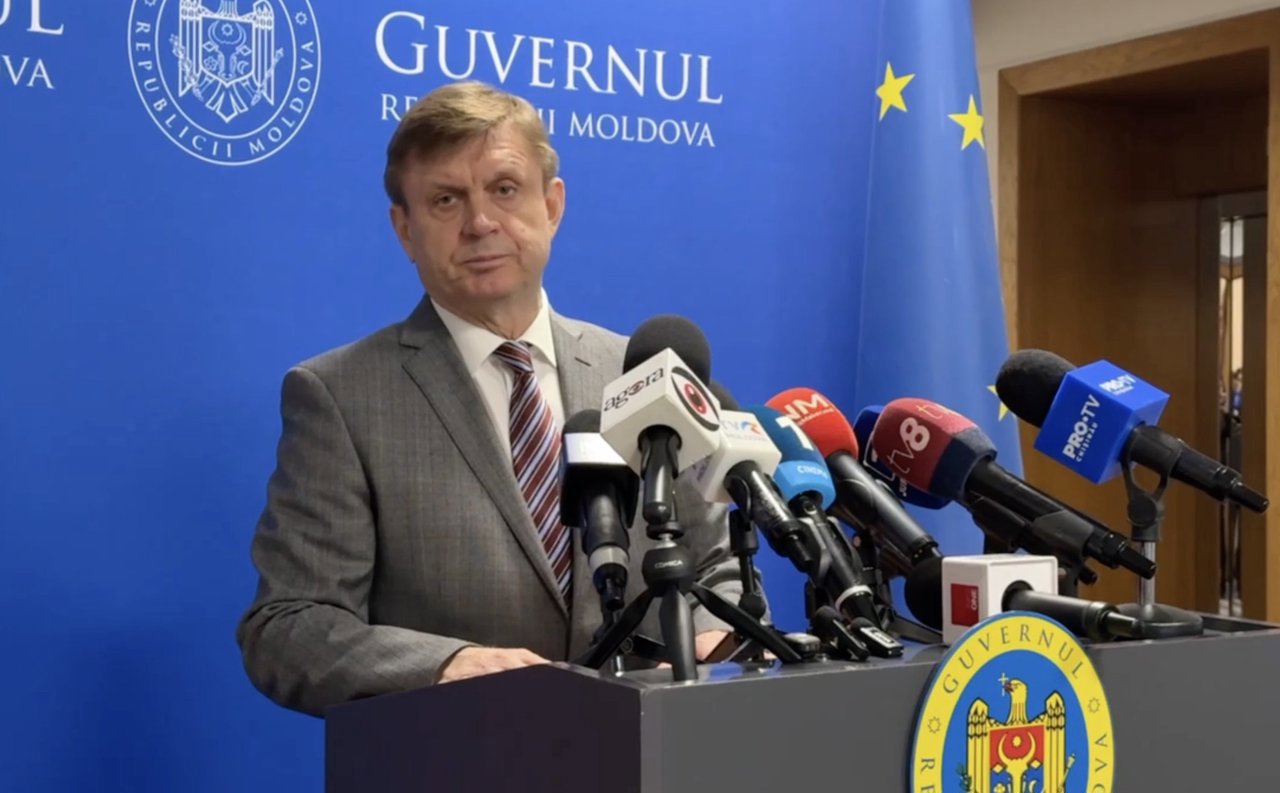
Moscow's claims about supposed threats to the safety of the roughly 220,000 Russian citizens residing in the Transnistrian region are "unfounded" and "distorted." The Republic of Moldova is committed solely to a peaceful resolution of the Transnistrian conflict, according to Deputy Prime Minister for Reintegration, Valeriu Chiveri.
The reaction from the official in Chișinău follows statements made by Serghei Shoigu, the Secretary of the Russian Security Council. On April 21, Shoigu declared that Russia "will take all necessary measures" to protect its citizens in the separatist region of the Republic of Moldova, claiming that their "interests and safety" are threatened by the "reckless and irresponsible actions of Kyiv and Chișinău."
In response, Deputy Prime Minister for Reintegration Valeriu Chiveri stated, "We categorically reject such statements, which we consider unfounded and distorting the position of the Republic of Moldova in the context of resolving the Transnistrian conflict and the country's reintegration. Our position is very clear: we are seeking a peaceful solution for our country's reintegration based on respect for sovereignty and territorial integrity within internationally recognized borders." This statement was made after a Government meeting on April 22.
Chiveri also noted that the Russian Federation has not honored its commitments made in 1999 in Istanbul regarding the withdrawal of its illegally stationed army from Moldova. He emphasized, "The military presence of the Russian Federation in the Republic of Moldova is illegal. Our country has consistently advocated for the withdrawal of these forces. We are fully aware of the commitments made by the Russian Federation in Istanbul to withdraw its military forces illegally deployed on our territory, which, to this day, has not happened."
The former Russian Defense Minister has accused the Chisinau authorities of “blackmailing” the Transnistrian region in the energy sector, despite the fact that Tiraspol rejected a €60 million aid proposal from Brussels for gas imports.
In an interview with the publication Komsomolskaya Pravda, Shoigu stated, “Chisinau allows gas supply on the left bank only to cover basic social needs, and otherwise tries to impose a prohibitive tariff. This can only be described as blackmail and an attempt at intimidation.”
He also remarked that Moldova's rhetoric regarding the Transnistrian region “increasingly resembles the statements of Ukrainian authorities about Donbas in 2014.” Shoigu advised Chisinau not to follow “Kiev’s line” and to avoid attempting to resolve the Transnistrian issue “by force”.
“I have repeatedly warned at all levels that any attempt to resolve the Transnistrian issue through force, as well as the desire to replace the Russian peacekeeping forces with a ‘Western contingent,’ will have negative consequences for the Republic of Moldova and the entire region,” emphasized the Secretary of the Russian Security Council.
Recently, the Russian State Duma approved, in its first reading, a draft law that authorizes the deployment of Russian troops abroad in cases where Russian citizens feel threatened.
In this context, it is worth noting that shortly after the outbreak of the war in Ukraine on February 24, 2022, the Russian Embassy in Chisinau urged Russian citizens in Moldova to report any perceived threats. However, those targeted criticized the call, advising Moscow to stay home and refrain from intervening to “save” them.