Opposition seeks a role in EU integration: “Consensus is difficult when you’re seen as an obstacle”
The parliamentary opposition accuses the government of monopolizing the European agenda. It warns that excluding other political groups from decision-making could turn European integration—originally a project built on national consensus—into a source of political conflict. The criticism comes as the Republic of Moldova’s progress has been hailed by European partners as a true “miracle”.
"This work is being carried out not only by a strong team within the Government of the Republic of Moldova; we also see that these actions are supported by the Parliament, which is adopting laws at a rapid pace to implement the European acquis," stated the German Ambassador to the Republic of Moldova, Hubert Knirsch, at the annual conference on EU enlargement held in Chișinău.
The diplomat addressed and refuted false claims suggesting that the European Union does not want the Republic of Moldova to become part of the European family.
"Accession to the European Union is not a dream. It is a reality being built day by day. The narrative that the European Union does not particularly want the Republic of Moldova to become a member state is losing its traction. Everyone supports the country's efforts, and we will continue to stand by its side in the coming years to support the process and contribute to the closing of all negotiating chapters," the German ambassador affirmed.
In a video message from Brussels, Vice-President of the European Parliament Victor Negrescu commended the results achieved by the Republic of Moldova during a difficult period brought about by the war in Ukraine. "In 2022, when Russia launched its full-scale invasion of Ukraine, few could have imagined how quickly the Republic of Moldova would advance on its European path. Four years later, we are discussing accession negotiations, institutional reforms, and economic integration. These results did not come about on their own. They were achieved against a backdrop of security threats, energy-related pressures, disinformation, and even attempts at destabilization," stated the Romanian Member of the European Parliament.
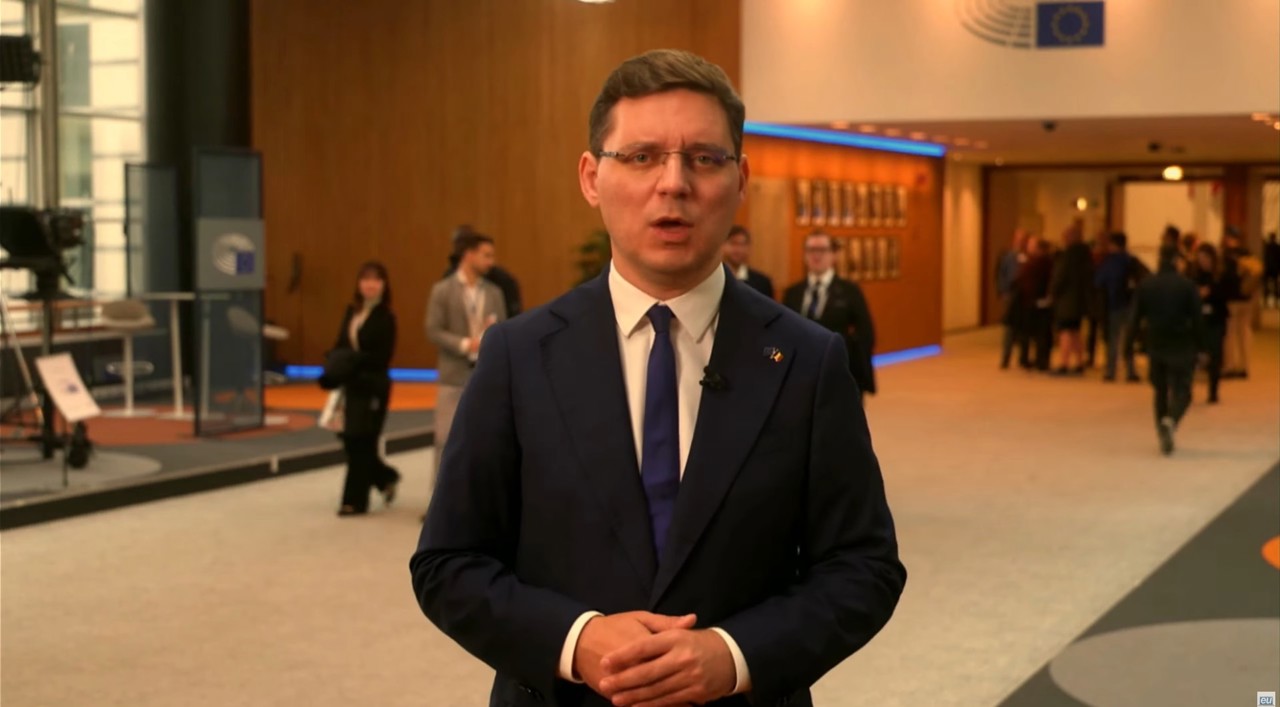
Also, Victor Negrescu pointed that the real battle for integration will take place in Chișinău. Therefore, the country's leadership should strive to increase citizens' trust in and support for this strategic direction.
"The next stage of accession will not be won solely at the negotiating table in Brussels. In fact, it will be won in the Parliament in Chișinău, within public institutions, in local communities, and through citizens' trust. For this reason, the legislature must not be merely a factory for transposing European directives; it must serve as the democratic engine of the accession process," argued Victor Negrescu.
EU accession requires continuous progress and the implementation of adopted legislation. Otherwise, democracy risks losing its appeal, and all efforts could be rendered entirely void, the Vice-President of the European Parliament warned. Victor Negrescu added that adopting laws is not enough; citizens must see that the law is applied equitably and that institutions function effectively.
Doina Gherman, Deputy Speaker of the Parliament of the Republic of Moldova, noted that the historic achievements discussed in recent days are the result of years of hard work by expert teams who have worked tirelessly on the process.
“We in Parliament are responsible for adopting and voting on these laws. We are working at an accelerated pace. In 2026, we have handled 354 legislative acts. During the first parliamentary session of the year, we addressed around 177 acts, laws, and directives. In October alone, we harmonized approximately 10 legislative acts concerning justice, the economy, energy, and transport. Naturally, this is a race against time, and we are fully aware of that,” Doina Gherman stated.
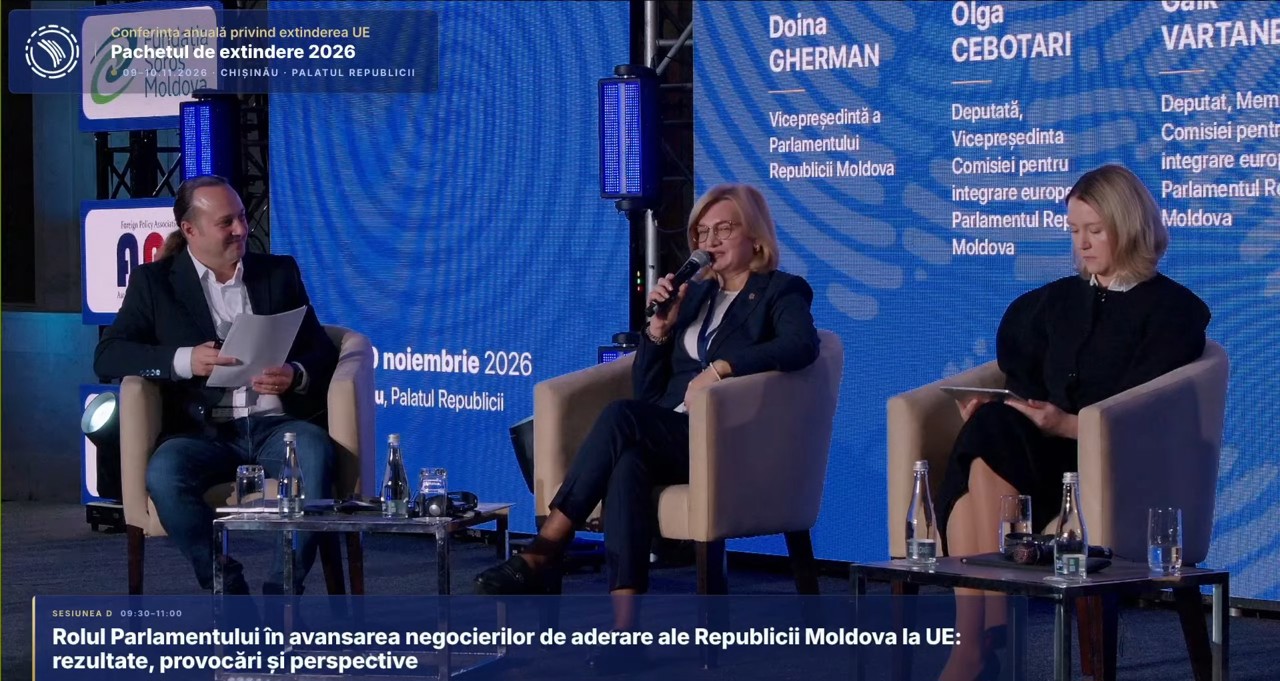
She confirmed that 2027 will be a year of both reforms and concrete results, with each institution responsible for delivering the outcomes needed for European integration.
“There is perfect harmony between the Presidency, the Government, and the parliamentary majority. We possess an unprecedented and strong political will to advance the European agenda. The ‘EU-2028’ objective remains a priority”, stated the Deputy Speaker of the Parliament.
Social cohesion: key to advancing the European path
Former Prime Minister Ion Sturza, president of the Foreign Policy Association, has pointed out that many citizens mistakenly believe the Republic of Moldova will become a member state of the European Union by 2028. The situation is not nearly that certain, he asserts.
"What could have been an opportunity might instead turn 2028 into a year of problems; we must signal to society that life does not end in 2028," Ion Sturza said.
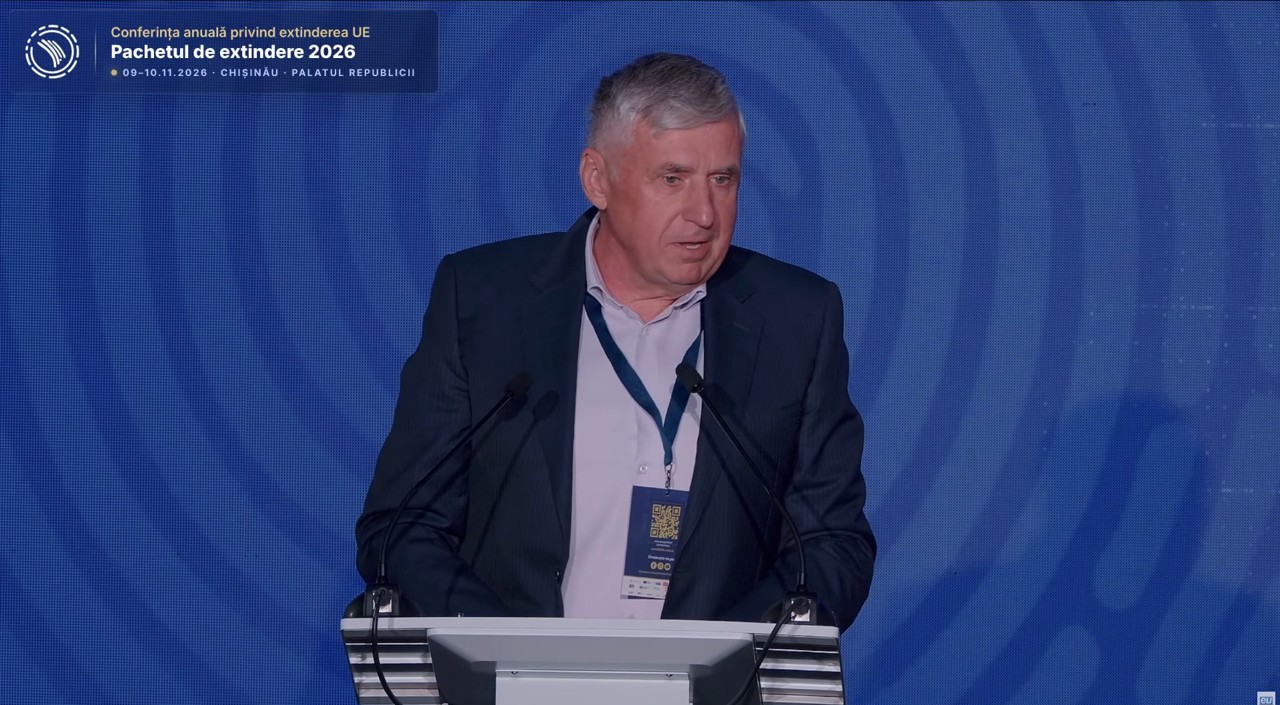
Another identified issue is the tendency to associate integration exclusively with the ruling party. This could have negative consequences for the European integration path, especially given the declining popularity of the party currently in power.
"After two electoral cycles, support for the ruling party is eroding due to multiple crises, minor missteps in the governing process, and the government’s eleventh-hour attempt to implement much-needed reforms. Ideally, these should have been carried out at the beginning of the electoral cycles—not now, in the midst of one—as this will significantly distort how society perceives European integration," stated the president of the Foreign Policy Association.
According to Ion Sturza, without social cohesion and broad-based involvement—both at the central and local levels—the goal of European integration could be jeopardized.
Pro-European opposition votes for nearly all EU-related laws
Gaik Vartanean, an MP from the "Alternativa" faction and a member of the Committee for European Integration, states that the parliamentary majority uses the opposition as a "voting machine" while refusing to support legislative initiatives put forward by other factions.
"In practice, the pro-European opposition votes for nearly all laws bearing the 'EU' label. At the same time, most proposals originating from the opposition are frequently blocked and very rarely reach the plenary session. I believe this imbalance undermines the process's inclusive nature. When the opposition is consistently portrayed as an obstacle rather than a potential partner, reaching a consensus becomes difficult", said Gaik Vartanean.
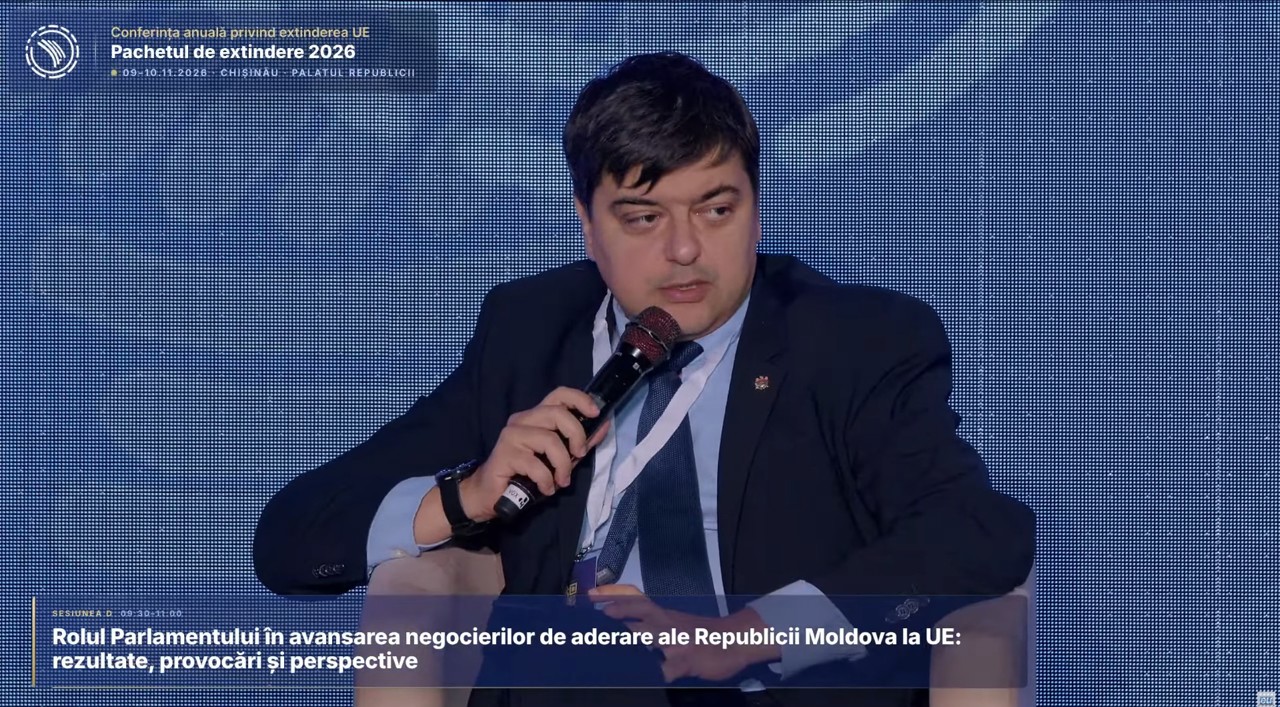
According to the MP, the parliamentary majority fears losing control over this strategic issue.
"The impression is being created that only one political force is capable of advancing European integration. To make the accession process more transparent and inclusive, and to garner broad societal support, a change in approach is required. First and foremost, the opposition’s contribution must be acknowledged—not only when they vote for European-related legislation, but also when they put forward their own legislative proposals," the MP stated.
Socialist MP Olga Cebotari, Vice-Chair of the Committee for European Integration, emphasized the need for broader parliamentary debates on the subject of European integration. She also suggested that the opposition could draft alternative reports to pressure the ruling party.
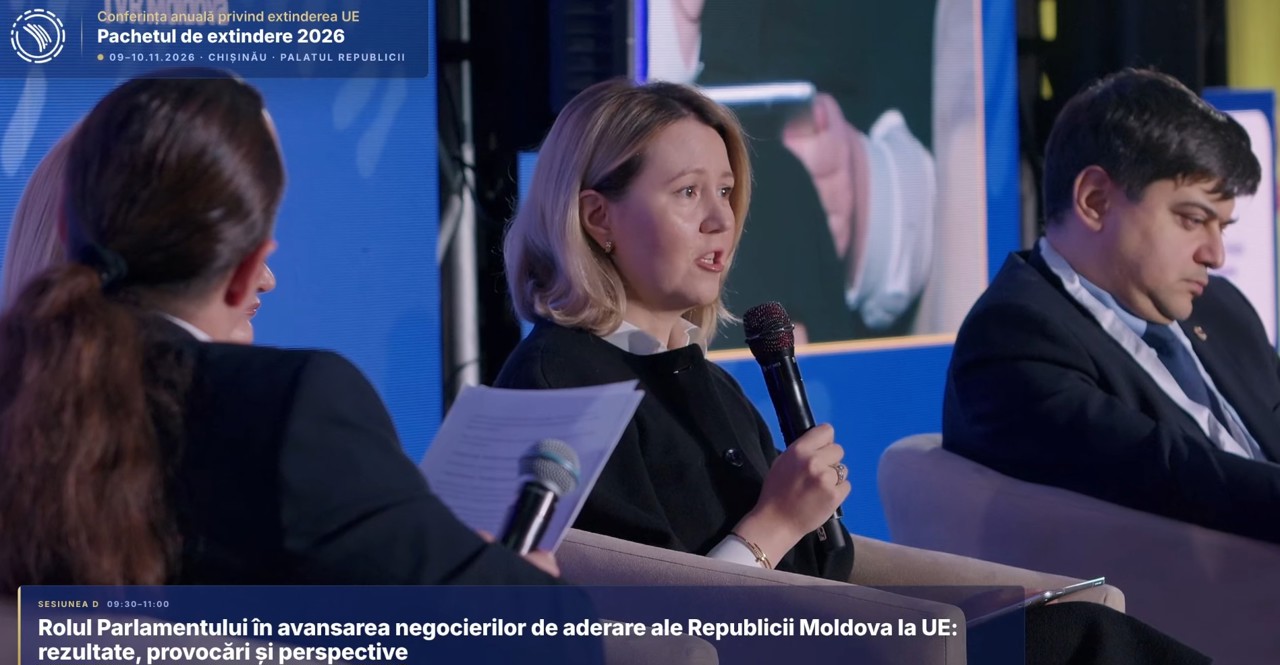
"The commission is still new; we are learning how to work and how to monitor various matters. I look at the practices in other states that have already joined the EU, and at the role the opposition played in those countries. I can tell you that the opposition would present alternative reports and a wide range of other documents. I hope that one day, together with my colleagues in the opposition, we will reach that same level," added Olga Cebotari.
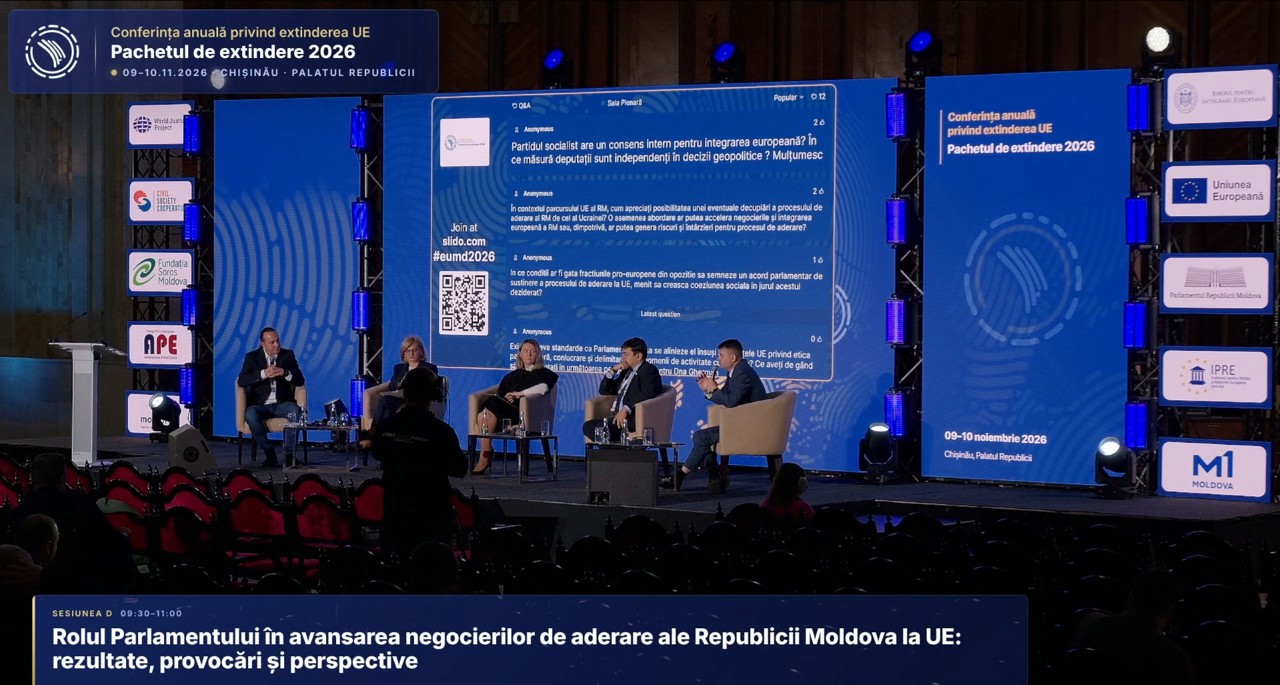
The annual conference on EU Enlargement, dedicated to the "2026 Enlargement Package," is taking place from November 9–10, 2026, at the Palace of the Republic in Chisinau.
The event brings together 700 participants and was opened by President Maia Sandu and the Commissioner for Enlargement, Marta Kos, who is on an official visit to Moldova from November 8–10.