Two Russian Banderol missiles breach Moldova's airspace
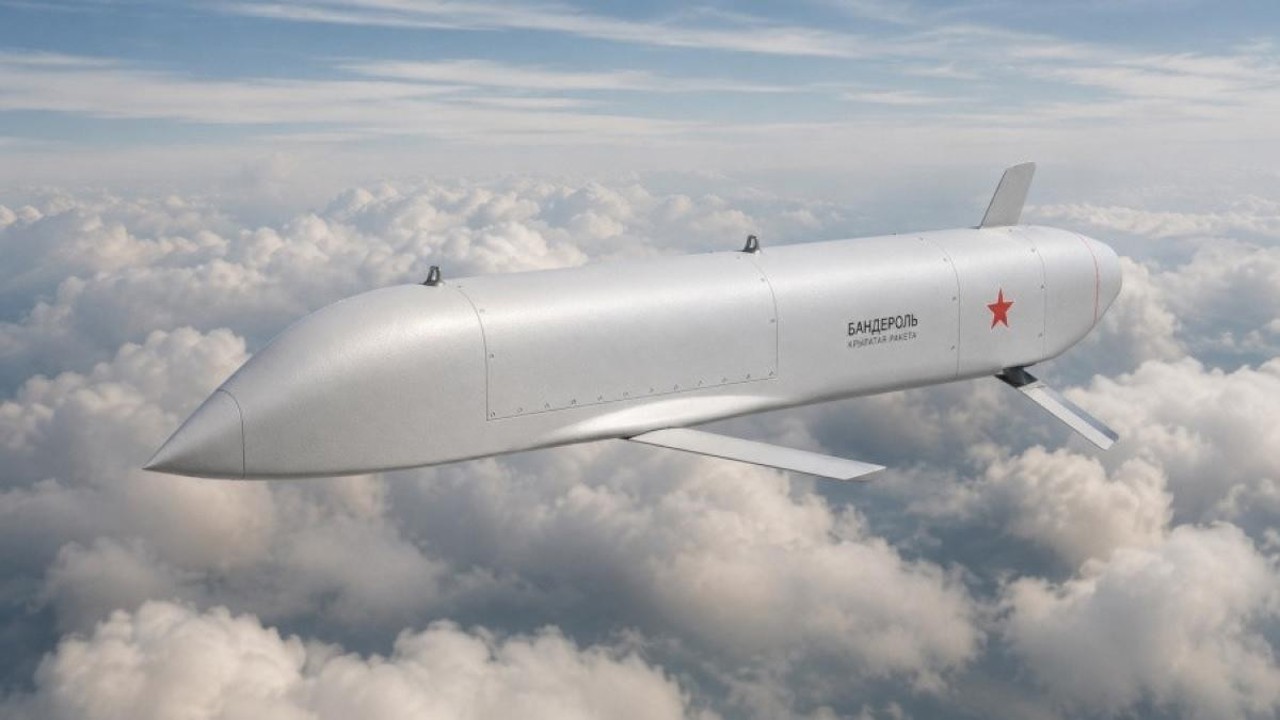
Two Russian Banderol cruise missiles entered Moldova’s airspace on Wednesday morning during Russia’s large-scale attacks on Ukraine, crossing the country for a total of nine minutes, the Defence Ministry said.
Two missiles crossed Moldova's airspace
The first missile entered Moldovan airspace at 06:04, approaching from Yaski in Ukraine’s Odesa region and heading towards Tudora, in the Ștefan Vodă district. It left the country’s airspace at 06:09, flying towards Starokazachye, in the same Ukrainian region.
The second missile crossed the state border at 06:06, approaching from Lymanske in the Odessa region and heading towards Pervomaisc, on the left bank of the Dniester. It exited Moldovan airspace at 06:10, heading towards Razdelna, Ukraine.
The Air Operations Center continues to monitor the country's airspace in coordination with the competent authorities and international partners, the Ministry of Defence said.
Previous incidents and security concerns
On October 3, several aerial objects breached Moldova's airspace amid Russian attacks on Ukraine. Explosions and debris were reported in the Căușeni, Ștefan Vodă, Anenii Noi and Hâncești districts.
Fragments recovered at the sites included components resembling those found in Russia's S8000 Banderol missile. However, the available findings did not establish that all the aircraft involved in the October incidents were Banderol missiles.
What is the S8000 Banderol?
The S8000 Banderol is a jet-powered strike weapon that combines features of a cruise missile and an unmanned aircraft. It is manufactured in Russia by AO Kronstadt, a defence company also known for producing the Orion reconnaissance drone.
The weapon can be launched from unmanned aircraft and adapted for deployment from Mi-28 attack helicopters, according to Ukraine's Defence Intelligence.
Banderol was first used against Ukraine in spring 2025 and has since featured in Russian attacks on infrastructure in the Odessa region. Vladyslav Vlasiuk, Ukraine's presidential envoy for sanctions policy, said the weapon was involved in around 80% of Russian attacks on infrastructure in the region, according to Euronews.
The missile can travel at speeds exceeding 500 kilometres per hour and has a range of up to 500 kilometres. Its fragmentation warhead weighs 114 kilograms and can contain up to 50 kilograms of explosives.
A cheaper alternative to conventional cruise missiles
One of the weapon's main advantages is its relatively low production cost. Euronews estimates that a Banderol missile costs between €42,500 (approximately 856,000 MDL) and €127,500 (approximately 2.57 million MDL), depending on its components.
By comparison, a conventional Russian cruise missile can cost around €685,000 (approximately 13.8 million MDL). The price difference allows Russia to deploy cheaper weapons that can force air defence systems to expend resources intercepting them.
Unlike Shahed-type drones, Banderol uses a jet engine, enabling it to fly at higher speeds. Although the missile can be disrupted by electronic warfare systems, it also has an autonomous navigation capability.
Foreign components despite sanctions
According to Ukraine's Defence Intelligence, the Banderol incorporates a Chinese-made jet engine and a Japanese battery, alongside electronic components sourced predominantly from the United States.
The findings highlight Russia's continued access to foreign-made technologies despite international sanctions and export restrictions imposed following its full-scale invasion of Ukraine.
Translation by Iurie Tataru
RELATED COVERAGE
- Russian missiles and drones explode inside Moldova, minister says
- Eight airspace violations in Moldova last week: five drones exploded
- Four unauthorized overflights of Moldova’s airspace occurred overnight
- Russia endangers Moldova's security: 100 drones and missiles have illegally crossed its airspace since 2022
- In 2026, Moldova's airspace was violated 67 times, with nearly a third in October