Moldova expands Romanian instruction in Russian-language schools
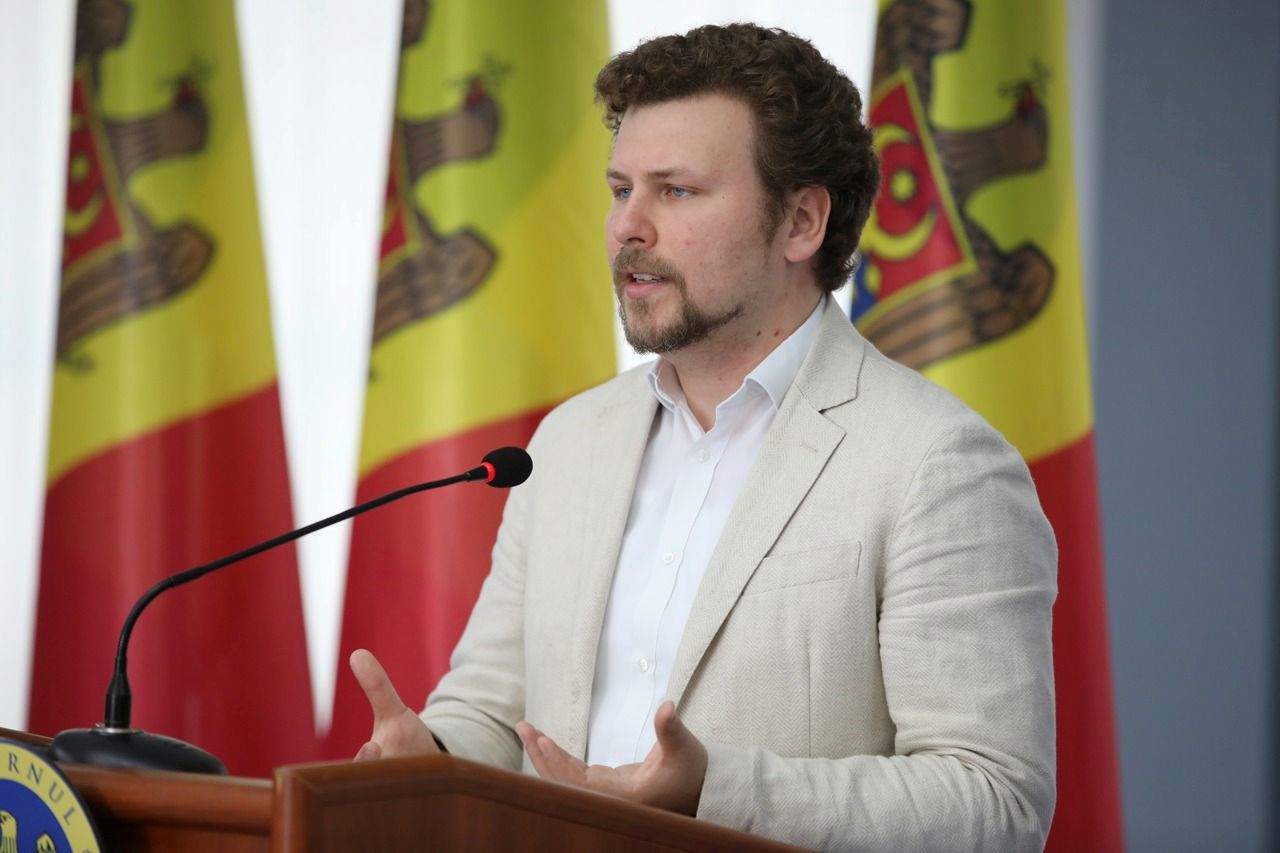
Moldova plans to gradually expand Romanian-language instruction in Russian-language schools, Education Minister Dan Perciun announced on November 23, prioritizing communicative fluency before shifting non-core subjects into the state language.
Speaking on Radio Moldova's "La 360 de grade" broadcast, Perciun said the Ministry of Education and Research will first focus on upgrading how Romanian is taught in Russian-language institutions.
“We are focusing on what we can improve faster, namely the quality of Romanian language teaching in Russian schools,” said Perciun. “We want graduates who can speak Romanian and communicate with others, with a stronger emphasis on communication.”
Under the ministry's roadmap, student proficiency will align with the Common European Framework of Reference for Languages (CEFR). Pupils will be expected to reach level A1 by the end of primary school, B1 upon completing middle school, and B2 at high school graduation.
Expanding subjects and classes in Gagauzia and Taraclia
In the medium term, authorities plan to gradually transition non-core subjects—including civic education, arts, and physical education—into Romanian within Russian-language schools. The ministry also aims to back schools seeking to open Romanian-language classes, particularly in the autonomous region of Gagauzia and the southern Taraclia district.
Roughly 60 schools, primarily near Gagauzia and in Taraclia, began piloting multilingual teaching models this year. The initiative draws on a bilingual education framework from Italy's South Tyrol region, using multiple languages to teach individual subjects.
Teacher shortages remain a primary bottleneck in communities requesting Romanian-language instruction. Perciun noted that a planned Romanian-language class in Comrat failed to open this year because authorities could not recruit a primary school teacher.
To address the gap, the government introduced a €10,010 (200,000 MDL) relocation allowance for educators willing to transfer from other districts. Officials also plan to meet with a school in Vulcănești interested in opening a Romanian-language primary class next year.
No short-term plan to phase out Russian-language schools
Asked whether Moldova could eventually transition exclusively to Romanian-language schooling, Perciun said eliminating Russian-language institutions is not a current government objective.
Any broader expansion of Romanian-language instruction must account for local community preferences, teacher readiness, and retraining pathways for current Russian-language educators, he added.
“Ambitious would mean more space for the Romanian language, including in Russian schools, but we must consider community opinion, teacher preparedness, and how to retrain existing staff,” said Perciun. “So this is a 15-year horizon, not an overnight shift.”
Translation by Iurie Tataru
RELATED COVERAGE
- More Romanian classes in Gagauzia and Taraclia; Government offers 200,000 lei to attract teachers
- Schools urged to submit files to MEC for multilingual instruction
- 900 candidates register for Moldova's first Romanian language proficiency certification
- National Romanian Language Learning Program: 8,200 beneficiaries this year
- Gagauzia reopens Romanian language center at Comrat University