Moldova Vetting Commission: Prosecutor general's file prioritized in integrity assessment
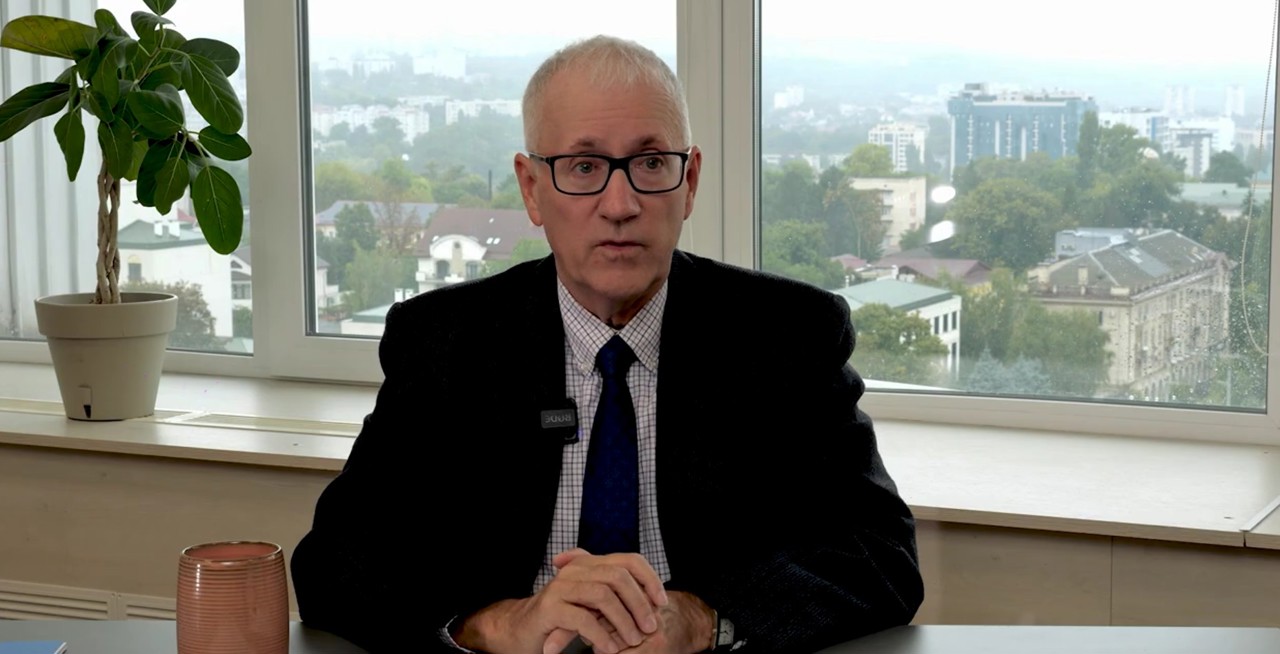
The file concerning Moldova’s Prosecutor General will be given priority during the external assessment of prosecutors’ ethical and financial integrity, according to Vetting Commission President Christopher Lehmann.
He described the background check on the Prosecutor General as "complex," requiring the scrutiny of vast amounts of information over a ten-year period.
"This involves examining thousands of pages of documents—bank statements, property deeds, managed case files, and other types of records," Lehmann detailed. "On average, this analysis takes our financial analysts and investigators several months. However, given the case's high profile, the Prosecutor General's file will be prioritized."
The Vetting Commission is proceeding at a steady pace, with regular hearings underway. The current focus is on prosecutors from the Anti-corruption Prosecutor's Office, which has a list of 67 names submitted for review.
Lehmann noted that the process will accelerate with the addition of three new national and international members, allowing the Commission to increase its assessment of prosecutors from the Prosecutor's Office for Combating Organized Crime and Special Cases (PCCOCS).
The Challenge of Data Access
Each file reviewed covers at least 10 years, encompassing thousands of pages of financial, legal, and ethical data. The Commission relies on its legal mandate to request this information from Moldovan state institutions, but multiple clarification rounds are often necessary.
"We must be extremely precise in our requests," Lehmann explained. "If you ask for Tuesday's information, you won't get Monday's. Multiple rounds of questions are often needed to complete a file, and sometimes the information received raises new questions, making the process protracted."
A significant challenge remains the Commission's lack of access to overseas data, such as bank statements or property deeds from neighboring Romania, which complicates cross-border investigations.
"Our legal authority is restricted to the territory of the Republic of Moldova. Currently, there are no efficient mechanisms for obtaining documents... from other countries, such as Romania," the Commission president stated.
Goals: Restoring Trust and Paving the EU Path
Lehmann asserts that the vetting process has two core objectives: strengthening public trust in prosecutors and preparing the judicial system for Moldova's European integration.
"I hope the Commission's impact will be two-fold," he said. "First – to boost public and judicial system confidence in the professionalism and integrity of prosecutors in the Republic of Moldova. Second – to help establish a corps of ethically and financially vetted prosecutors."
Lehmann added that in the longer term, the Vetting Commission’s work "will help smooth the path for Moldova's accession to the European Union," calling EU membership the ultimate measure of the reform process's success.
All hearings are public and video-recorded, and reports from both the Commission and the Superior Council of Prosecutors (CSP) are publicly accessible.
Interim Prosecutor General Alexandru Machidon remains in his post despite winning the permanent position competition on August 19. CSP President Dumitru Obadă previously told Radio Moldova that Machidon can only assume his full mandate after successfully completing the external integrity assessment and receiving the signed presidential decree of appointment.
To date, the Vetting Commission has issued decisions for 33 prosecutors; 16 have passed the ethical and financial assessment.
Translation by Iurie Tataru