Serghei Shoigu: Russia will take all necessary steps to protect its citizens in Transnistrian region
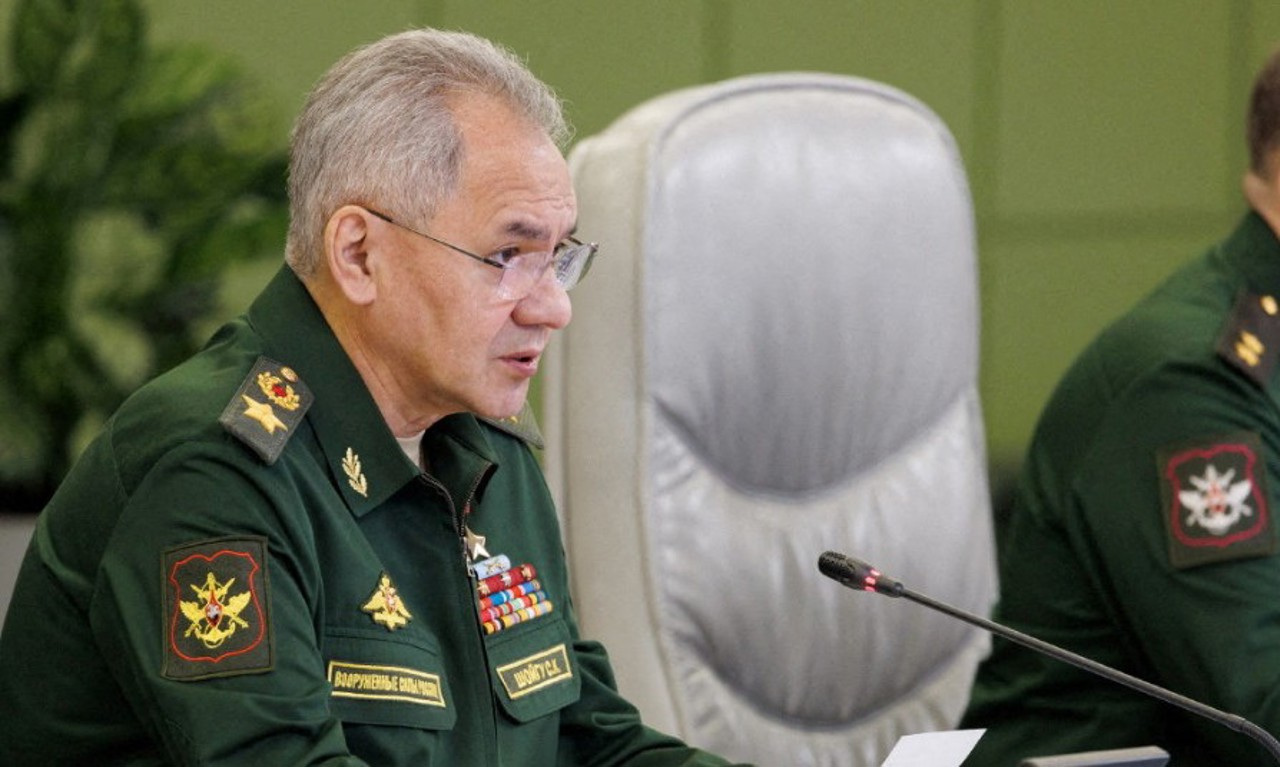
On Tuesday, Serghei Shoigu, the Secretary of the Russian Security Council, stated in an interview with the popular Russian daily Komsomolskaya Pravda that Russia will take all necessary measures to protect its citizens in Transnistrian region, a separatist region in eastern Moldova, according to Agerpres, referencing EFE.
“If necessary, Russia will take all the necessary measures and use all available methods to protect Russian citizens in Transnistrian region, in accordance with the Constitution of the Russian Federation,” Sergei Shoigu reiterated.
Shoigu, a former defense minister, emphasized that around 220,000 Russian citizens live in the Transnistrian region and that “their interests and security are currently threatened due to the reckless and irresponsible actions of Kiev and Chisinau.”
He accused the Chisinau authorities, which have received financial support from the European Union for gas imports, of blackmailing the pro-Russian region in the energy sector.
“Chisinau allows gas supply on the left bank only to cover basic social needs and otherwise tries to impose a prohibitive tariff. This can only be qualified as blackmail and an attempt at intimidation,” Shoigu stressed.
However, it was the Transnistrian authorities who turned down EU aid last year to continue receiving Russian gas.
“Tiraspol rejected this proposal. Russia does not allow them to accept European aid for fear of losing control over the region,” Moldovan Prime Minister Dorin Recean stated at the time.
Shoigu also remarked that the rhetoric of the Moldovan authorities regarding Transnistrian region “is increasingly resembling the statements of the Ukrainian authorities about Donbas in 2014,” the year Russia annexed Crimea and sent paramilitaries to support the separatist movement in eastern Ukraine, which it invaded eight years later.
Recently, the Russian State Duma (the lower house of the federal parliament) approved, in the first reading, a bill authorizing the deployment of Russian Federation troops abroad in case Russian citizens feel threatened.
At the same time, Shoigu warned Chisinau not to follow the “Kiev line” and attempt to forcibly integrate Transnistrian region with the rest of the Republic of Moldova.
“I have repeatedly warned, at all levels, that any attempt to resolve the Transnistrian problem by force, as well as any desire to replace the Russian peacekeeping forces with a ‘Western contingent,’ will have negative consequences for the Republic of Moldova and the entire region,” the Secretary of the Russian Security Council stated, adding that, in this case, “Maia Sandu and her team will bear full responsibility.”
On April 17, members of the command of the Russian Task Force in Transnistrian region (TGRT), which is illegally stationed in eastern Moldova, including the commander and chiefs of staff, were declared undesirable by Chisinau.
The commander of the TGRT, Dmitry Zelenkov, as well as his deputies Dmitry Opalev, Sergei Mashenko, and Sergei Shirshov, along with the chiefs of staff of the TGRT, Marat Yarulin and Aleksei Bogomolov, were declared undesirable.
“It is clear that the authorities of the Republic of Moldova, with the support of the European Union, are trying to expel Russian troops from Transnistrian region. The Moldovan authorities have effectively deprived the TGRT leadership of the right to travel outside the region,” Shoigu said, arguing that this political step demonstrates “the firm intention of the current leadership in Chisinau to further aggravate the situation.”
The current leadership in Chisinau, including President Maia Sandu, has repeatedly called on the international community to exert pressure on Moscow to withdraw its troops from Transnistrian region and remove ammunition from the warehouses in Cobasna.